The winners of the 2025 World Car Awards revealed!

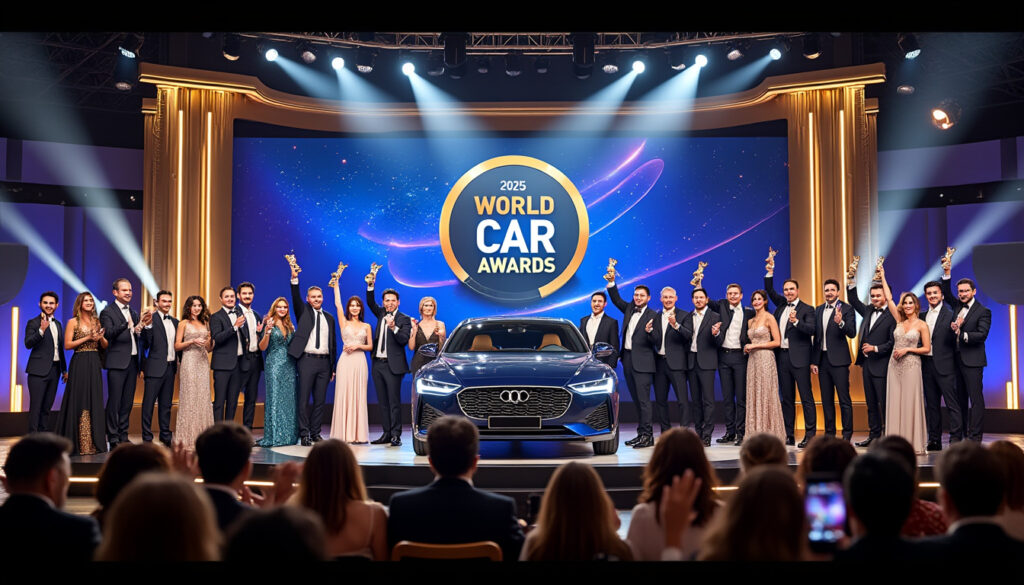

Every year, the New York Auto Show shines with a particular glow when the prestigious World Car Awards crown the most significant innovations in the global automotive industry. The 2025 edition is no exception. It highlights a strong trend: the rise of Asian brands in a universe where electrification, innovative design, and hybrid performance become the keys to success. Against a backdrop of fierce rivalries among traditional manufacturers such as Toyota, Mercedes-Benz, BMW, Audi, Volkswagen, Peugeot, Renault, Ford, Honda, and Mazda, the selection of winners confirms that the race towards sustainable mobility is accelerating, blending simplicity, technological sophistication, and ergonomics tailored to urban and sporting needs. The awards ceremony revealed a rich and eclectic ranking, reflecting the breadth of solutions offered by the automotive industry to address environmental challenges and the ever-increasing demands of drivers. The Kia EV3, the new king of electric vehicles, succeeds in the most coveted category after the giant EV9, while Porsche’s hybrid performance claims a powerful renewal. This detailed analysis provides an informed look at the profound evolutions in the sector, outlining the key trends that will shape the automobile of tomorrow.
The Triumph of Asian Brands and the Rise of Electric Vehicles at the 2025 World Car Awards
In the automotive world, Asian brands continue to redefine standards, and 2025 is a particularly symbolic year. Of the six main categories at the World Car Awards, three trophies were awarded to manufacturers from Asia, demonstrating technological know-how and a forward-thinking vision of electric mobility. These winners are not there by chance: their success illustrates a thoughtful strategy combining energy efficiency, innovative design, and adaptability to a rapidly changing competitive market.
The Kia EV3, a 100% electric small SUV from South Korea, won the emblematic title of World Car of the Year. This spectacular success is not limited to a mere title; it directly succeeds its older sibling, the Kia EV9, a model that had already disrupted the rules of electric vehicles. This victory highlights Kia’s continuous rise as it stands out amidst European challengers like the BMW X3 and the Hyundai Inster with a path that combines innovation, practicality, and accessibility.
Despite the victory of the Kia EV3 in the overall title race, it is the Hyundai Inster that has prevailed in the World Electric Vehicle category. This particular distinction values the energy performance and onboard technology of an incisive model designed to appeal to an urban and tech-savvy audience. The Hyundai Inster thus surpasses not only the Kia EV3 but also the Porsche Macan Electric, offering Hyundai a strategic positioning in the international competition, reflecting a controlled transition towards clean drive systems.
BYD, another Chinese brand renowned for its innovations in electromobility, stands out in the World Urban Car category with its compact model, the Seagull (or Dolphin Mini depending on the markets). This success highlights the growing demand for practical, compact vehicles suited to dense urban living and increased environmental constraints. The podium also includes the Mini Electric and once again the Hyundai Inster, showcasing the fierce competition in this segment of mini electric vehicles, where lightweight technology and efficient autonomy reign supreme.
- Kia EV3 : World Car of the Year, small electric SUV
- Hyundai Inster : World Electric Vehicle, efficient and technological
- BYD Seagull : World Urban Car, innovative urban compact
The 2025 ranking thus shows a recognition for Asian manufacturers who dominate both global and urban segments of electric vehicles. This victory reflects a perfect alignment between deep technological research and the tangible expectations of consumers, not to mention the major ecological challenge facing the sector. For all these brands, it is a confirmation of their good positioning on the global automotive chessboard.
| Category | Winner | Model | Type of Engine | Manufacturer Origin |
|---|---|---|---|---|
| World Car of the Year | Kia | EV3 | 100% electric | South Korea |
| World Electric Vehicle | Hyundai | Inster | 100% electric | South Korea |
| World Urban Car | BYD | Seagull (Dolphin Mini) | 100% electric | China |
Creativity at the Heart of Design: The Aesthetic Dimension of the 2025 World Car Awards
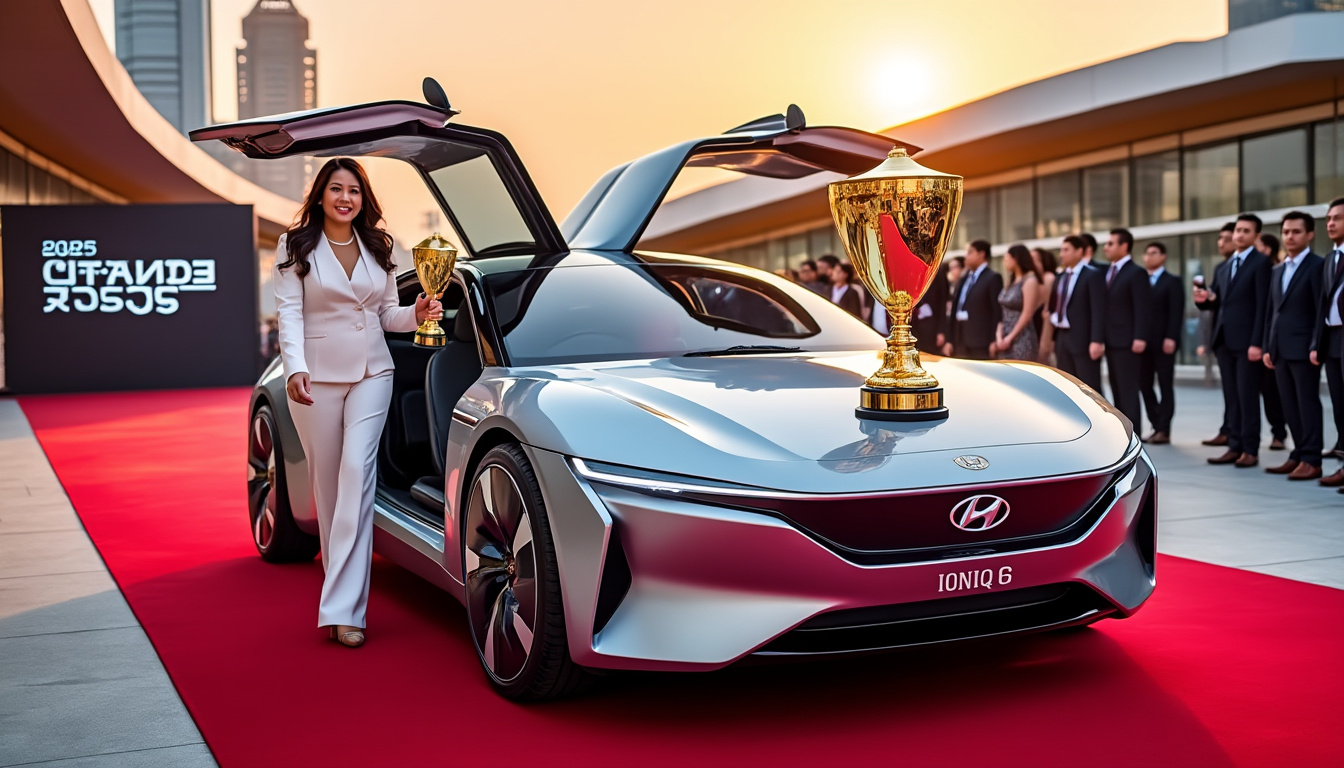
If the core of the awards revolves around performance and energy efficiency, aesthetics play a major role in the competition. In 2025, the World Car Design category celebrated the excellence of an electric vehicle rich in history and a symbol of automotive renewal: the Volkswagen ID. Buzz. This German electric van combines retro design with modern technologies, appealing as much for its iconic look as for its ergonomics designed for family and professional use.
This success grants Volkswagen its 26th title at the World Car Awards, proving the manufacturer's consistency in highlighting a subtle blend of aesthetics and functionality. Competing in this category, the Kia EV3 and the Toyota Land Cruiser represented contrasting proposals, respectively in the compact electric segment and the classic all-terrain SUV segment. The ID. Buzz thus stands out as an icon of futuristic style grounded in nostalgic roots, a strategy that captures emotion while providing an innovative response to green mobility.
The Principles of Successful Automotive Design in 2025
Design is no longer just an aesthetic covering, but a complete experience interface, where form and function harmonize to enhance passenger comfort and safety. The Volkswagen ID. Buzz perfectly embodies this philosophy through:
- A recognizable and iconic silhouette that respects Volkswagen's heritage.
- A spacious, modular, and bright interior, designed for conviviality and functionality.
- The discreet yet innovative integration of electric technologies, offering a clean visual.
- A particular focus on sustainable materials and their environmental impact.
In a context where brands like Audi, Mercedes-Benz, BMW, Peugeot, Renault, or Ford compete in the electric and hybrid offerings, the ability to propose a striking and functional style has become a determining lever for conquering markets. These elements translate into a palpable competitive advantage in sales and brand image, greatly influencing customer loyalty.
| Model | Key Design Elements | Segment | CO2 Emissions (g/km) |
|---|---|---|---|
| Volkswagen ID. Buzz | Retro-futuristic design, modular interior, sustainable materials | Electric van | 0 |
| Kia EV3 | Compact, dynamic lines, advanced onboard technology | Electric SUV | 0 |
| Toyota Land Cruiser | Robustness, classic all-terrain design, off-road capability | All-terrain SUV | Variable depending on engine |
The Rise of SUVs and Luxury Cars in the World Luxury Car and Performance Car Categories
Beyond the compact electric frenzy, the 2025 World Car Awards also validate the enduring appeal of high-end vehicles and extreme performance, a territory where the most advanced technology and automotive excellence are measured. The World Luxury Car and World Performance Car categories have thus highlighted models capable of combining comfort, power, and innovative environmental commitments.
The Volvo EX90, a Swedish electric SUV, wins the luxury category award. This choice illustrates Volvo’s ability to connect technological maturity and ecological awareness. With impressive range and high-end features designed to maximize comfort and safety, the EX90 competes with the Porsche Macan and the Panamera, two rivals particularly renowned for their refinement and industrial precision.
On the pure performance front, Porsche makes an indisputable mark with the 911 Carrera GTS. This hybrid sports car, which exceeds 600 horsepower, outpaces its direct competitors such as the BMW M5 and the Porsche Taycan Turbo GT. This triumph manifests a strategic transition: while 100% electric cars dominate the overall rankings, this year sees a successful hybridization asserting itself, blending traditional driving pleasure with respect for environmental standards.
- Volvo EX90 : excellence and comfort in a luxury electric SUV
- Porsche 911 Carrera GTS : hybrid power, performance, and innovation
- Porsche Macan and Panamera : top finalists in luxury and performance
The subtle interplay between performance standards and ecological imperatives influenced by Toyota, Mercedes-Benz, Audi, Ford, Honda, or Mazda continues to unfold in 2025 with varied technical solutions. It is particularly interesting to note the driving role played by Porsche, navigating between the tradition of motorsport and future orientations toward more considered mobility.
| Category | Model | Engine Type | Power (horsepower) | Feature |
|---|---|---|---|---|
| World Luxury Car | Volvo EX90 | 100% electric | 400 | Advanced comfort and safety |
| World Performance Car | Porsche 911 Carrera GTS | Hybrid | +600 | Combination of power and innovation |
| Luxury finalists | Porsche Macan, Panamera | Electric/hybrid | Variable | Sporty reputation and luxury |
Strategic Lessons from the 2025 World Car Awards and Their Impact on the Global Market
Beyond the spectacle of the trophies, the World Car Awards act as a powerful barometer for the directions charting the future of the automotive industry. Analyzing the 2025 results offers insights into how manufacturers such as Toyota, Mercedes-Benz, BMW, Audi, Volkswagen, Peugeot, Renault, Ford, Honda, and Mazda adapt their strategies in the face of rising ecological and technological challenges.
The dominance of electric vehicles, notably represented by Kia and Hyundai, sends a strong message to global markets: sustainable mobility is no longer a distant horizon but a reality already palpable in households and professional fleets. The diversity of models, ranging from SUVs to vans to compact urban vehicles, demonstrates that electric cars touch all segments and needs, and that consumers now have a choice.
Alongside this dynamic, advancements in hybrid performance, symbolized by Porsche, embody a pragmatic evolution, marrying power with emission control. It is a fine balance between technological innovation and preserving the driving sensations that could define the next decade.
- Strengthening electric ranges across all urban and road segments
- Increased research on autonomy, rapid charging, and durability
- Integrating design as a key differentiation argument
- Emphasizing comfort, safety, and high-end user experiences
- Hybrid mixing to maintain performance while limiting environmental impact
Manufacturers are thus striving to adapt their production chain, invest in next-generation batteries, and collaborate more closely with technology suppliers. These initiatives aim to deploy lighter, smarter, and more connected cars that meet the demands of tomorrow’s cities.
| Strategic Axes | Key Actions | Expected Impact |
|---|---|---|
| Electric Mobility | Development of solid batteries, optimization of infrastructures | Emission reduction, mass adoption by the public |
| Innovative Design | Sustainable materials, interior modularity | Enhanced customer attraction, brand differentiation |
| Hybrid Performance | Advanced hybridization, controlled power | Maintaining driving pleasure, meeting standards |
| User Experience | Comfort, safety, connectivity | Customer loyalty, increased satisfaction |
It also becomes evident that iconic brands like Audi, Mercedes-Benz, Peugeot, or Mazda, even if absent from the main rankings, must continue to innovate to maintain their influence and attract a rapidly changing clientele. Their ability to combine tradition and modernity will be key to conquering the mobility of the future.
Perspectives and Challenges for Manufacturers: How Winners Foretell the Automobile of Tomorrow
The results awarded during this edition of the World Car Awards provide a fascinating glimpse into the challenges and prospects of the automotive sector, containing essential lessons for all stakeholders. Between ecological aspirations, comfort demands, and the need for adaptability to lifestyles, manufacturers must navigate a dynamic, sometimes tumultuous environment.
The emphasis on electric vehicles, underscored by the recognition of the Kia EV3 and other models, marks a clear transition towards modular and economical platforms capable of integrating into rapidly changing urban ecosystems. For Toyota, Honda, or Renault, for example, this revolution is an invitation to accelerate the development of affordable hybrid and electric solutions while preserving universal appeal.
Performance, primarily embodied by Porsche, reminds us that beyond mere transport, the automobile remains a vector of emotions. Technological advancements in hybrids provide fertile ground for innovations that marry power, enjoyment, and responsibility. Some manufacturers like Ford or Peugeot could draw inspiration from these advancements to create specific models that combine dynamism and environmental respect.
- Investing in R&D to improve energy efficiency and safety
- Exploring lightweight and recyclable materials
- Facilitating technological integration for better interaction between vehicle and driver
- Promoting a varied offering that meets diverse needs, from urban to sporty
The new directions taken by highly innovative Asian manufacturers prompt a global re-evaluation. As environmental standards tighten, they put pressure on historical players to rethink their model and avoid a status quo. Only the ability to anticipate these transformations with steady incremental steps and multidimensional approaches will allow each brand to remain competitive.
| Manufacturer | Innovation Axes | Challenges to Overcome |
|---|---|---|
| Toyota | Advanced hybrids, sustainability | Maintaining accessible electric leadership |
| Honda | Clean powertrain technologies | Securing innovation against competition |
| Ford | Hybrid sportiness, connectivity | Balancing performance and ecology |
| Peugeot | Compact design, energy efficiency | Adapting range to urban trends |
| Mazda | Skyactiv technology, lightness | Enhancing competitiveness in electric |
Si vous souhaitez lire d'autres articles tels que The winners of the 2025 World Car Awards revealed!, consultez la catégorie News.
-
Lysandre Verne says:
C'est incroyable de voir les marques asiatiques dominer le marché électrique. Bravo à Kia et Hyundai !
-
Les innovations des marques asiatiques sont vraiment impressionnantes, surtout avec l'électrique qui évolue si vite.
-
Les avancées des marques asiatiques sont impressionnantes, surtout en matière d'électrification. Vivement la suite !
Leave a Reply
Articles relatifs