Lotus persists in the path of hybrid: an ambitious demonstration in Europe

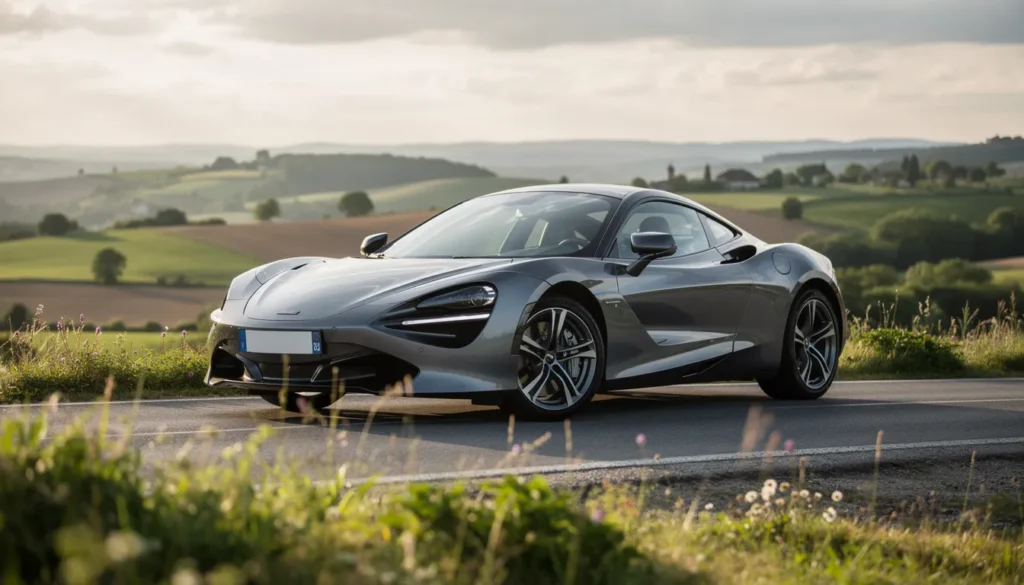

Lotus and the Hybrid: A Response to the Challenges of the Automotive Market
When discussing the automotive industry today, it is inevitable to refer to certain environmental pressures. The European Union imposes increasingly strict standards regarding CO2 emissions. In this context, any car manufacturer that wishes to evolve must demonstrate responsiveness and innovation. Lotus, famous for its lightweight and athletic sports cars, is not exempt from this requirement. Its decision to shift towards hybrid models illustrates its willingness to adapt to this new environment while maintaining its performance heritage.
Faced with stagnant traditional electric consumption and a market where hybrid vehicle sales are experiencing strong growth, Lotus is positioning itself adeptly. The strategy is manifest through the development of plug-in hybrid models aimed at attracting a still hesitant public towards electric vehicles. French customers, for example, are increasingly aware of the ecological impact of their cars. This poses a challenge but also an opportunity for brands like Lotus, which can capitalize on their expertise in sports performance while integrating more virtuous technologies.
In this context, it is worth asking: what innovations does Lotus intend to deploy? While waiting for the first hybrid model, currently in development, the brand has highlighted a new driving technology called "Hyper Hybrid." This technology, based on a 900 V electric architecture, should allow for extremely fast charging speeds. Consequently, a car like the Lotus Emira, converted to hybrid, could offer performance equivalent to that of its predecessors while minimizing its carbon footprint.
How will these changes be perceived by the European market? One thing is certain: it will be crucial for Lotus to conquer this market while respecting the timing of the transition to hybrid. Its CEO, Feng Qingfeng, has also stated that the first hybrid model should be launched in Europe in the autumn of 2026. This model will be the Eletre SUV, which is expected to showcase an impressive power of 912 horsepower, even in its hybrid version. Such performance could tip the scales favorably for Lotus against competitors like Bentley or Lamborghini, who currently dominate the high-end hybrid car market.
An Expanding Hybrid Range
To accompany the rise of hybrids, Lotus plans a varied range that will not be limited to a single SUV. Indeed, the brand aims to launch several models by 2027:
- A Hybrid Eletre SUV: As previously mentioned, this iconic model will be launched first.
- A Compact Vision X SUV: This vehicle targets a broader audience, positioned below the Eletre.
- Hybrid Sports Models: Lotus is committed to continuing its sporting heritage with a hybrid lineup.
Lotus is convinced that this transition to hybrid will resonate not only with today's customers but also with the future expectations of the automotive market. The brand's reputation, coupled with ecological initiatives and exceptional performance, constitutes an undeniable advantage during this transition. Moreover, such diversification can also mitigate the financial risk associated with the transition to fully electric models, especially at a time when tariffs on electric vehicles made in China are becoming increasingly strict.
| Model | Type | Year of Launch | Key Features |
|---|---|---|---|
| Eletre | Hybrid | 2026 | 912 horsepower, air suspension |
| Vision X | Hybrid | 2027 | Compact, optimized performance |
| Sports Models | Hybrid | Coming soon | Preserved sporting heritage |
The promise of these hybrid models is therefore not limited to fuel efficiency; it also encompasses a dynamic experience that could restore the emotional connection that is so dear to Lotus with its customers. The hybrid becomes a playground where performance and ecology meet, offering an attractive alternative for today's consumer.

Challenges to Overcome for a Successful Transition
Despite this euphemistic approach, the transition to hybrids will not be without challenges. First, it is essential for Lotus to clearly communicate the advantages of its hybrid models. This includes not only performance and cost savings but also the reduction of carbon footprint. Indeed, many people remain skeptical about the effectiveness of hybrids in a world that seems to be resolutely turning towards electric vehicles.
Witnesses to this trend can be found at auto shows and during presentations of new models. In talking about commitment to 'sustainable mobility', it becomes fundamental to ensure transparency about the environmental impacts of each model. The competition is not only among sports car manufacturers like Lamborghini but also encompasses a multitude of other brands that are heavily investing in electric vehicles. Thus, Lotus must more than ever prove that hybrid models represent a choice for the future, and not a transitional option.
Moreover, charging infrastructures pose another significant challenge. While technological advancements promote rapid development of hybrid models, it will be essential that the charging network keeps pace. Customers must be able to rely on a dense and efficient infrastructure to maximize the benefits of these vehicles. In this regard, Lotus seeks to engage with local players to improve charging capabilities and create solutions tailored to their customers.
Feedback on Luxury Models
The figures speak for themselves: some industry insiders are concerned about the rise of hybrid vehicles in brands like Bentley, where more than 68% of sales come from these models. Could this data inspire Lotus? In fact, these successful examples recommend a deeper examination of strategic choices. To this end, it becomes vital to regularly compare performance across all segments, adapt strategies based on customer feedback, and rethink communication around new products.
- Market Status: Understand public perception regarding hybrids.
- Partnerships: Establish collaborations to improve infrastructures.
- Performance Tracking: Analyze the performance of each model post-launch.
These initiatives aim not only to ensure a successful transition to hybrids but also to renew the fascination that brands like Lotus enjoy, founded on history, craftsmanship, and excellence.
Hybridization as a Four-Leaf Clover for the Future of Lotus
In summary, the upscale move and hybridization of vehicles represent much more than a simple market adjustment. It is, in reality, an ambitious demonstration of Lotus's innovative capacity. Companies that succeed in reinventing themselves are often those that go beyond initial customer expectations. By isolating hybrids as a tool for integrating pioneering technologies, Lotus takes another step toward an automobile that is not only high-performing but also environmentally friendly.
At this stage, the key lies in execution. How will each model be received by the public? The first test drives, sets of technical features, and advertising campaigns will play a crucial role in shaping the brand's perception. By shifting its sporting legacy to offer an ecological alternative, Lotus seeks to persuade those for whom a combustion engine remains inseparable from the pleasure of driving. By proposing robust hybrid choices, the brand aims to position itself for the future while honoring its many decades of automotive heritage.
A Commitment to a Sustainable Future
New regulations push manufacturers to innovate constantly. Ultimately, hybrids appear as a reasonable alternative for many customers while offering performance that reflects the very essence of Lotus. In 2026, as the hybrid Eletre makes its entry into the European market, all expectations will crystallize around this ambition. Lotus is determined to prove that it still has much to offer in the automotive landscape of tomorrow.
| Challenges to Overcome | Potential Solutions |
|---|---|
| Public Perception of Hybrids | Increase transparency and communication. |
| Insufficient Charging Infrastructure | Create local partnerships to improve access to charging. |
| Increased Competition | Focus on innovation and performance. |

Si vous souhaitez lire d'autres articles tels que Lotus persists in the path of hybrid: an ambitious demonstration in Europe, consultez la catégorie News.
Leave a Reply
Articles relatifs