Formula 1 Canadian Grand Prix: Charles Leclerc expresses his disappointment after qualifying, stating that his car had the potential to secure pole position.

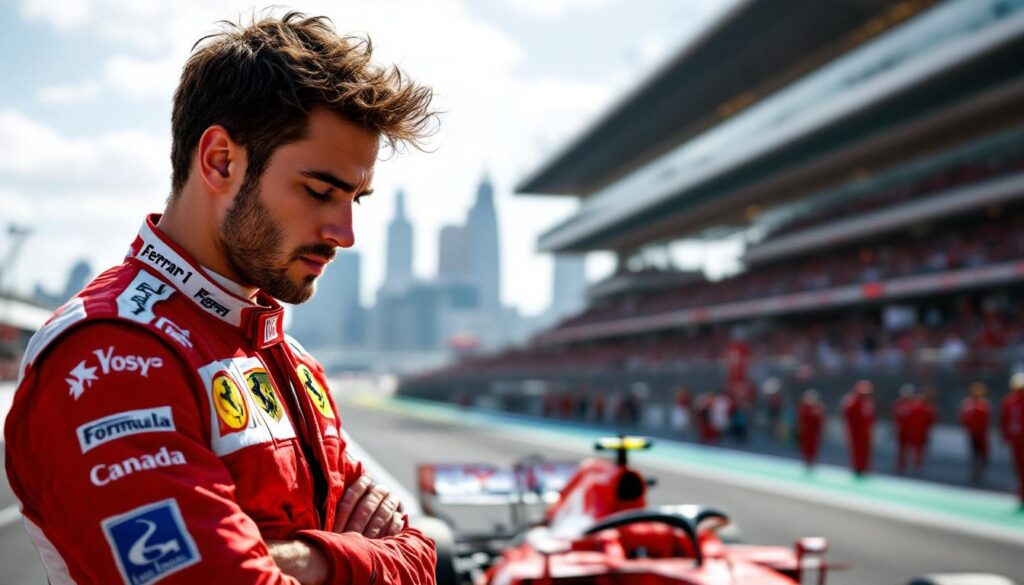

Jordan, a Formula 1 enthusiast, could not contain his frustration while watching the Canadian Grand Prix, particularly during the qualifying sessions. For him, as for many others, the spectacle of Charles Leclerc, driver for Scuderia Ferrari, was one that left a bitter taste. With his promising performances in free practice, Leclerc seemed to be playing in the big leagues, to the point of entertaining the idea of clinching pole position. And yet, a setback quickly turned everything upside down. This weekend in Montreal, the young Monegasque clearly had the potential to shine, but the reality of qualifying brought him a disillusionment that few fans could ignore.
Qualifying Analysis: A Missed Potential
During the qualifying session of the Canadian GP, Charles Leclerc faced unexpected challenges. Q3, the crucial moment when drivers try to get the best out of their machines, turned into a struggle for survival on the grid. Just when it seemed he was about to post an astonishing lap, his approach was disrupted by aerodynamic turbulence caused by the presence of other cars on the track.
This critical moment saw Leclerc skid off, resulting in a classification well below his expectations, with a qualifying position of 8th. This outcome made him miss a valuable opportunity that could have catapulted him ahead of his rivals. Instead, he found himself behind drivers like Lando Norris and Alex Albon, who also faced complications during this difficult session. Here is a table summarizing the performances of the main drivers during qualifying:
| Driver | Team | Grid Position |
|---|---|---|
| Max Verstappen | Red Bull Racing | 1 |
| Carlos Sainz | Ferrari | 2 |
| Lando Norris | Mclaren | 6 |
| Charles Leclerc | Ferrari | 8 |
| Alex Albon | Williams | 9 |
Leclerc expressed this disappointment, acknowledging that despite the difficulties faced, he had a good feeling with the car. Far from being just a disappointed driver, he took responsibility for this failure. He wondered if he should have chosen a different moment to go out on track and execute his fast lap. It is in adversity that true champions are measured, and Charles Leclerc seems ready to take this lesson to heart.
The Challenges on the Montreal Track
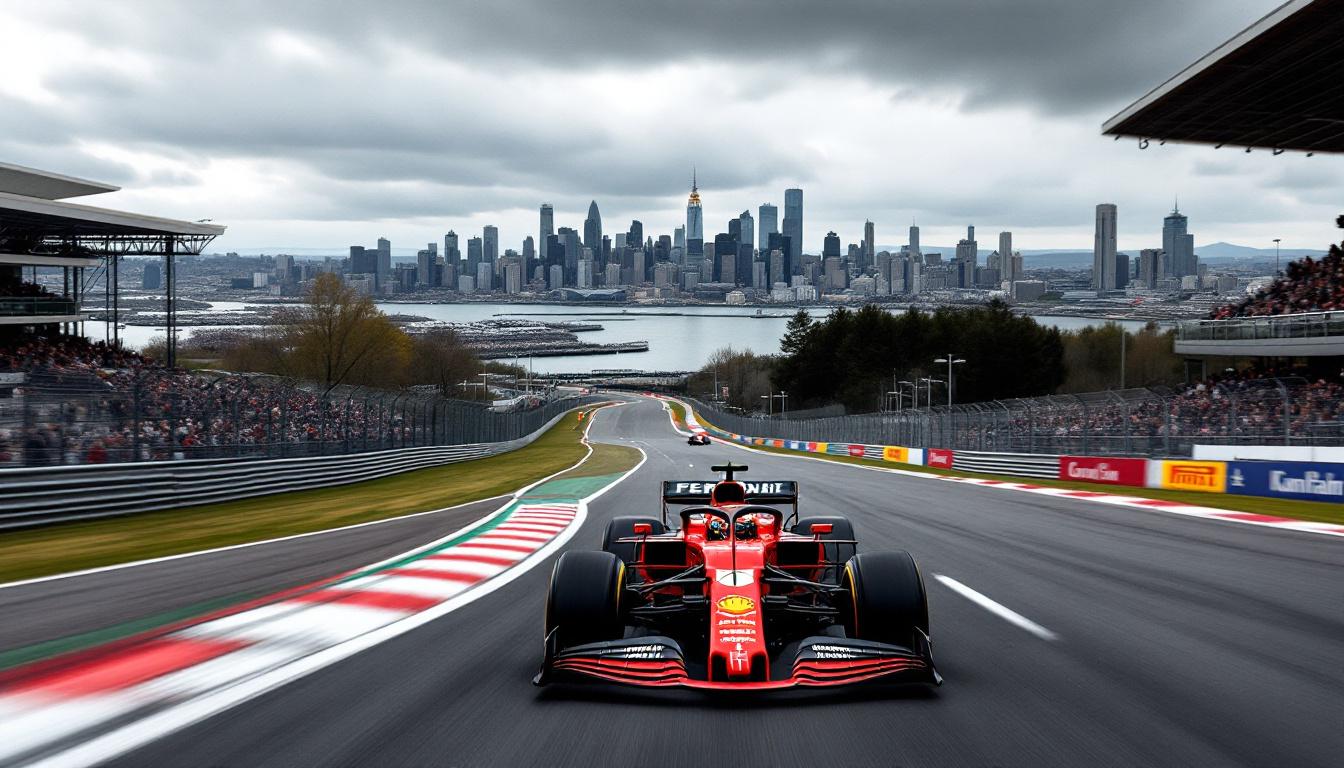
The Montreal circuit is notoriously famous for its unique demands. With its tight rails, it offers little margin for error. Each turn is an invitation to precision, and a small mistake can lead to disastrous consequences. As such, qualifying quickly transforms into a tactical and technical challenge. Leclerc, meticulous and always in search of perfection, faced a circuit that leaves no room for improvisation.
The conditions the day before, marked by free practice, added a layer of complexity. This reset left the drivers in a delicate situation: perform immediately at the highest level without too many reference points. Leclerc, having suffered an accident during practice, had to contend with consequences for the car's setup. It was crucial for him to regain confidence in his driving suit. He knew that victory waited only for those who dare to take risks. But how to take calculated risks in such a demanding environment? Here are some challenges that drivers need to consider:
- Tire management: teams must effectively choose tire compounds based on track conditions.
- Lap timing: understanding the right moment to hit the track is crucial to avoid traffic.
- Race strategy: anticipating competitors' maneuvers and managing one's own race pace.

Charles Leclerc's Sentiment and the Importance of Emotion Management
The ability to manage emotions after an experience like that of Charles Leclerc is crucial. At the end of his session, he was clear about his state of mind: frustration was real, and he was disappointed not to have maximized the potential of his Ferrari. This speaks volumes about his character. Taking responsibility for a disappointing result is a mark of maturity and commitment. Even though these moments are challenging, they can also become a driving force for the future.
In the heat of the action, emotions can sometimes cloud reasoning. Leclerc was able to remain clear-headed, recognizing that judgment errors, such as a misestimation of the gap to other cars, had an impact. This scenario confronts drivers with a constant dilemma: push the machine to the limit or stick to a more conservative strategy. In such moments, a driver’s reflections can become crucial and determine their ability to bounce back.
Leclerc also mentioned that the circuit required increased caution. Losing the rear in one of the turns is a testament to this. For the driver, understanding his vehicle and identifying its limits can make a decisive difference. And how could he avoid such incidents in the future? Here are some reflections he might consider:
- Increasing the analysis time for each lap to better understand the car's behavior.
- Anticipating the behaviors of other drivers to react accordingly.
- Adjusting his mental approach to maintain focus under pressure.
For Charles Leclerc, the road is not just paved with applause. Being a Formula 1 driver requires accepting the little control one has over external elements. By questioning himself, he could emerge as an even stronger driver in the race.
The Implications for the Ferrari Team
This incident in qualifying has implications that go well beyond the performance of a single driver. Ferrari, a team with so much historical wealth and a coveted track record in Formula 1, finds itself at a strategic crossroads. The results of qualifying reflect not only a driver’s capabilities but also those of the technical team that must work tirelessly on the car's performance.
Ferrari's engineers and mechanics will undoubtedly think about the adjustments to be made. Every minute counts in a Formula 1 race, and small changes can make a big difference. The feedback from qualifying could also influence decision-making for the upcoming races. From tire management Pirelli to fuel choices Shell, everything must be carefully revised.
The events of this weekend remind us that competition is broader and more complex than it seems. Ferrari will need to shine to justify its ambitions against rivals who wait for the slightest weakness. Here are some key factors to watch for the future for the team:
- In-depth performance data analysis to adjust the next strategy.
- Enhanced cooperation between drivers and engineers to maximize the performance of both cars.
- Specific preparation for each circuit considering particular characteristics.
For teams like Ferrari, every race is a new opportunity for redemption, but it's essential to learn from every missed occasion. For Charles, it represents an additional step toward the maturity of his driving.
The Role of Sponsors and Partners in Supporting the Team
Beyond performances on the track, another vital aspect of the world of Formula 1 is the financial and strategic support from sponsors. Prestigious brands like Heineken, Ray-Ban, Perrier water, SAP, and Cepsa must ensure that their investment pays off. The Canadian Grand Prix was not only a racing event but also an exposure channel for them. Every performance visibly impacts their brand image.
Charles Leclerc, as a prominent figure of Ferrari, becomes the face of these brands. They count on him not only to score points in the championship but also to appeal to their target audience. Events like this guide sponsors’ future decisions aligning with successful teams.
A good narrative performance, furthermore, can strengthen the relationship between driver and sponsors, leading to more sustainable partnerships. Here, the importance of results is highlighted. A list of Ferrari's partner brands helps to create a strong collective image:
- Heineken: Responsible for eco-responsible engagement and cross-promotion.
- Ray-Ban: Represents the style and elegance determining F1 drivers.
- Perrier water: Associated with sports performance and premium hydration.
- SAP: Provider of technology for data optimization and analysis.
- Cepsa: Present at every turn to show their support for sporting activities.
For Ferrari, managing these relationships is just as essential as developing top performance. The synergy between driving and marketing is crucial. Leclerc and his team must therefore keep their focus, as the speed on the track will determine the extent of the support they will receive back from the brands.
Si vous souhaitez lire d'autres articles tels que Formula 1 Canadian Grand Prix: Charles Leclerc expresses his disappointment after qualifying, stating that his car had the potential to secure pole position., consultez la catégorie News.
Leave a Reply
Articles relatifs