The end of low-emission zones: a vote by the National Assembly that raises questions

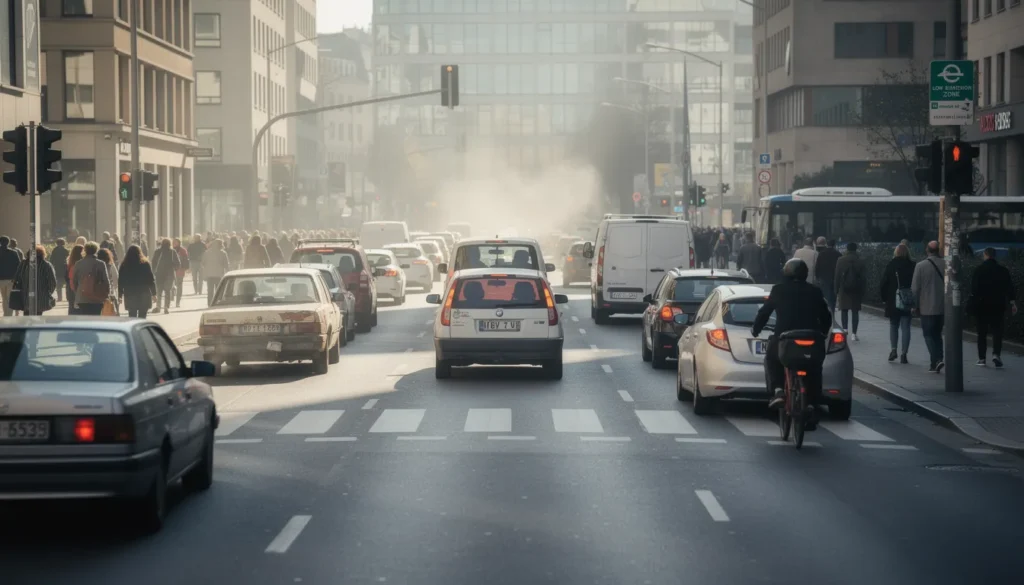

The debate on Low Emission Zones (LEZ) in France is far from over, but the recent vote by the National Assembly marks a significant turning point. Indeed, the deputies decided, during a session on May 28, to abolish this measure aimed at restricting access for the most polluting vehicles to large urban areas. This decision, motivated by considerations of social justice and freedom of movement, raises ambiguity regarding the implications for ecology and air quality in cities. What are the consequences for sustainable transport and sustainable development in France?
The stakes of low emission zones: a complex social and environmental context
The LEZ were introduced in France for the first time in 2018 and have been evolving ever since. Initially implemented in the Paris region, they were quickly expanded to other large cities. Their main objective was to reduce air pollution by banning access for older, polluting cars based on the Crit'Air vignette. The system was also intended to encourage motorists to opt for less polluting vehicles while promoting the use of renewable energy and public transport.
However, the implementation of these zones has sparked a genuine political and social storm. Many motorists expressed their dissatisfaction with what they saw as a social injustice. Indeed, replacing an old vehicle with a newer model is an investment that not all French people can afford. Meanwhile, vehicles that do not exhibit high levels of pollutant emissions, such as some recent SUVs, could circulate freely, leaving environmental advocates perplexed. These inconsistencies have proved to be critical points in the debate on LEZ.
The impacts on air quality and public health
Air quality in major French cities is not just an environmental issue: it concerns the health of millions of citizens. Studies have shown that air pollution is responsible for respiratory diseases, cardiovascular problems, and a decrease in life expectancy. By abolishing the LEZ, the National Assembly is treading on thin ice. How can the health of citizens be protected while taking into account the economic realities of motorists?
It is crucial to look beyond the measure itself and explore the potential consequences:
- Decreased sustainable urban mobility: abolishing the LEZ could mean increased dependence on polluting vehicles.
- Increased health risks: a rise in pollution levels could worsen public health problems.
- Impact on public transport: urban areas may need to invest more in public transport to compensate for the abolition of the LEZ.
| Issues associated with the abolition of the LEZ | Potential effects |
|---|---|
| Decreased air quality | Increase in respiratory diseases |
| Regulatory inconsistencies | Perception of social injustice |
| Increased car traffic | Decrease in public transport usage |
The political dynamics surrounding low emission zones
The National Assembly's vote in favor of the abolition of low emission zones has sparked passionate debates within the political class. The 98 votes for and 51 against reflect a diversity of opinions. The deputies of La France Insoumise denounced this decision as a measure of social justice, while others, like those from the Rassemblement National, argued in favor of freedom of movement.
This decision is not limited to the issue of LEZ. It is part of a broader debate on environmental regulation and sustainable transport policies in France. Environmental policy is often seen as a vast set of compromises. The need to promote the well-being of citizens in terms of sustainable transport must also be balanced with economic realities to enable a just ecological transition.
It then becomes relevant to ask: what role do deputies play in redefining environmental policy? It is clear that the deputies' choice regarding low emission zones reflects a profound questioning of established priorities.

Impression on public opinion and citizen mobilization
The issue of LEZ immediately captured public attention. Petitions were launched, demonstrations organized, and online debates intensified. Citizen participation has proved to be a critical element in political decision-making regarding urban mobility.
The experiences lived by citizens are often at the forefront. To illustrate this point, here are some feedbacks:
- Lives impacted: motorists explained how their daily lives have been transformed, between vehicle choices, financial difficulties, and impacts on their mobility.
- The need for alternative solutions: many people expressed their need for viable alternatives to polluting vehicles.
- Mobilization for a sustainable future: more and more citizens are getting involved, not only to fight pollution but to forge a more sustainable future.
Economic consequences of the abolition of low emission zones
Another essential aspect that deserves exploration is the economic impact of the National Assembly's decision. The LEZ were partially funded by the European Union, which invested billions to support the transition to more sustainable means of transport. The abolition of these zones could lead to significant financial consequences for the country.
It is crucial to examine:
- Loss of subsidies: France had planned to use nearly 40 billion euros of European aid to develop sustainable mobility infrastructures.
- Potential penalties: in the event of non-compliance with commitments made to the European Union, France could face severe penalties.
- Consequences for the automotive sector: car manufacturers could see a reversal in demand for electric and hybrid vehicles considering the reopening of urban areas to polluting vehicles.
| Potential economic consequences | Long-term effects |
|---|---|
| Loss of European funding | Increased difficulties in developing ecological initiatives |
| EU penalties | Increase in public deficit |
| Uncertainty for car manufacturers | Negative impact on the production of clean vehicles |
The future of urban mobility policies in France
In light of this abolition of the LEZ, questions about urban mobility arise with renewed urgency. What alternatives can emerge to continue promoting sustainable transport modes? What policies can genuinely contribute to improving air quality? These questions are fundamental for the future of sustainable development in France.
The future of urban mobility may take several avenues:
- Strengthening public transport: investing in more efficient and accessible public transport is a potential solution.
- Infrastructure for electric vehicles: increasing the number of charging stations for electric vehicles could encourage their adoption.
- Education and awareness: promoting a collective awareness of environmental issues could encourage citizens to change their transportation behaviors.
At the crossroads of economic, social, and environmental issues, the question of LEZ is emblematic of a challenge whose repercussions touch every citizen. Upcoming decisions must be made with an eye towards social justice and ecology, while keeping in mind the necessity of sustainable development.
Si vous souhaitez lire d'autres articles tels que The end of low-emission zones: a vote by the National Assembly that raises questions, consultez la catégorie News.
Leave a Reply
Articles relatifs