Ford favors Renault for its European electric city cars, neglecting Volkswagen

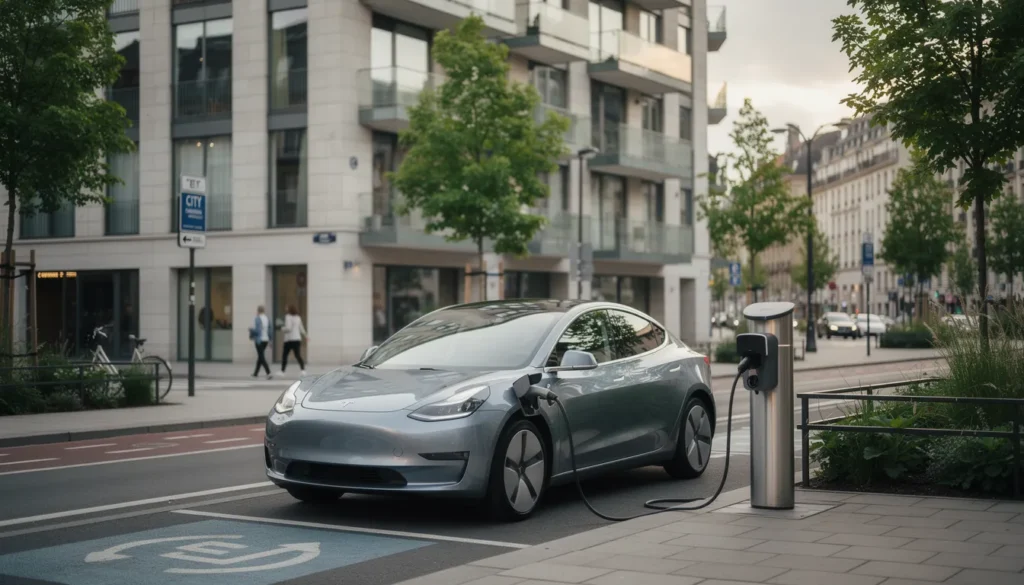

In a turn that makes classic automotive frenzy seem like a true absurd farce, Ford has decided to take a plunge into the electric pool by partnering with Renault for its European city cars. Yes, you heard that right, the same Ford that was launching noisy V8s at every corner has hit the brakes to manufacture small electric cars, and that, without John Wayne to accompany him.
A choice that is least unexpected
The new electric city cars on the Ampère1 platform, intended to accommodate the Renault and Ford brands, will arrive by 2028. At that point, who knows, maybe the whole world will have made an ecological turn and drones will deliver our groceries. But for now, the troubling shift towards sobriety is leading Ford to make a choice that would have easily been labeled absurd a few years ago: to forgo Volkswagen, the giant that, at first glance, should have been the ideal partner for the production of electric city cars.
The behind-the-scenes of the partnership
Ford has carefully analyzed its supply chain like a chef inspecting his ingredients before concocting a dish. Jim Farley, at the helm of Ford, had the audacity to declare that the choice of Renault rests on more favorable costs than those of Volkswagen. Imagine, the boss of an iconic brand prefers a chocolate croissant to a schnitzel in this automotive kitchen.
A heavy blow for Volkswagen, which has not only stepped in the dish but also into slicing traps. While Ford praises Renault, one wonders if Volkswagen, which is desperately trying to stay the course amid foreign competition, has misjudged the public's taste for these electric city cars.
The future of small electric cars in Europe
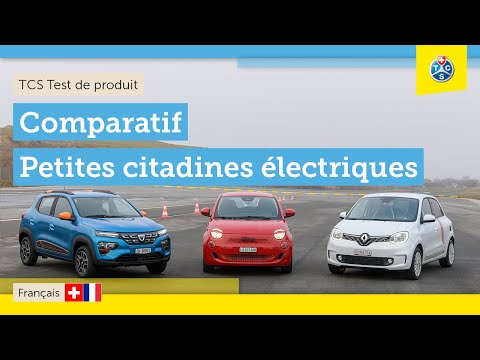
It is not surprising that Renault is asserting itself in this segment where it already produces the electric Renault 5 with resounding success. If the news is to be believed, its factory in Douai is in high gear: 100,000 vehicles are rolling off its production lines like sausages at the beer festival. But what does all this tell us about the automotive industry in Europe? The energy transition is underway, but there is a yo-yo effect among actors who seem to be entangled in their own strategy.
Where have the Volkswagens gone?
This whole story is like a movie whose script was written by an enthusiastic intern. Volkswagen, which was surfing the wave of SUVs with its ID.4 and ID.5, sees its dominance fading away. With this Ford-Renault alliance, we are witnessing a reversal of fortunes. Indeed, electric cars have taken center stage, and who would have believed such a turnaround was possible? Suddenly, Volkswagen's well-oiled recipe seems less attractive to car enthusiasts.
The road to sustainable mobility
Times are changing, and the race towards sustainable mobility is just beginning. We envision a future where things do not revolve around an Iron Man bar but around charging stations. Ultimately, Ford, with Renault by its side, is redefining the landscape of electric cars in Europe — and perhaps one day, it would be comparable to a flame in a starry night, but for now, the path still seems paved with dubious decisions and references to unlikely agreements.
The challenge ahead for the future
The two manufacturers are busy modifying technologies to integrate software, but who said that the synergy between two automotive giants would not be fraught with obstacles? The future will be exciting, but until proven otherwise, caution seems to be in order. To stay afloat, the players in the automotive industry must not only change their strategy but also prove that they are capable of turning the page, one electric car at a time.

Source: www.macg.co
Si vous souhaitez lire d'autres articles tels que Ford favors Renault for its European electric city cars, neglecting Volkswagen, consultez la catégorie Volkswagen.
Leave a Reply
Articles relatifs