Should electric cars be banned on ferries to Corsica?

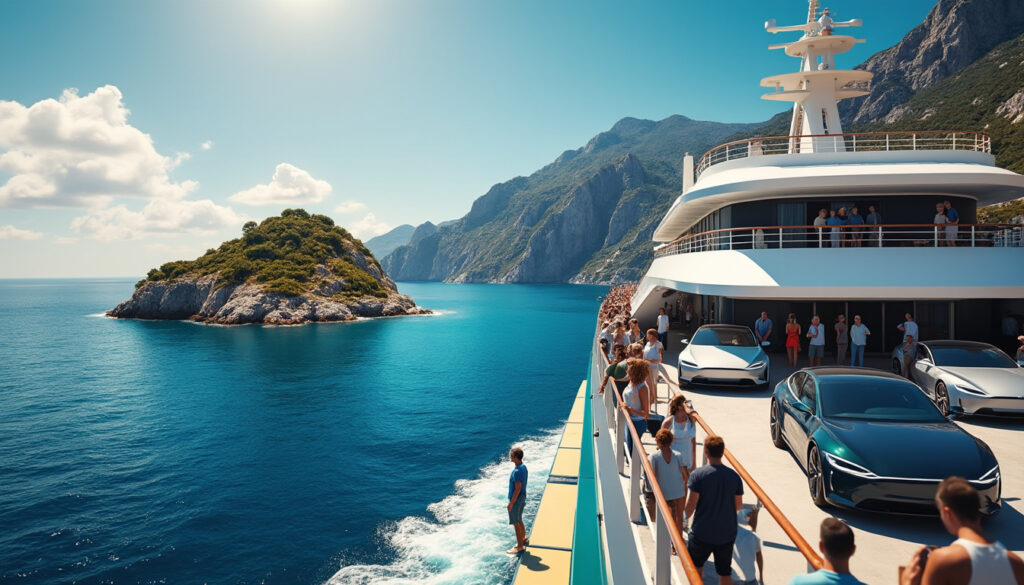

Maritime transport between the mainland and Corsica is an issue that raises many debates today, particularly concerning the shipping of electric vehicles. As the transition towards more sustainable modes of transport is underway, some voices are calling for a temporary ban on electric vehicles on ferries. This concern is based on safety considerations, especially in the event of a fire. With a gradual increase in the number of electric vehicles on the roads, how might these questions impact maritime transport to Corsica?
The transport of alternative fuel vehicles by ferry
The maritime sector has always been an essential pillar of transport, especially for islands like Corsica. Ferries, which connect the mainland to the island, transport a multitude of vehicles each year. Among them, a growing number consists of electric, hybrid, and other alternative energy vehicles.
Currently, shipping companies such as Corsica Ferries, Moby Lines, SNCM, and Corsica Linea welcome both thermal and electrically charged vehicles on their ships. However, these companies impose specific regulations to ensure safety on board. It is essential to comply with safety guidelines, as the transport of electric vehicles requires additional precautions.
Regulations in place for electric cars
Currently, there is legal ambiguity regarding the conditions of boarding for electric cars. Indeed, several companies, facing the increase in this type of vehicle, have begun to adopt rules. For example, Corsica Linea has integrated the requirement for boarding electric vehicles with a battery charged to less than 30%. Moreover, a rigorous check of the charge status of these batteries is crucial, although it seems that the checks are often insufficient.
Another challenge is related to the charging infrastructure in Corsica. With few charging stations available, many drivers feel compelled to charge their vehicle to 100% before departure. This raises the question: if certain measures are not implemented, will safety take a back seat?
A look towards the next step: the implications of the energy transition
The issue of safety should not be taken lightly. By 2025, with the anticipated increase in the number of electric cars, it is essential to question whether the legal framework surrounding their transport needs to be strengthened. Indeed, current legislation is slow to keep up with this transition. This has also led to calls for a temporary ban on electric vehicles from ferries until adequate solutions are studied and implemented.
In this context, how are some maritime companies, like Baleària or La Méridionale, responding to these new concerns? Their boarding methods may provide answers to this question, and transparency in risk management is essential to establish trust between passengers and companies.
- Safety measures to undertake for the maritime transport of electric vehicles:
- Check the charge status before boarding
- Specific zones for parking electric vehicles on board
- Training personnel on risks associated with electric vehicles
- Installation of appropriate new extinguishing devices
Ferry: this incongruous rule raises concerns among car drivers
The new policy applied on certain ferries closely examines the growing importance of electric cars in maritime transport. A group of engineers, including a recently retired engineer who has received considerable attention, has launched a petition asking for a moratorium on electric cars aboard ferries. The main reason for this petition is based on the lack of safety measures adapted to modern automotive technology.
Statistics indicate that an electric vehicle does not necessarily catch fire more often than a thermal vehicle. However, the consequences of a fire on a ferry are devastating. Incidents, such as the sinking of the cargo ship Felicity Ace, which was transporting automobiles, highlight the potential dangers when a fire cannot be effectively contained on board. The petition therefore calls for robust measures specifically tailored for the transport of electric vehicles to be implemented before allowing their transport.
The drivers' perception of the imposed limitations
Consumers have varied opinions on these regulations. While some feel comfortable with the imposed restrictions, others believe that they unfairly penalize electric vehicle owners. Indeed, actors in this sector, like Traghetti Toscani or CTN (Compagnie Tunisienne de Navigation) are trying to find common ground to reassure their passengers. Opinions are often linked to multiple factors:
- The awareness of passenger safety.
- The dependence on electric vehicles.
- The environmental impacts of transportation choices.
It is crucial to study how these choices reflect concerns about safety and the future of maritime transport. Accepting the limitations may require efforts from companies to ensure that customers understand the rationale behind these measures.
In favor of a temporary ban on electric vehicles on ferries
The proposal for a moratorium on boarding electric vehicles is certainly a growing concern. The main argument in favor of such a ban is based on the current state of safety at sea. It has been observed that the demand for special precautions is increasing as new solutions are being developed.
Indeed, several experts point out that although they are less likely to catch fire, once an electric vehicle is on fire, the buildup of heat in lithium batteries can lead to a thermal runaway, a phenomenon that is difficult to control. Therefore, particular attention needs to be paid to existing emergency protocols. It is imperative that fire detection and suppression systems be implemented on these ferries.
Comparison of safety measures across Europe
It is also interesting to note that some European countries have taken stricter measures regarding electric vehicles on their ferries. For example, Greece has imposed severe restrictions to limit their transport. Here is a comparative table of measures applied in different countries:
| Country | Applied restrictions | Recommended safety measures |
|---|---|---|
| Greece | Restrictions on electric vehicles on ferries | Separate storage zones, charging recommendations |
| France | No ban, but specific regulations | Dedicated zones, charge level checks |
| Sweden | Temporary bans depending on battery status | Staff training, suppression devices |
These variations show the lack of unified standards regarding the boarding of electric vehicles on ferries in Europe. A more coherent and harmonized legislative approach seems necessary to ensure safety while maintaining the fluidity of maritime transport.
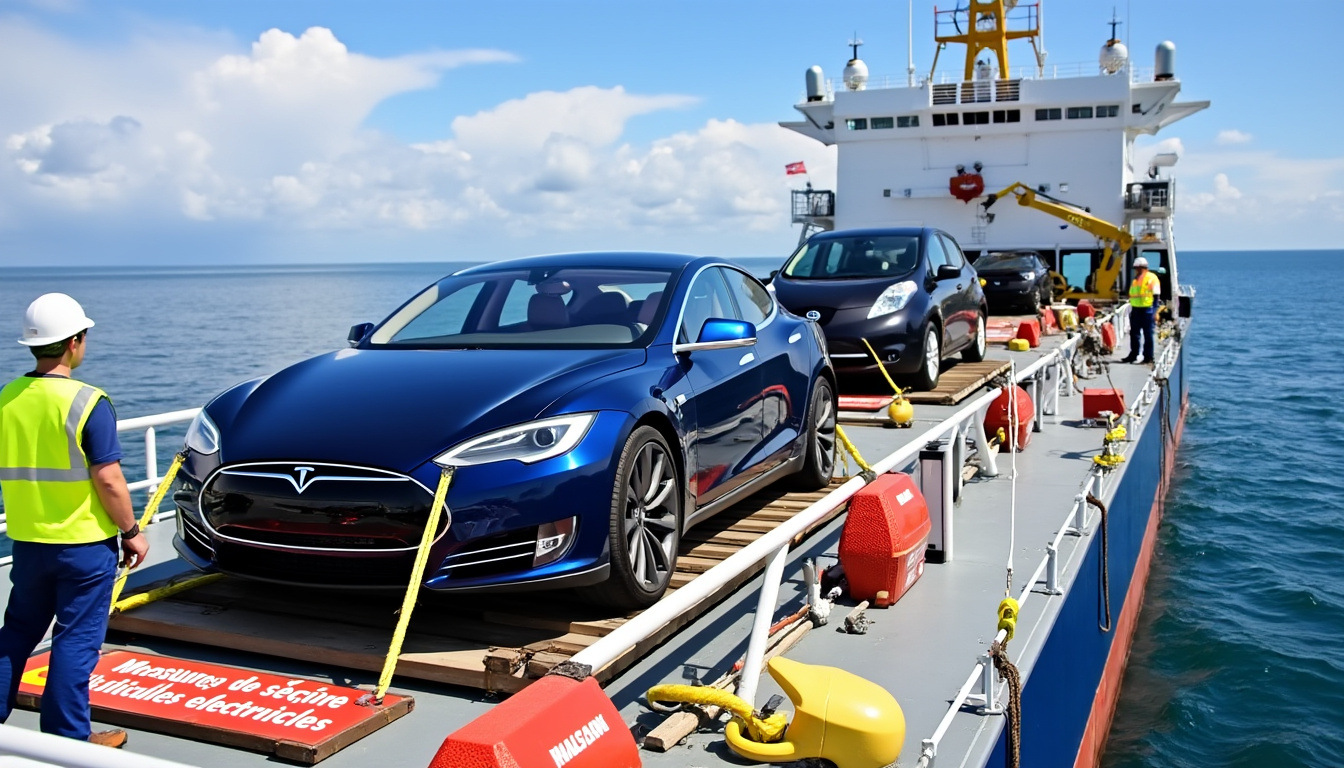
Electric cars: is it better to take another option to Corsica by ferry?
As shipping companies continue to adapt to the growing demand for ecological transport options, the notion of safety persists. Travelers must be well-informed about the various options available for reaching Corsica. Given the increasing restrictions on ferries, it may be wiser to consider alternatives.
Alternative routes, such as using public transport in Corsica or renting thermal vehicles on the island, could be viable solutions. Additionally, maritime carriers are continuously evolving to address these concerns. Innovations, such as providing hybrid vehicles or shared transport solutions, could prove interesting for travelers.
The role of shipping companies in this transition
As companies like La Méridionale and Corsica Linea take measures to ensure safety, they are also considering integrating new technologies for a safer crossing. This could include improving fire detection and developing specific protocols. The role that these companies play in implementing these innovations will be crucial.
In the end, the question of whether to temporarily ban electric cars on ferries could become a secondary issue if solutions with a better regulatory approach emerge.
- Some potential developments for shipping companies:
- Develop specific safety protocols for electric transport.
- Integrate new fire monitoring and detection technologies.
- Collaborate with maritime authorities on clear legislation.
- Promote education and awareness among users about risks and solutions.

Si vous souhaitez lire d'autres articles tels que Should electric cars be banned on ferries to Corsica?, consultez la catégorie Non classé.
-
Lysandre Dubois says:
Il est essentiel de garantir la sécurité lors du transport des véhicules électriques par ferry.
-
Il est essentiel de garantir la sécurité des passagers avant d'autoriser les voitures électriques sur les ferries.
-
Il est crucial d'assurer la sécurité des passagers. Un débat nécessaire sur les véhicules électriques!
Leave a Reply
Articles relatifs