Volkswagen announces a price reduction for its electric vehicles starting next year

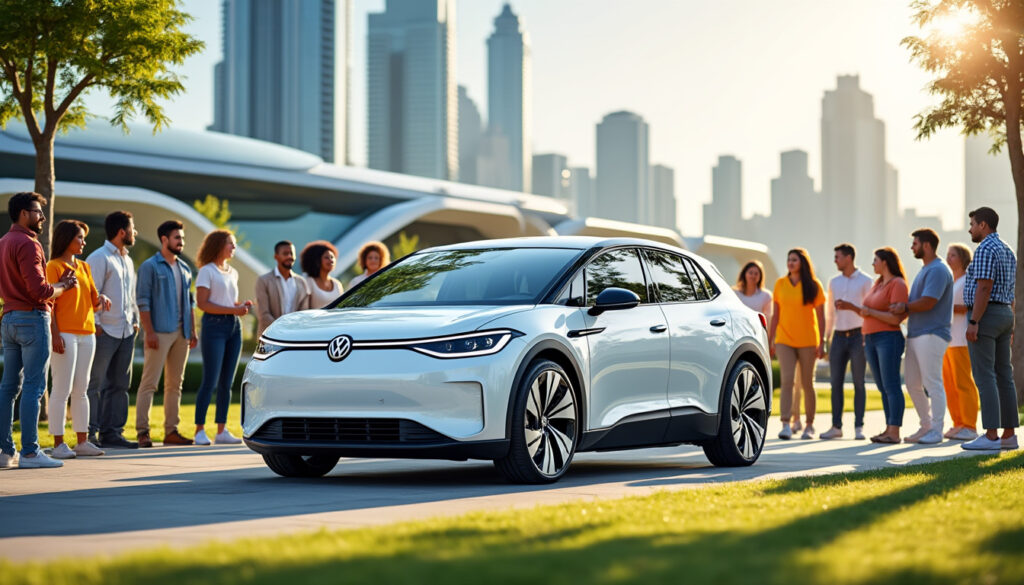

The stakes related to the energy transition are more crucial than ever, and in this context, Volkswagen's announcements are generating increasing interest. Indeed, the German manufacturer has revealed its plans to lower the prices of its electric vehicles starting next year. This decision could transform the dynamics of the automotive market, making electromobility more accessible to a wider audience.
A clear strategy to counter rising prices
The issue of price remains one of the main obstacles to the adoption of electric vehicles. Volkswagen seems to have understood that without a significant reduction in costs, many consumers will continue to turn to combustion models. Thus, by 2025, the brand plans to introduce a set of measures aimed at reducing the costs of its models.
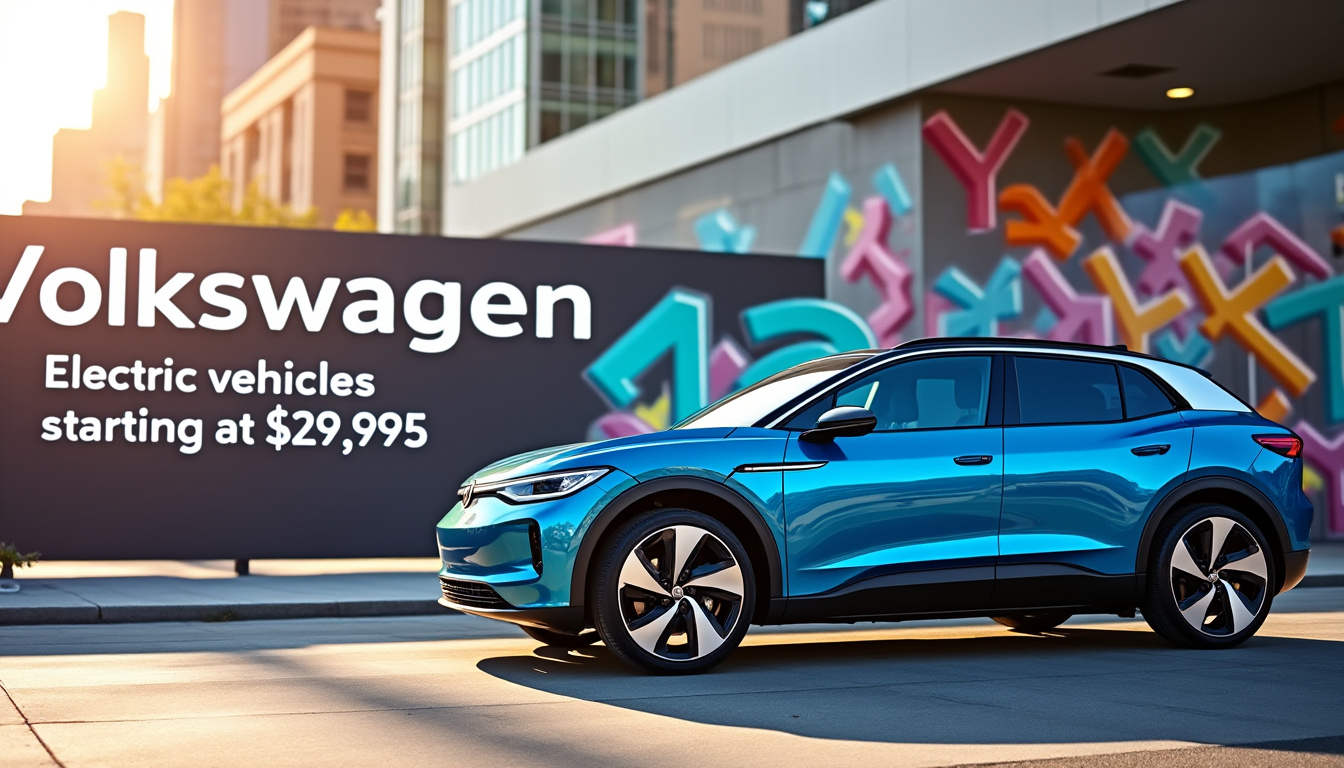
The ID range and its attractive prices
As part of this initiative, Volkswagen announced that several models from its ID range will see their prices lowered. For example, the ID.3, which has made a splash in recent years, will be offered at less than 40,000 euros, with a stated reduction of 3,000 euros. This increasing accessibility could attract many customers hesitant to switch to electric.
Here is a summary table of the new announced prices:
| Model | Price before reduction | Price after reduction | Announced savings |
|---|---|---|---|
| ID.3 | 43,000 € | 40,000 € | 3,000 € |
| ID.4 | 50,000 € | 45,000 € | 5,000 € |
| ID.5 | 52,000 € | 40,740 € | 11,260 € |
| ID.7 | 61,140 € | 46,840 € | 14,300 € |
This approach is all the more relevant in a context of rising competition. Other brands, such as Renault and Peugeot, are already offering electric vehicles at competitive prices. By positioning itself this way, Volkswagen aims to attract not only its traditional customers but also a new audience, increasingly concerned about the environment.
Government support and purchase incentives
To support these price reductions, Volkswagen has also called upon the environmental bonuses implemented by the government. For example, an Eco bonus of 4,000 euros will be applied to the ID.3, ID.4, and ID.5 models, helping to enhance the attractiveness of these vehicles. These bonuses will help reduce the purchase cost for many potential buyers.
These initiatives show that Volkswagen intends to play a major role in the electric vehicle market, facing competitors like Tesla, Nissan, and even BMW, which are already well established.

Innovations and technological advancements: the pillar of price reduction
Beyond price reductions, Volkswagen is also relying on technological innovations to make its electric vehicles more affordable. The new battery technology, particularly lithium iron phosphate (LFP) batteries, which will be integrated into future models, promises a significant reduction in costs.
The advantages of LFP batteries
LFP batteries, which are starting to gain popularity in the industry, are cheaper to produce than those based on nickel and cobalt. Here are some of their advantages:
- Reduced production cost by 20 to 30% compared to traditional batteries.
- Generally longer lifespan.
- Better resistance to high temperatures.
- Significantly reduced fire risk.
Although these batteries have a lower energy density, the optimization of their costs allows bringing the prices of electric vehicles closer to those of thermal models, thus making the purchase of an electric car more economically reasonable.
The ID.2: a flagship model coming in 2026
Expected in 2026, the ID.2 will be the first model to benefit from this technology. Positioned as a compact car, its price should be around 25,000 euros. This model could become one of the first electric vehicles truly accessible to consumers. This launch also gives Volkswagen the opportunity to bridge the existing price gap with combustion models.
This choice of technology aligns with trends in the international market. Indeed, some players such as Ford and General Motors are also exploring similar options to remain competitive in the electric vehicle sector.
A changing competitive landscape
Volkswagen's decisions do not take place in a vacuum. The market for electric vehicles is constantly evolving, and other players such as Citroën, Kia, Fiat, and many others are closely monitoring this dynamic. As the pressure to reduce prices intensifies, these brands will also need to adapt their strategies. However, the situation is complex: new environmental regulations, the cost of raw materials, and the rise of new entrants in the market complicate matters even further.
The first beneficiaries of this dynamic
With the introduction of new models at reduced prices, several categories of consumers could benefit from this development:
- Young drivers looking for affordable vehicles.
- Families wishing to invest in a spacious car while staying within budget.
- Urban users turning to ecological and economical solutions.
It is undeniable that the price drop, combined with an increase in supply and technological improvements, will strengthen the appeal of electric models, especially for those who were previously skeptical about their true reliability/price ratio.
Long-term vision: what direction for Volkswagen?
Volkswagen is adopting a proactive approach to anticipate upcoming changes in the automotive industry. This approach is also the basis for strategic partnerships with other companies, including Xpeng and Rivian, to improve embedded software and enhance connectivity in its models.
This commitment to pushing the boundaries of innovation, coupled with a cost reduction strategy, aligns with the group’s ambitions for the coming years. It aims to position Volkswagen not only as a leader in electric vehicle technology but also as a responsible and accessible player.
The future outlook for electric vehicles in Europe
In 2025, the market for electric vehicles in Europe is set to undergo a major evolution. As electric consumption technology improves and charging infrastructures intensify, forecasts suggest a strong enthusiasm from consumers. Volkswagen, as a key player, has an important role to play in this transformation. The possibility of lowering prices while incorporating innovations is becoming a reality.
Consumer expectations are evolving
The modern consumer is becoming increasingly aware of the environmental implications of their choices. Consequently, the demand for less polluting and more economically viable cars is strengthening. Various studies also show that:
- 75% of potential vehicle buyers use price as the most determining criterion.
- More than 60% of consumers are willing to consider an electric model if financial aids or price reductions are implemented.
- More than two-thirds of customers prefer brands that invest in sustainable practices.
This shift in expectations invites manufacturers to adapt, and Volkswagen is taking the lead in this transition. With these price reductions, the manufacturer could redefine its image to appeal to a new clientele attracted by more affordable and environmentally friendly options.
The challenge of charging infrastructures
If price reductions make electric vehicles more accessible, and technology continues to advance, another challenge remains: that of charging infrastructures. For the transition to be complete, an effective charging network must be established.
Collaboration with governments and private sector companies will be essential to build a reliable network of charging stations. This initiative goes beyond the simple marketing of cars; it involves creating a complete ecosystem favorable to electromobility.
In conclusion, Volkswagen's announcement is at the heart of an ambitious movement aimed at making electric vehicles more accessible. At a time when environmental concerns are growing and consumers are seeking sustainable alternatives, these initiatives represent a golden opportunity to redefine the European automotive landscape. As the future becomes a major commercial issue, industry players must act quickly and effectively to secure a prominent place in the future of cars.
To learn more about the reductions and available aids, visit this link.
Si vous souhaitez lire d'autres articles tels que Volkswagen announces a price reduction for its electric vehicles starting next year, consultez la catégorie Uncategorized.
Leave a Reply
Articles relatifs