Volkswagen plans to market electric cars that can travel over 1,000 km in Europe

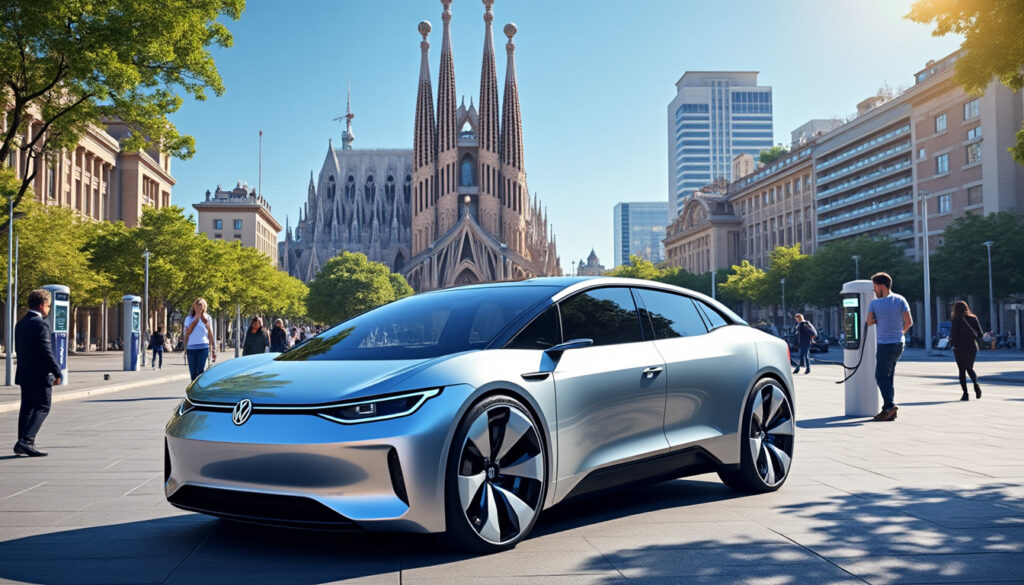

The electric car market is in full swing, with major players such as Volkswagen, Tesla, Nissan, and BMW competing in innovation. In this context, Volkswagen is beginning to consider bold solutions, notably the commercialization of models equipped with a range extender, promising performance that could appeal to an audience anxious about range concerns. But behind this promise lies a complex regulatory and technical reality. This article therefore examines Volkswagen's strategy and the foreseeable future of electric vehicles.
The Current Landscape of the Electric Car Market in Europe
In recent years, the automobile market in Europe has undergone a radical transformation. With European Union regulations mandating that sales of combustion engine vehicles become obsolete by 2035, a genuine race toward electrification has begun. Manufacturers such as Renault, Peugeot, Citroën, and Audi are launching the production of 100% electric models, responding to the growing demand from consumers.
The Range Challenges for Consumers
Motorists' fears regarding the range of electric vehicles are still a current issue. Despite significant advancements in battery technology and the expansion of charging infrastructure, many still hesitate to abandon combustion engines.
- Charging Infrastructure: Although it has significantly developed, lack of uniformity and waiting times can be problematic.
- Cost: Electric vehicles, while increasingly accessible, often remain more expensive to purchase than their combustion counterparts.
- Performance: Charging speeds and actual range can vary depending on many factors such as weather conditions.
Technological innovations, including solid-state batteries, are expected to radically change this picture in the future, offering not only greater range but also enhanced safety. Concurrently, growing regulations must be taken into account.
| Manufacturer | Model | Range (km) | Price (€) |
|---|---|---|---|
| Volkswagen | ID.4 | 500 | 45,000 |
| Tesla | Model 3 | 614 | 50,000 |
| Renault | Megane E-Tech | 450 | 35,000 |
| Nissan | Leaf | 385 | 30,000 |
The Rise of Range Extenders: A Solution for Volkswagen
One of the ideas emerging in this context is that of cars with a range extender. This technology, while appealing on paper, poses several practical questions. The principle relies on the integration of a small combustion engine for battery recharging purposes, without being connected to the wheels. It is a concept that has been exploited by models such as the BMW i3 and could be integrated into future Volkswagen models. Indeed, the brand's CEO, Oliver Blume, has expressed growing interest in this approach.
The Regulatory and Technical Limits of Range Extenders
Despite the touted advantages of range extenders, this technology faces the backlash of existing regulations in Europe. Indeed, these vehicles are not considered electric cars for private use. This means that they do not benefit from the ecological bonus, but are instead subject to penalties due to their weight. This further complicates their adoption in the market.
The Legal Framework in Question
The legal framework governing the sale of electric cars imposes certain rules that Volkswagen cannot ignore:
- Eligibility for Bonuses: Range extender cars do not receive financial support, unlike 100% electric vehicles.
- Weight penalties: Every kilo over 1.6 tons incurs an additional tax, which could make some models too expensive for the market.
- Import Duties: Producing these vehicles outside of Europe incurs additional costs that are passed on to the consumer.
Consequently, manufacturers such as Volkswagen must consider these elements in their development strategy to remain competitive against pure electric alternatives offered by other brands such as Tesla, BMW, or Mercedes-Benz.
| Element | Consequences |
|---|---|
| No ecological bonus | Long-term financial sacrifices for the consumer |
| Weight penalty | Higher final price for certain vehicles |
| Import Duties | Adjustment of costs for imported vehicles |
A Future Strategy for Volkswagen
Despite the challenges posed, Volkswagen appears determined to move forward. The manufacturer has already recorded over 80,000 pre-orders for its Scout model in the United States, poised to introduce this technology to consumers. This demonstrates an offensive willingness in the face of the increasing competitiveness of the market.
Long-Term Vision: Sustainability and Innovation
In the face of the rising environmental concerns, it is essential for automotive players to redefine their objectives. For Volkswagen, the goal is clear: to become the leader in the electric car market while integrating sustainable innovations.
- Affordable models: Volkswagen plans to offer vehicles just below 20,000 euros, a tactic that could revolutionize access to electric mobility.
- Continuous expansion: As countries like France and Germany push for emission reductions, Volkswagen continues to explore partnerships, particularly in China, to reduce costs and expand its range.
- Consumer-Centric Approach: By understanding the real needs of users, Volkswagen aims to develop tailored solutions that address their concerns.
The Impact of Competition on Volkswagen's Strategy
In this struggle for innovation and market share, Volkswagen is not alone. Other giants like Nissan, Opel, and Mercedes-Benz are also reshuffling the deck with their technological advancements and reliable products. The emergence of models such as the Mercedes-Benz EQC or the Nissan Ariya aims to provide robust and high-performing alternatives for motorists.

Permanence of Market Challenges
The road ahead for Volkswagen looks tumultuous, and it is essential for the manufacturer to anticipate market laws, consumer behavior, and evolving environmental standards. The following questions arise:
- How can Volkswagen differentiate itself in terms of technology?
- What will be the impact of regulatory changes on its future products?
- Will the integration of a range extender appeal to consumers, or will it be seen as a backward step in favor of combustion engines?
In summary, the future of Volkswagen appears promising, but it will require skillful navigation through an automotive landscape in full renaissance.
Si vous souhaitez lire d'autres articles tels que Volkswagen plans to market electric cars that can travel over 1,000 km in Europe, consultez la catégorie Non classé.
-
Alaric Dupont says:
L'idée des voitures avec prolongateur de portée est intéressante, mais les enjeux réglementaires restent préoccupants.
-
Volkswagen semble vraiment s'engager dans l'avenir électrique, c'est encourageant pour les consommateurs.
-
Volkswagen semble sur la bonne voie, mais il reste des défis à surmonter pour séduire les consommateurs.
-
L'idée des voitures à prolongateur d'autonomie est intéressante, mais qu'en est-il de la réglementation ?
Leave a Reply
Articles relatifs