Vietnam, a promising destination for car manufacturers



Vietnam, with its 100 million inhabitants and a booming economy, is positioning itself as a strategic location for the automotive industry. Both local and foreign manufacturers are starting to explore the opportunities offered by this dynamic market. In 2025, as urbanization and environmental concerns become pressing, the Vietnamese automotive industry is taking a turn. This country is looking to diversify its offerings while attracting industry giants. The situation is all the more fascinating as it is marked by the emergence of local brands like VinFast, while welcoming international players such as Toyota, Ford, and Hyundai.
The challenge of an expanding market
Vietnam continues to transform. New roads, improved infrastructure, and a growing manufacturing network attract investors' attention. Foreign car manufacturers have understood this well. For example, Skoda, a subsidiary of Volkswagen, recently decided to establish a factory in the dynamic province of Quang Ninh. This choice is part of a broader strategy aimed at establishing a strong presence in Southeast Asia.

Why is Vietnam so appealing? Here are a few reasons:
- A young and growing population: with nearly 60% of the population aged under 35, the country represents a vast potential market.
- An expanding middle class: rising incomes lead to increased demand for personal vehicles.
- Rapid urbanization: cities like Hanoi and Ho Chi Minh City need to meet growing mobility challenges.
- Improving infrastructure: the Vietnamese government is making massive investments in infrastructure, thereby facilitating access to markets.
As part of the government strategy, Vietnam is also aiming for increased local production of spare parts to reduce its reliance on imports. This also contributes to stabilizing the market and supporting local manufacturers. The opportunities are undeniable, but the challenges are also present.
| Factor | Impact |
|---|---|
| Demographics | Vast potential market with a booming middle class |
| Urbanization | Growing demand for mobility, need for practical automobiles |
| Infrastructure | Continuous improvement of roads and logistical connections |
As competition intensifies, one question remains: how will companies adapt to this rapid evolution? Elon Musk once said that the future belongs to those who see opportunities before they become obvious. This applies perfectly to Vietnam. Production discrepancies, raw material costs, and innovation needs become crucial factors to consider.
The giants of the automotive industry in Vietnam
The Vietnamese automotive landscape is populated by big names like Honda, Nissan, Kia, and Hyundai. Each player has its own approach to establishing itself in this unique market. For example, Ford recently launched an initiative to expand its distribution network in the country. This strategy aims to make its models more accessible to Vietnamese consumers who seek vehicles that are both modern and meet their requirements.

Here are the main automotive companies present in the Vietnamese market:
- Toyota: market leader with a diverse offering ranging from city cars to SUVs.
- Honda: focusing on motorcycles and fuel-efficient vehicles.
- Ford: concentrated on SUV and pick-up models.
- Hyundai: emerging as a major player with an extensive dealer network.
- VinFast: a newcomer making waves by launching electric cars.
Each of these companies faces challenges: meeting high quality expectations while maintaining competitive prices. Vietnamese consumers are becoming increasingly demanding and seek connected and eco-friendly vehicles. In this regard, the rise of electric vehicles, driven by VinFast, is particularly significant. By 2025, this local brand's ambition is to strengthen its presence internationally with models suited to global requirements.
| Manufacturer | Type of vehicle | Strategy |
|---|---|---|
| Toyota | SUVs, sedans | Diverse offering, focus on innovation |
| Honda | Motorcycles, compact vehicles | Focused on sustainability |
| Ford | SUVs, pick-ups | Expansion of distribution network |
| Hyundai | Electric vehicles | Highlighting technology and design |
| VinFast | Electric vehicles | International future, impact of environmental standards |
Innovation in this sector is paramount. Thinking differently is key. Companies must adapt not only to emerging trends but also to the needs of each market. In reality, the massive sums invested in research and innovation testify to this commitment.
The rise of electric vehicle technologies
As 2025 approaches, the phenomenon of electric vehicles is gaining momentum in Vietnam. With cities facing pollution and mobility challenges, the electric car appears as a solution for the future. VinFast is at the forefront of this movement, capitalizing on the rise of renewable energies. Other brands like Toyota and Hyundai are closely following suit, developing similar projects.
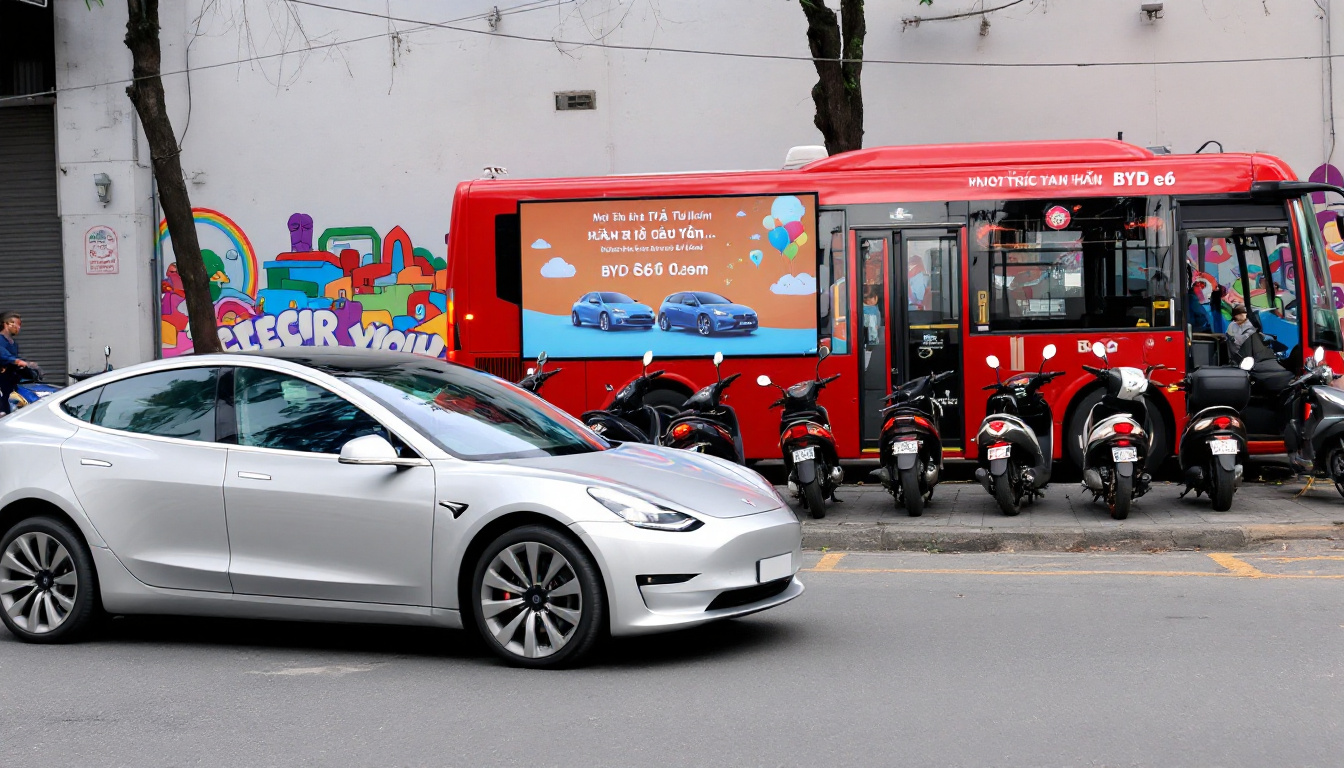
The reasons for this trend towards electric vehicles are manifold:
- Regulatory compliance: new laws favor less polluting cars.
- Fuel efficiency: operational costs are significantly lower than gasoline vehicles.
- Evolving technology: advancements make renewable energies more accessible.
The long-awaited VinFast factory, located in Hanoi, begins producing electric cars this year. The success of this enterprise will depend on its ability to diversify in the global market while paying close attention to local needs.
| Year | Expected number of electric vehicles | Change from the previous year |
|---|---|---|
| 2025 | 200,000 | + 50% |
| 2026 | 300,000 | + 50% |
| 2027 | 500,000 | + 66% |
In the long term, the success of the rise of electric vehicles will depend on charging infrastructure. Projects for charging stations are multiplying, supported by the government. What are the next steps to ensure an effective transition to electric mobility? Collaborations between companies and the government, as well as consumer education initiatives, are crucial.

The challenges facing the automotive industry
Despite a promising landscape, the Vietnamese automotive industry is not without challenges. One of the main ones is international competition. Local players are becoming aware that simply being present is not enough. Constant innovation and quality improvement are becoming essential.
The challenges that the industry must face include:
- Price pressure: brands must offer competitive vehicles while maintaining profit margins.
- Compliance with environmental regulations: the rise of regulations has direct implications for manufacturing processes.
- Dependence on imports: the necessity for imported parts can impact costs and production flexibility.
To address these challenges, companies must adopt flexible business models. Technological innovation must guide every step, with a focus on sustainable solutions at the forefront of priorities.
| Challenge | Potential solution |
|---|---|
| Strong competition | Invest in R&D to improve quality |
| New environmental regulations | Adopt eco-friendly manufacturing practices |
| Dependence on imports | Diversify local supply chains |
Vietnam has the potential to become a leader in the Southeast Asian automotive industry. Market players must capitalize on ongoing societal transformations and meet growing demand with innovative solutions. Ultimately, the collective vision of the industry will determine its success.

Si vous souhaitez lire d'autres articles tels que Vietnam, a promising destination for car manufacturers, consultez la catégorie News.
-
Lysandre Bertil says:
Le Vietnam évolue rapidement, c'est fascinant de voir de nouvelles marques émerger!
-
Le Vietnam a un potentiel incroyable dans l'industrie automobile, surtout avec l'émergence des véhicules électriques.
Leave a Reply to Lysandre Bertil Cancel reply
Articles relatifs