Unlicensed cars: a disaster during technical inspections


Unlicensed cars are often seen as a practical alternative for those who cannot obtain a traditional driving license. However, with the implementation of mandatory technical inspections since April 1, 2024, an alarming observation has emerged: most vehicles face major issues during inspections. These results highlight safety and reliability issues that require urgent attention.
Unlicensed cars: a catastrophic report at the technical inspection
The technical inspection, an obligation for any vehicle circulating on public roads, has revealed particularly worrying figures for unlicensed cars. In one year of applying this new regulation, about 1.3 million of these vehicles have been submitted to inspection. Among them, 30% have failed the test, a figure that worries automotive experts. While 12% of regular cars did not pass their inspection, the situation for small cars is even more critical.
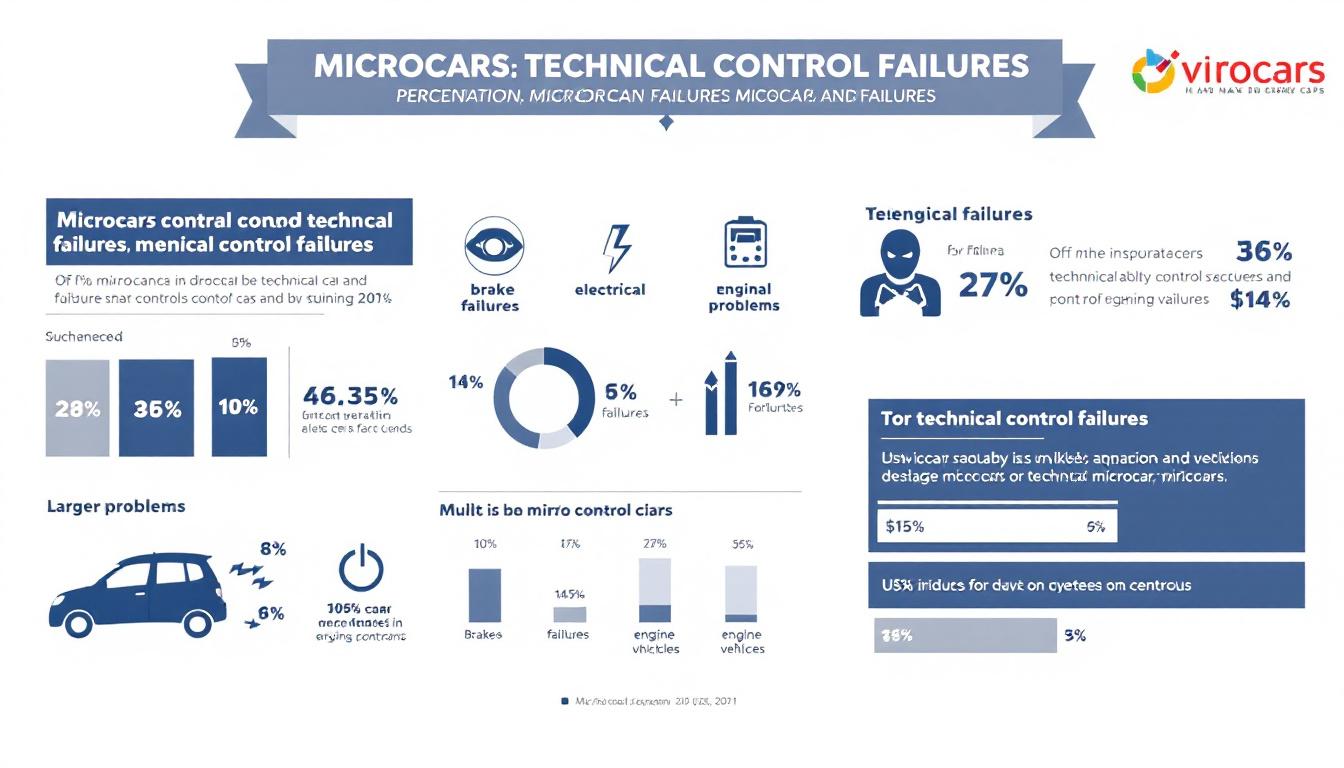
Safety issues concern several aspects, including:
- Tire condition: 5% of re-inspections are caused by worn or inappropriate tires.
- Pollutant emissions: 4% of cases fail due to exceeding environmental standards.
- License plate issues: although rare, 1% of failures are due to poorly secured plates.
The vehicles affected by this alarming rate are mainly those registered before 2017 or second-hand cars older than five years. This raises a crucial question: how can the maintenance of these vehicles be improved? Owners need to realize that a failed technical inspection not only results in additional costs but also poses potential dangers on the road.
| Defect type | Failure percentage |
|---|---|
| Wheel/Tire | 5% |
| Pollutant emissions | 4% |
| License plates | 1% |
| Total failures | 30% |
Reasons for a poor ranking
Analyzing the data, we see that unlicensed cars, often considered economical and accessible solutions, show worrying signs of neglect. Why such a trend?
The owners of these vehicles, whether popular models like Aixam, Ligier, Microcar, or JDM, must realize that each defect can have serious consequences. For example, a simple worn tire can lead to accidents, and non-compliant emissions can result in fines. Inspection centers must therefore redouble their efforts to raise awareness among users about the importance of regular maintenance.
The safety issues related to unlicensed cars
Road safety is at the heart of concerns when discussing unlicensed cars. These vehicles, often seen as harmless, actually represent significant risks. Driving an unlicensed car that has not passed the technical inspection puts not only one's own life at risk but also that of other road users.
A significant portion of road accidents is caused by poorly maintained vehicles. Recent statistics have shown that cars that neglect their maintenance represent an increased risk to the community. The main causes of accidents can be attributed to mechanical failures such as:
- Faulty brakes that do not respond in emergencies.
- Defective headlights or taillights, contributing to reduced visibility at night.
- Steering problems, which can lead to a loss of vehicle control.
It is time for owners to take responsibility. Better maintenance could significantly reduce the number of re-inspections, but this requires a change in mindset. The figures display a striking contrast compared to those of motorcycles, where only 10% of vehicles failed the technical inspection. In comparison, mopeds are around 28%.
| Type of vehicle | Technical inspection success rate |
|---|---|
| Unlicensed cars | 70% |
| Motorcycles | 90% |
| Mopeds | 72% |
Reflections on user behavior
It is wise to ask whether unlicensed car users are truly aware of the risks they are taking. Often, there seems to be a gap between their perception of these vehicles and the reality of their safety. This may be partly due to insufficient information regarding the importance of regular technical inspections.
To address this, awareness initiatives should be launched. Effective campaigns could consist of:
- Organizing maintenance workshops for new owners.
- Approaching young drivers through driving schools to emphasize safety over convenience.
- Collaborating with vehicle companies like Chatenet, Tango, and Berlingo to promote better-designed vehicles that meet strict safety standards.
Future perspectives on technical inspections
The technical inspection for unlicensed cars was introduced with the intention of improving road safety. However, it seems that the implementation of this measure still needs to adapt to address the challenges raised by current statistics. Starting in July 2025, stricter measures will be added to checks, particularly on noise and the maximum speed of vehicles.

These new rules will only increase the need for meticulous inspection of every aspect of the vehicle. Indeed, the list of checks should be expanded and could include:
- Wear of mechanical parts, to prevent unexpected breakdowns.
- Acoustic evaluations, to ensure vehicles do not cause noise disturbances.
- Speed tests, in order to prevent any excess during their use.
Companies like Direct Automobile and Bajaj will also need to prepare for the new requirements. It would be wise to develop more robust models that comply with current standards, thus ensuring not only the longevity of their vehicles but also the safety of their users.
Strategies for a better future for unlicensed cars
For significant change to occur, it is essential that owners, manufacturers, and public institutions collaborate. The actions to be taken could be multiple and varied. The following strategies could contribute to an improvement in the fleet of unlicensed cars:
- Offering discounts on technical inspections for owners who regularly maintain their vehicle.
- Providing free training on preventive maintenance for new small car buyers.
- Establishing a reminder system for technical inspection deadlines, via SMS or email.
It is also vital to protect the user by reforming the regulatory approach. Creating standards more tailored to distinct models of unlicensed cars could boost sales while ensuring driver safety. This may include engaging local and international companies to produce comparable models, such as Groupe Sipa and others, that align with a commitment to quality and transparency.
| Proposed strategy | Potential impact |
|---|---|
| Discounts on technical inspections | Encouraging preventive maintenance |
| Free training | Increasing compliance with standards |
| Reminder system | Reducing maintenance forgetfulness |
It is crucial that all stakeholders understand the stakes. Drivers of unlicensed cars must be informed and educated to navigate our roads safely. Efforts must bear fruit in the results of upcoming inspections.
Si vous souhaitez lire d'autres articles tels que Unlicensed cars: a disaster during technical inspections, consultez la catégorie News.
-
Sélène Verlaine says:
Les voitures sans permis peuvent être pratiques, mais leur sécurité est vraiment préoccupante.
-
Les voitures sans permis sont vraiment inquiétantes, surtout avec ces résultats d'inspection alarmants.
-
Il est important que les propriétaires prennent soin de leurs voitures pour éviter les accidents.
-
Ces résultats montrent vraiment qu'il est temps d'améliorer l'entretien des voitures sans permis.
Leave a Reply to Elowen Tristane Cancel reply
Articles relatifs