Toyota reinforces its position: the electric car is not the panacea

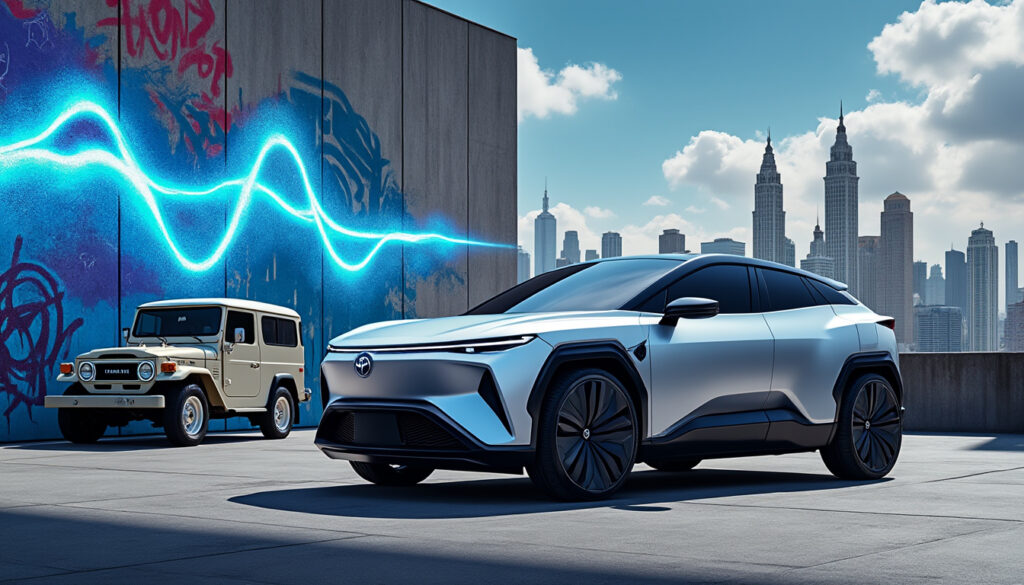

The debates surrounding the energy transition in the automotive industry are intensifying. While many manufacturers such as Nissan, Renault, and Volkswagen are diving headfirst into all-electric vehicles, Toyota seems to be singing a different tune. The recent statement by president Akio Toyoda, suggesting that electric vehicles could be “more polluting” than some other models, raises questions and deserves to be unpacked to understand the strategy of the Japanese giant.
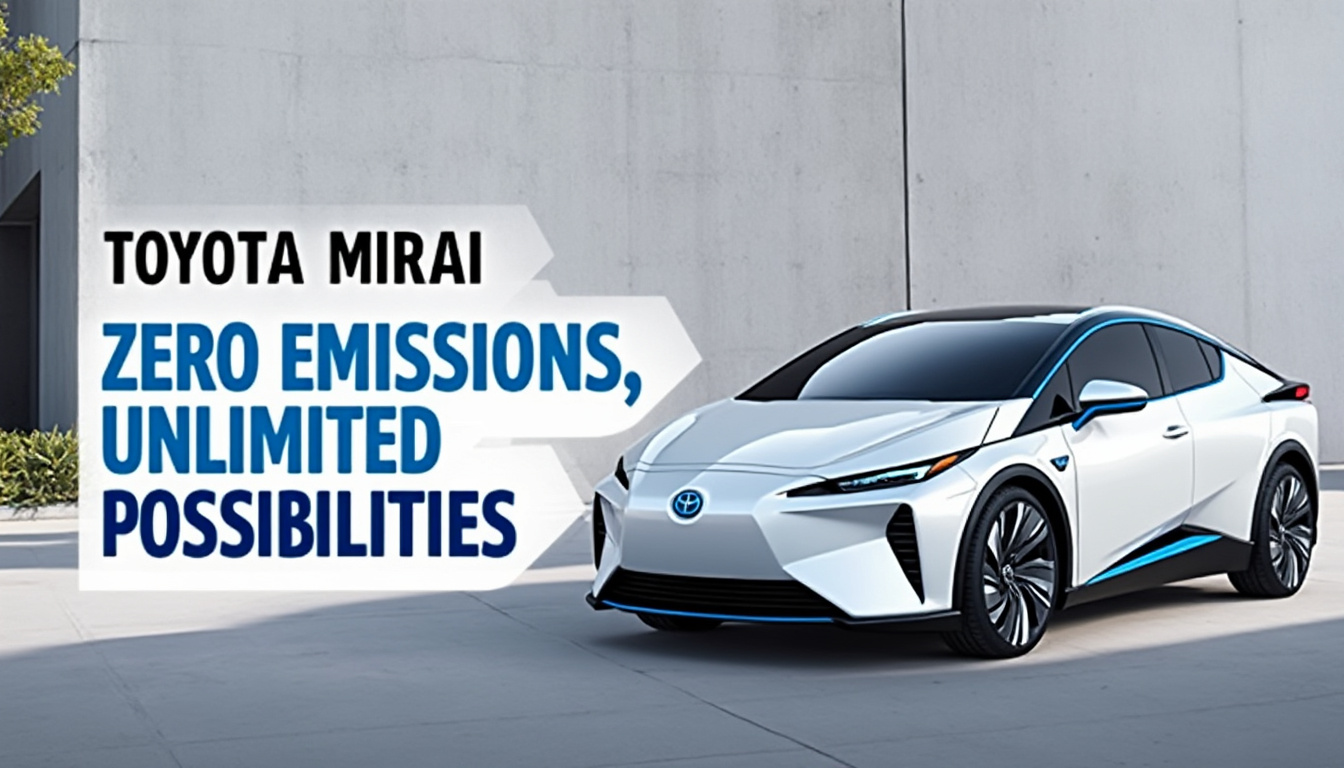
An alternative vision in the automotive industry
Toyota persists and stands firm with a multi-energy approach, refusing to yield to the sirens of total electrification. Instead, the Japanese manufacturer advocates for a balance between various types of propulsion – hybrids, plug-in hybrids, electric, thermal, and even hydrogen. This energy patchwork reflects a pragmatic philosophy, rooted in an understanding of different geographical contexts.
- 🚗 Hybrids: 27 million vehicles sold
- ⚡ Electric: Just one model, the bZ4X, in the lineup
- ♻️ Hydrogen: In development for the future
Origin of the controversy: carbon dioxide in the crosshairs
When Akio Toyoda states that “our real adversary is carbon dioxide, not a specific technology,” he puts the debate back in order. The need to reduce overall emissions far outweighs the technical issues of each solution. An attitude that encourages analyzing concrete results rather than means.
| Technology | CO₂ Emissions | Sustainability |
|---|---|---|
| Hybrid | Generally lower | ✅ Proven |
| Electric | Variable depending on electricity source | ⚠️ Depends on infrastructure |
| Hydrogen | Potential to explore | 🔄 In development |
The practical challenges of total electrification
Beyond environmental considerations, several barriers to switching to electric vehicles prove to be crucial. Despite notable advancements, challenges persist:
- 💰 Purchase cost: on average €15,000 to €20,000 more than a thermal model
- 🔌 Charging infrastructure: uneven development across the world
- ⏳ Limited range for specific uses
These challenges, although partly being mitigated in 2025, continue to hinder universal adoption and remain pressing in many regions.
A winning business strategy
Toyota does not just have an ideological vision; it also reaps commercial benefits from it. The company observes a growing demand for its hybrid vehicles while continuing to invest wisely in electric technology. This allows it to capitalize on a proven and profitable model, as opposed to making massive investments in a sudden shift to electric.
| Market | Hybrid model sales | Electric model sales |
|---|---|---|
| Europe | 👍 Growing despite regulations | 👎 Limited |
| Asia | 👍 Strong demand | ⚡ Increasing slowly |
| North America | 👍 Solid presence | 👎 Retail underwhelming |
Towards a pluralistic future of mobility
Finally, Toyota's vision for decarbonizing transport reflects a broadened conception of mobility solutions. According to the leader, it would be illusory to think that a single technology could address all the challenges. A set of responses tailored to local contexts is essential.
- 🌍 Adaptability: varied solutions according to regions
- 🔄 Continuous innovation: hybridization and new technologies
- 📈 Environmental responsibility: long-term commitment
This approach, often deemed timid, reveals a necessary pragmatism in facing the complex challenges of the upcoming transition. The diversity of strategies could thus become a major asset in addressing contemporary environmental challenges.

Si vous souhaitez lire d'autres articles tels que Toyota reinforces its position: the electric car is not the panacea, consultez la catégorie Non classé.
-
Milo Auvray says:
Toyota a raison d'explorer plusieurs technologies pour réduire les émissions de carbone.
-
Toyota a raison de privilégier une approche diversifiée plutôt que de se concentrer uniquement sur l'électrique.
-
Toyota a raison, il faut diversifier les solutions de mobilité pour vraiment aider l'environnement.
Leave a Reply to Alaric Buzulut Cancel reply
Articles relatifs