The transition to electric and the use of public transport: five out of six French people reluctant to change their travel habits

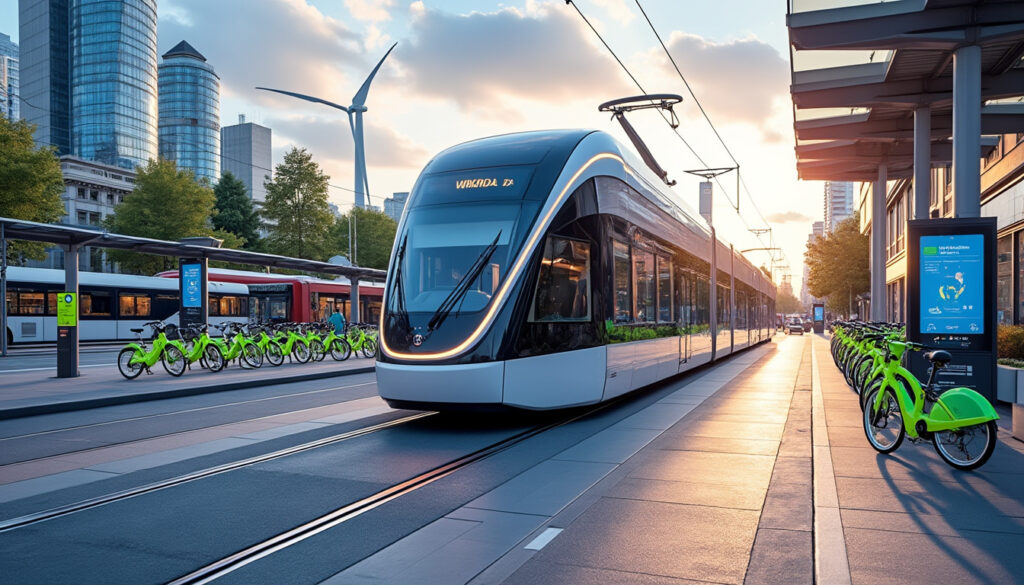

The commuting habits of the French are deeply embedded in their daily lives, and the shift towards more ecological modes of transport does not seem to be on the agenda yet. A recent study conducted by Bip&Go highlights the reluctance of a majority of the population to adopt electric and public transport. What is really happening in the minds of the French? What are the reasons for this persistent attachment to individual cars? This article examines this crucial question for the future of sustainable mobility.
The French relationship with cars: a strong attachment
Cars are an integral part of French life. According to the study conducted by Bip&Go, it appears that more French people consider their car as a family member rather than just a means of transport. For 8% of respondents, their vehicle is a true extension of themselves, to the point of giving it a nickname. This emotional connection with the car reflects a car culture that is deeply rooted in French society.
An indispensable tool in daily life
Apart from this emotional attachment, the car is primarily seen as an essential tool. Indeed, 68% of respondents deem their vehicle indispensable for everyday life. The car is used daily by 63% of the French, and this is for several activities:
- Leisure: 42%
- Work: 19%
- Shopping: 16%
This dependence on the car reveals much more than a simple practical choice. It reflects a lifestyle that values the flexibility and autonomy that a personal vehicle can offer. However, this same functioning can be seen as a hindrance to the transition towards more sustainable mobility solutions.
Reluctance to change: why such a gap?
Despite the growing awareness of the issues related to sustainable mobility, the majority of drivers do not seem ready to change their habits. A large proportion, namely 84%, do not intend to modify their use of the car, highlighting a resistance to innovation and the energy transition. Several reasons explain this phenomenon:
- Lack of infrastructure: For 27% of the French, better access to public transport would be a real plus. However, the reality of infrastructure issues still favors car usage.
- Fuel costs: 14% of respondents would consider switching to electric if fuel prices continued to rise, reflecting an economic responsiveness rather than an ideological one.
- Improvements for soft mobility: Only 13% would be encouraged by better urban planning, such as pedestrian zones or bike lanes.
These results raise questions. What debate is necessary for the French to realize the benefits of shared and less polluting mobility? The areas for improvement relate as much to infrastructure as to a change in mentality.
| Reasons | Percentage |
|---|---|
| Better access to public transport | 27% |
| Rising fuel prices as a determinant | 14% |
| Planning for soft mobility | 13% |
| Switching to electric | 9% |
| No intention to change | 84% |
The transition to electric: a necessity for the planet
With more than 21% of global greenhouse gas emissions attributed to transport, electrification appears as an essential lever to combat climate change. France is engaging in an energy transition, but the resistance to electric vehicles remains palpable. This shift requires both material investments and an evolution in mindsets.
The stakes of the energy transition
Governments and companies are implementing solutions to encourage this transition. The development of charging networks, for example, is a major axis to facilitate the adoption of electric vehicles. Brands like Renault, Peugeot, and Citroën are competing in the market to offer more affordable and practical models. Yet, change still seems distant.
Public transport as a viable alternative
Public transport, such as that managed by SNCF and RATP, sometimes seems underutilized in France. Indeed, innovative solutions, such as electric buses or trams, offer a sustainable and comfortable way to travel. But why aren’t the French turning to them more? Issues of frequency, coverage of urban and rural areas, and service quality need to be addressed to convince users.
Electric public transport: benefits and impacts
Investing in electric public transport could change the game. With the goal of becoming a sustainable city, the benefits are considerable not only environmentally but also socially and economically. By facilitating access to less polluting means of transport, it is possible to reduce the carbon footprint of cities while improving air quality.
Environmental benefits
The transition to electric public transport can bring substantial ecological gains. For example, these systems contribute to reducing CO2 emissions while diminishing noise pollution in urban areas. Electric public transport also attracts users who would otherwise use their cars.
- Reduction in carbon emissions
- Improved air quality
- Reduction of urban noise
Impact on society and the economy
Electric transport also promotes the local economy by creating jobs related to their maintenance and operation. Companies like Mobility by Orange and BlaBlaCar participate in this dynamic by offering collaborative mobility solutions.
| Advantages of electric public transport | Potential negative impact |
|---|---|
| Reduction in CO2 emissions | High initial costs |
| Improvement in air quality | Need for adequate infrastructure |
| Job creation | Risk of reluctance to change |
Future perspectives for mobility in France
The commuting habits of the French present a major challenge to achieving sustainable solutions. The combination of public transport, electric vehicles, and effective citizen awareness could offer an optimistic vision for the coming years. Stakeholders in the automotive industry, local authorities, and users themselves all have a role to play in the transition.
What challenges need to be addressed?
By 2025, several measures need to be taken to prepare for the transition. Infrastructure must be updated and expanded, information systems about alternatives need to be improved, and user awareness is essential. The main challenges remain:
- Increase intermodality
- Invest in charging infrastructure
- Strengthen collaboration among stakeholders
An invitation to action
Every stakeholder has a role to play: from local authorities to users, everyone must contribute to the change. The time has come to rethink mobility. The effectiveness of public transport can become a true asset for the environment, but this evolution requires collective will. So, how can we ensure that these solutions actually materialize? The future of mobility in France depends on these choices.
Si vous souhaitez lire d'autres articles tels que The transition to electric and the use of public transport: five out of six French people reluctant to change their travel habits, consultez la catégorie Non classé.
-
Lysandre Montmorency says:
Il est temps de vraiment changer nos habitudes de transport pour la planète.
-
La dépendance à la voiture complique vraiment la transition vers une mobilité plus durable.
-
Il est temps que la France évolue vers des modes de transport plus durables pour l'environnement.
Leave a Reply to Zéphyrine Luminis Cancel reply
Articles relatifs