The rotary engine, a lifeline for Mazda at the dawn of the electric era?

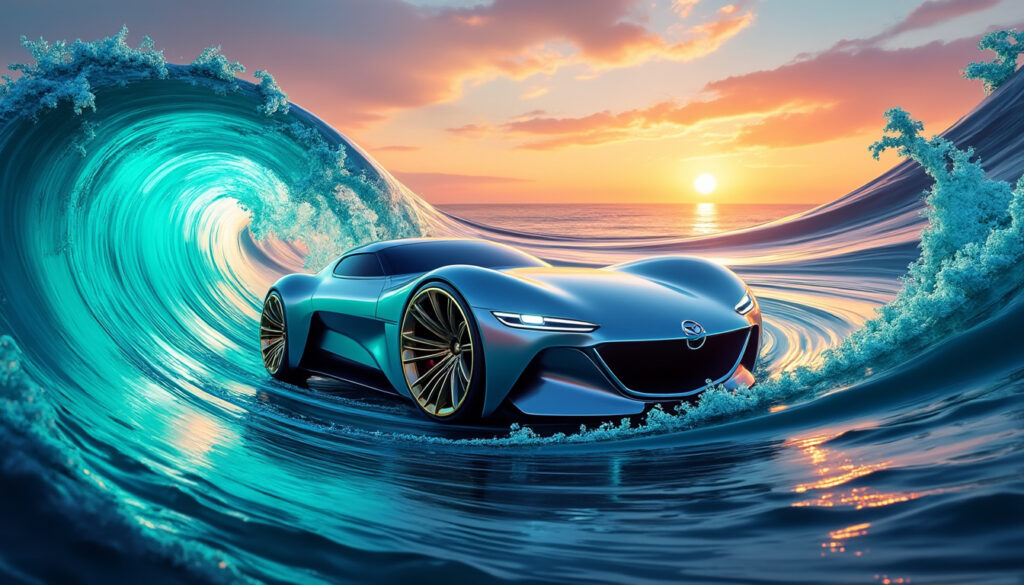

In a rapidly transforming automotive world, where electrification is supplanting traditional combustion engines, Mazda dares to go against the grain. The Hiroshima-based manufacturer, driven by an atypical philosophy, is calling upon an old accomplice: the rotary engine. But is this technology merely an alluring relic of the past, or could it prove to be the long-awaited solution to combine the passion for driving with electric innovation?
A history marked by innovation: the return of the rotary engine
The rotary engine, notably through the Wankel system, has had its heyday with iconic models like the RX-7 and RX-8. Despite the criticisms, it is characterized by its compactness and lightweight design, and continues to inspire Mazda engineers. In 2025, the brand decided to reinvent this technology to create the MX-30 R-EV, a plug-in hybrid integrating a rotary engine as an energy generator.

- 🚗 Compactness: The rotary engine has a lighter design, optimizing space in the vehicle.
- ⚡ Durability: By using the rotary engine as a range extender, Mazda aims for a more sustainable energy supply.
- 🏎️ Performance: Dynamic driving characteristics are preserved thanks to the lightweight Wankel engine.
The MX-30: An innovative yet timid hybrid
Mazda's first step into the electric realm, the MX-30, has encountered some bumps along the way. Although it's forward-looking, its range of 160 kilometers, launched between 2021 and 2023 exclusively in California, did not impress. The brand sold only 500 units, illustrating a lack of urgency and ambition.
| Model | Range (km) | Sales (units) |
|---|---|---|
| MX-30 (2021-2023) | 160 | 500 |
| RX-7 | Launch date | Resounding success |
A unique approach to the challenges of electrification
Mazda's reluctance to fully adopt electrification is based on solid arguments. Jeff Guyton, global CFO, states: “Mazda hates weight.” Indeed, this obsession with lightness is embedded in the brand's DNA. Battery technologies, while necessary, significantly add weight to vehicles, making them less agile. Lithium-ion batteries, for example, can add between 300 and 500 kg, a true bane for the manufacturer.
- ⚙️ Weight of batteries: Negative impact on agility.
- 📊 Performance: Priority given to the performance/weight ratio.
- 🔄 Optimization: Thermal engines via SkyActiv represent a more agile alternative.
A rotary engine as a generator: the future?
Despite the challenges that its rotary engines face in terms of emissions, Mazda remains determined to reintegrate them. The idea of using the rotary engine as an electricity generator represents a bold challenge, allowing it to exploit its efficiency while retaining good driving characteristics. The optimal engine speed range is between 300 and 3000 RPM, maximizing its output.

The challenge of identity in the face of uniform electrification
As the market evolves towards a standardization of designs, Mazda’s global designer is concerned. Masashi Nakayama warns that the future of automotive design could be reduced to a simple badge on a fender. For Mazda, this remains unacceptable. The harmony between power, performance, and aesthetics is essential to preserve its identity. A colossal challenge in a landscape where innovation becomes homogeneous.
- 🎨 Importance of design: The aesthetic signature must remain distinctive.
- 🔍 Differentiation: The necessity to maintain a distinct identity in the face of competition.
- 💡 Creativity: Single-handedly facing the uniformity of electric design.
| Characteristics | Importance |
|---|---|
| Brand identity | Essential for recognition |
| Driving performance | Driving pleasure - Central philosophy |
Towards an electric future: aiming for 2027
Despite its initial hesitations, Mazda is now committed to introducing a 100% electric vehicle in the American market by 2027. This project is part of a pragmatic strategy, aiming to design a compact SUV to appeal to a wide clientele.
- 📅 Deadline: 2027 will mark a turning point.
- 🏙️ Local production: Ensuring price accessibility.
- 💪 Range target: Aim for at least 480 km of range.
With a steadfast love for its roots, Mazda continues to navigate the challenges of the electric era with a strategy centered on its heritage, while integrating what is necessary to stay aligned with today's needs. Between passion for the rotary engine and electric innovation, the gap is closing, paving the way for an adventure as thrilling as it is double-edged.
Si vous souhaitez lire d'autres articles tels que The rotary engine, a lifeline for Mazda at the dawn of the electric era?, consultez la catégorie Non classé.
-
Lysander Fuchs says:
C'est fascinant de voir Mazda revenir à ses racines avec le moteur rotatif. J'attends l'MX-30 R-EV.
-
Mazda a vraiment une approche originale avec le moteur rotatif, j'espère que ça va marcher !
-
La technologie du moteur rotatif pourrait vraiment surprendre. Hâte de voir l'MX-30 R-EV sur la route!
-
C'est fascinant de voir Mazda revenir à des technologies plus anciennes, comme le moteur rotatif !
-
C'est fascinant de voir Mazda revenir à ses racines avec le moteur rotatif dans un monde électrique.
Leave a Reply to Elouan Fauré Cancel reply
Articles relatifs