The leader of the CGT is mistaken about the Renault Zoé



The recent intervention by Sophie Binet, the General Secretary of the CGT, during a debate on TF1 highlighted a sensitive issue that concerns both the automotive industry and sustainable mobility in France. In criticizing the relocation of French production, she referred to the Renault Zoe, an iconic model of the electric car. However, her statement labeling the model as "relocated to Romania" was quickly denied and raised many questions about the reality of the sector today.
The Renault Zoe: history and evolution of the model
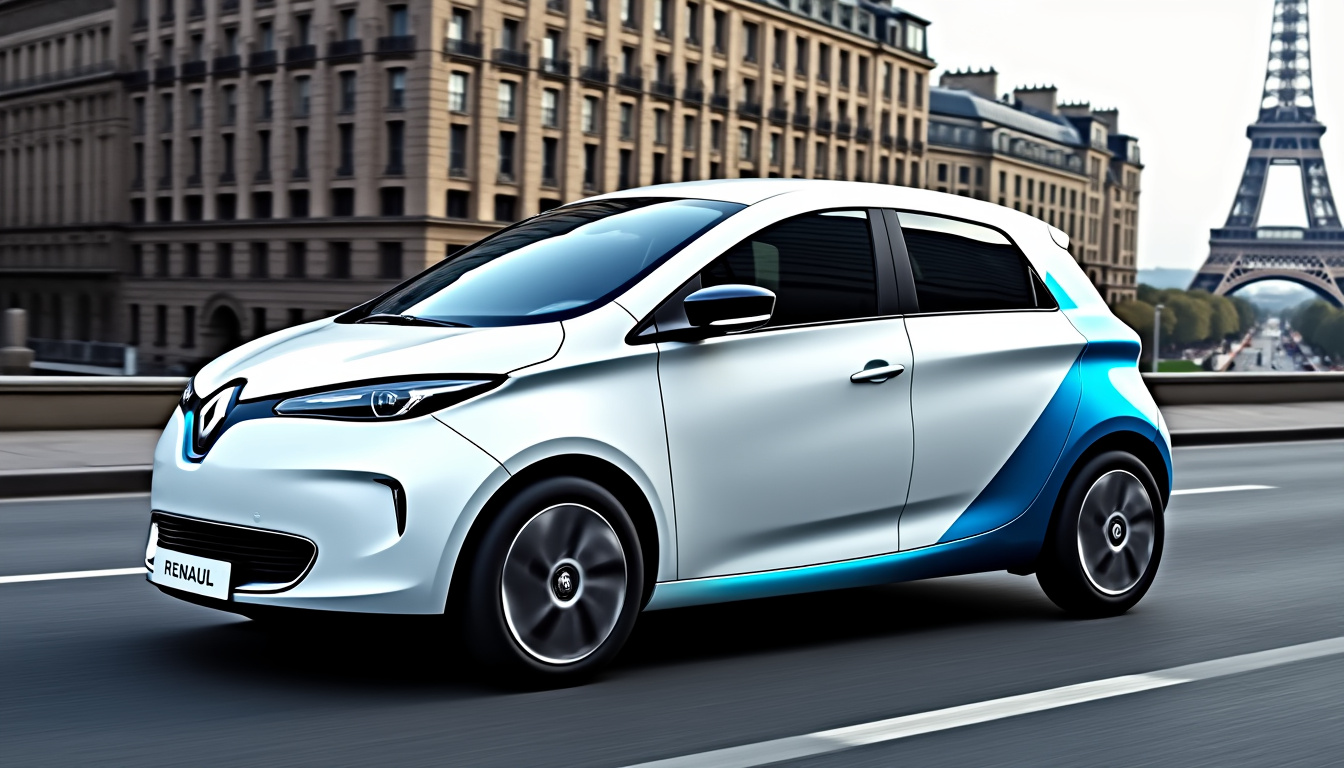
Launched in 2012, the Renault Zoe quickly captured the electric car market in France. With several versions from 88 to 135 horsepower, this model allowed thousands of citizens to access sustainable mobility while participating in an ecological revolution. In its early days, the Zoe represented Renault's ambition to establish itself in the electric automotive market, making it a flagship model among the group's cars.
The rise of the Zoe
The success of the Renault Zoe can be attributed to several factors:
- Financial accessibility: Its relatively affordable price compared to other electric vehicles attracted a wide audience.
- Range: With a representative range of 300 km, the Zoe was suitable for daily commutes.
- Charging infrastructure: The rise of charging stations facilitated its adoption, especially in urban areas.
Over the years, the Zoe has been updated to meet the growing expectations of consumers in terms of technology and range. However, faced with increasingly fierce competition in the automotive market, Renault had to prepare a different future for its flagship model.
The discontinuation of Zoe production
In 2024, Renault decided to stop the production of the Zoe, which has been replaced by a new model, the R5, manufactured in Douai, France. This choice is part of a broader strategy to modernize the manufacturer's catalog and meet the challenges of innovation in the electric automotive industry. Emmanuel Macron, during the TF1 debate, highlighted this transition to new models, emphasizing that the new R5 is indeed an electric car produced in France.
What Sophie Binet actually said: analysis of the statements
As mentioned earlier, Sophie Binet asserted that "Renault has just closed the production line of the Zoe in Flins" and continued by saying that "the Zoe has just gone to Romania". These two statements deserve to be analyzed in the current context of automotive production in France.
| Statement | Truth | Comments |
|---|---|---|
| Closure of the Zoe production line | True | The production line has been closed but the Zoe has not been produced since 2024. |
| Relocation of production to Romania | False | The Zoe is no longer produced, and the model has been replaced by the R5, assembled in France. |
This confusion regarding the location of production demonstrates a lack of underlying information about the automotive industry sector. When such an influential figure as Sophie Binet makes such statements, it can have significant repercussions on public perception regarding the future of electric mobility in France.
Impact on the automotive market and industry
The issue of automotive production and the strategic choices of manufacturers like Renault goes beyond simple statements. The constantly evolving automotive market is influenced by many factors, including European regulations on emissions, the rise of electric vehicles, and societal expectations regarding ecology.
Current state of the automotive market
In 2025, the European automotive market is dominated by the transition to more environmentally-friendly models. Here are some key indicators:
- Sales progress: Electric vehicle sales continue to grow, now representing a substantial share of the European market.
- Investment in infrastructure: Governments and companies are heavily investing in charging infrastructure to support the enthusiasm for electric vehicles.
- Technological innovations: The multifunctionality of new cars, coupled with connectivity, becomes essential to attract young consumers.
Repercussions on the industry
Erroneous statements by figures such as Sophie Binet can create misinformation that undermines consumer confidence. The French automotive industry, while looking towards the future, must also ensure that communication around its strategic choices is clear. Moreover, some key figures illustrate this situation:
| Year | Electric vehicle sales (in thousands) | Market share (%) |
|---|---|---|
| 2020 | 100 | 6% |
| 2021 | 200 | 10% |
| 2024 | 500 | 20% |
| 2025 | 1000 | 30% |
Renault, like many other manufacturers, must remain vigilant regarding public perceptions and analytical errors that can have lasting effects on their brand image.
The future of sustainable mobility and the role of the union
Beyond the debates on the production of the Renault Zoe, the CGT union has a key role to play in the current transition towards sustainable mobility. Concerns about jobs and the restructuring of factories reflect a reality that unions must manage while promoting the necessity of ecological transition.

Challenges for workers
The closure of production lines can be a source of anxiety for many workers. Here are some important issues for employees:
- Job protection: Unions must ensure that workers are protected in the face of restructurings.
- Training: With the emergence of new technologies, it is essential that employees are trained to adapt to new challenges.
- Social dialogue: Maintaining constructive dialogue between management and unions is essential for harmony within the company.
Why the CGT must reinvent itself
To accompany the transition to the green automotive industry, the CGT must evolve. Here are some areas for reflection:
- Collaboration with industry: Establish partnerships with companies in the sector to anticipate future needs.
- Promote sustainable mobility: Highlight the energy transition to attract new members and raise awareness of ecological issues.
- Regular information: Provide clear and precise communication to members to avoid misunderstandings regarding changes in production.
The transition to sustainable mobility is essential, but it must be done with respect for skills and workers' rights. The CGT has a crucial responsibility in this regard.
The necessity for accurate information in public debate
In light of recent events, it is clear that misinformation can hinder progress, especially in such a vital sector as the automotive industry. Faced with issues as crucial as ecology and employment, inaccurate statements harm the discussion on a better future.

The consequences of misinformation
The effects of misinformation can be harmful, both for businesses and consumers. Here are some identifiable consequences:
- Loss of trust: Consumers may become skeptical about the intentions of companies.
- Influence on political decisions: False information can negatively influence public policies regarding the automotive sector.
- Impact on employment: False beliefs about relocation can lead to strikes or dissatisfaction.
The role of the media in disseminating accurate information
The media has a responsibility in its coverage of information related to sensitive topics. A more rigorous approach might include:
- Truthful evaluation of statements: Ensure that claims made by public figures are verified.
- Public education: Inform about industrial evolution and ecological issues to avoid misinterpretations.
- Support for innovation: Encourage innovations that promote sustainable mobility rather than create divisions.
It is high time that public debate participants become aware of the importance of providing accurate and informed information to build a better future.
Si vous souhaitez lire d'autres articles tels que The leader of the CGT is mistaken about the Renault Zoé, consultez la catégorie Non classé.
-
Julian Verne says:
C'est inquiétant de voir des informations erronées sur des sujets aussi cruciaux. La communication doit être claire.
-
La confusion autour de la Zoe montre l'importance d'une bonne communication dans le secteur automobile.
-
La Renault Zoe a vraiment marqué l'histoire de l'électrique en France, mais l'avenir semble incertain.
-
La confusion autour de la Renault Zoe soulève des questions importantes sur l'avenir de l'industrie automobile.
-
La confusion autour de la production de la Zoe montre combien il est crucial de communiquer clairement.
Leave a Reply to Julian Verne Cancel reply
Articles relatifs