The impacts of the reduction of Chinese rare earth exports on Suzuki, Ford, BMW, and other industry players

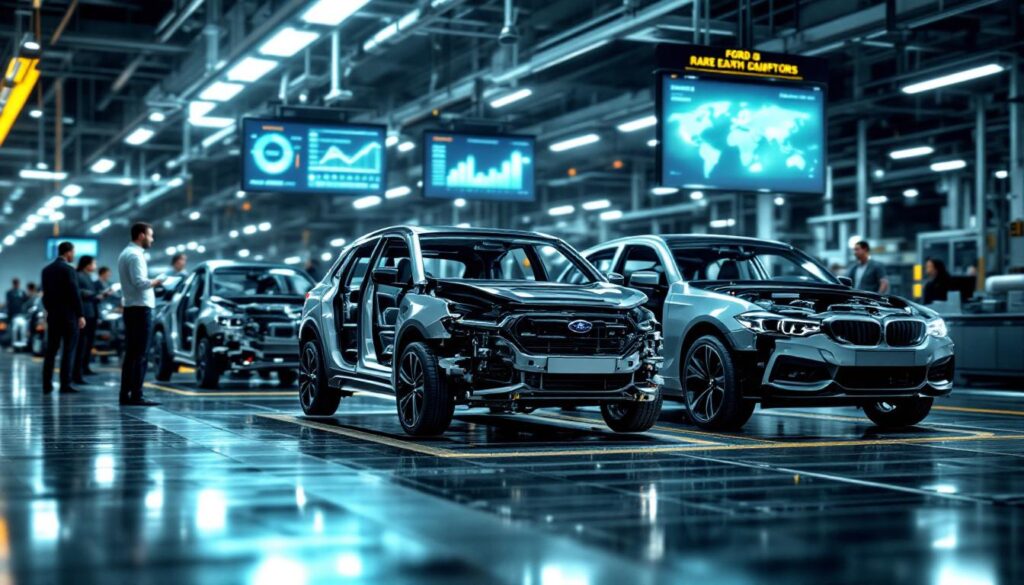

China's strategic decisions regarding the export of rare earths continue to redefine the global industrial landscape. In particular, the repercussions of export restrictions severely affect automotive giants like Suzuki, Ford, BMW, as well as other major players such as Honda, Toyota, Volkswagen, General Motors, Hyundai, Nissan, and Mercedes-Benz. These elements, although often invisible, are actually crucial for the manufacturing of modern and sustainable vehicles. In a context where these resources become increasingly scarce, what direction can the automotive industry take to navigate this storm?
Rare earths: a strategic issue for the automotive industry
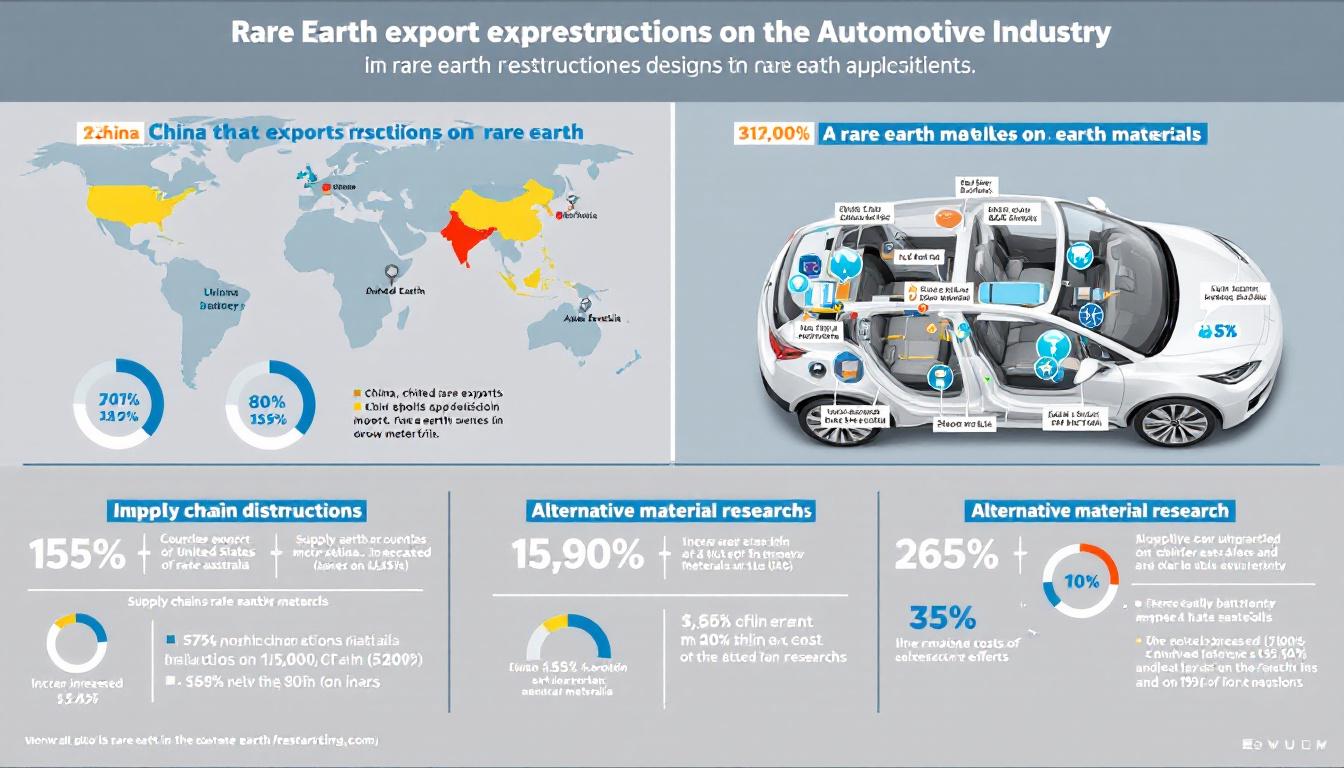
Nowadays, rare earths are essential in the manufacturing of numerous technologies, particularly electric motors, batteries, and navigation systems. Each modern electric vehicle contains a variety, ranging from permanent magnets to electronic components. Centered around 80% of global production, China controls the supply chain, giving it significant power over foreign markets.
The reduction of rare earth exports has immediate and direct consequences. It leads to a supply crisis that disrupts vehicle production. As a result, companies must adjust their strategies, cut production, and often face rising costs. The impact is felt on iconic models, particularly those from Ford and BMW, which consume significant quantities of these materials.
The consequences on different brands
With the reduction in exports, manufacturers must consider the specific impacts affecting their production. Here’s an overview of the situation for some brands:
- Suzuki: Facing shortages and rising costs, Suzuki will likely have to revise its sales forecasts.
- Ford: Primarily relying on advanced technologies, but the interruption in the supply of rare earths could delay the launch of new models.
- BMW: As a premium manufacturer, BMW can absorb some costs, but rising prices could affect its budget-conscious customers.
- Honda and Toyota: They are restructuring their supply chain to reduce their dependence on Chinese materials.
Seeking alternative solutions for sustainable sourcing
In the face of such an unstable business environment, the automotive industry is exploring various avenues. The search for substitutes for rare earths, for example, has become a priority. Several companies are looking to develop motor technologies that do not use these critical elements. This could reduce dependence on China and create new opportunities in research and development.
Companies like General Motors and Nissan are investing in the search for new components, while Mercedes-Benz is seriously considering the possibility of producing electric motors that do not require the use of rare earths. These efforts are a first step towards resilience against historical interdependence.
Government initiatives and trade policies
Meanwhile, governments are intensifying their efforts to locally support the industry. The European Union, for example, has launched projects to strengthen the production of rare earths within its territory. Aiming for strategic autonomy, institutions hope to reduce the pressure caused by the Chinese centralization of these resources.
| Company | Initiative | Objective |
|---|---|---|
| General Motors | Research on alternative materials | Reduce dependence on rare earths |
| Ford | Partnerships with local suppliers | Ensure stable supply |
| BMW | Develop technologies without rare earths | Minimize production costs |
| Hyundai | Create strategic alliances | Diversify sources of supply |
These initiatives illustrate the willingness to adapt and plan in an uncertain climate, but they also raise questions about the long-term repercussions. Can the transition to alternative materials be achieved in time?

Economic impact of export restrictions
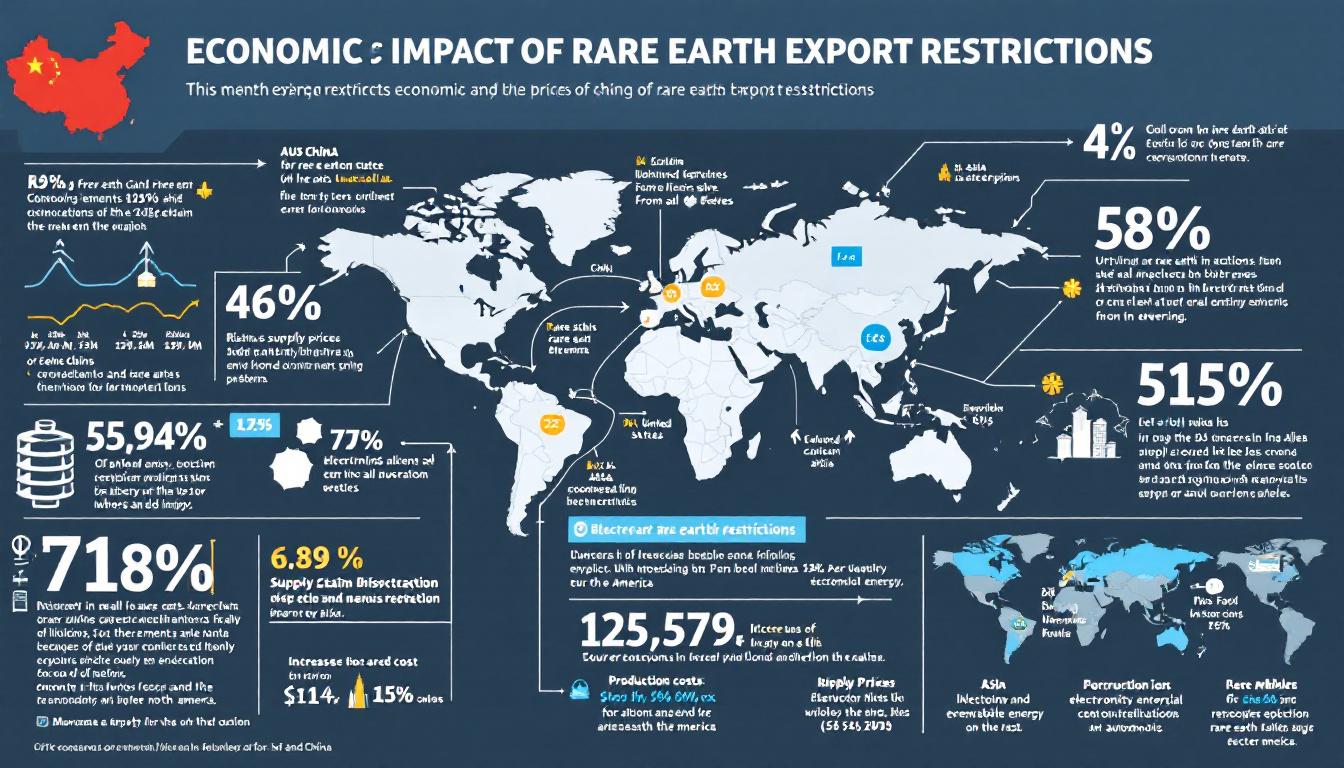
The economic consequences of China's restrictions on rare earths are not limited to supply chains. Indeed, these actions plunge the automotive industry into an economic crisis. Production costs are rising, and profit margins are tightening. One can expect inflation on vehicle prices, impacting not only consumers but also the economy as a whole.
Forecasts indicate a significant increase in electric vehicle prices within a few years. Customers must therefore prepare for adjustments to their automotive budgets. Companies that can quickly adapt to this new reality will have a competitive advantage.
Consumer reactions
In light of rising prices, consumer expectations are evolving. Demand for cheaper alternatives could increase, as well as interest in more sustainable and eco-friendly vehicles. Heightened awareness of the environmental impact leads some buyers to favor brands that invest in sustainable solutions. Regarding sustainability, communication about the efforts made will be crucial.
- Awareness of the origin of materials
- Adoption of hybrid and electric vehicles as responsible choices
- Seeking brands engaging in ethical practices
| Economic consequence | Implication |
|---|---|
| Increase in production costs | Raising of selling prices |
| Shortage of models | Consumers frustrated by the lack of options |
| Potential factory closures | Job loss and local impact |
The role of technology in the future of the automotive industry
As the automotive industry faces these challenges, technology continues to evolve. The emergence of new digital solutions and advanced manufacturing technologies plays a key role in addressing these issues. Artificial intelligence, for example, facilitates supply chain management, allowing companies to better assess and use available resources.
Integrated systems and logistics platforms also help optimize supply chains. Manufacturers can anticipate market fluctuations and adjust their production accordingly. Digitalization can thus become a strategic weapon to address China's export restrictions.
Innovation as a driver of resilience
Companies are investing in innovative startups and disruptive technologies that can help them diversify. This may include efforts to use alternative propulsion systems that require less or no rare earths. This shift towards innovation should not only be viewed as a response to a crisis, but as an opportunity to evolve towards a more sustainable and resilient future.
- Investments in AI and data analytics
- Development of new types of batteries
- Researching ways to improve the recyclability of parts
| Technology | Potential Impact |
|---|---|
| Artificial Intelligence | Supply chain optimization |
| Additive manufacturing (3D printing) | Waste reduction and streamlining production |
| Alternative batteries | Independence from rare earths |

Challenges and opportunities are intertwined in this transformation. As traditional industry players adapt to a changing environment, they also have the chance to redefine their value proposition. It is at the heart of this reflection that the future of the automotive industry is shaped.
Si vous souhaitez lire d'autres articles tels que The impacts of the reduction of Chinese rare earth exports on Suzuki, Ford, BMW, and other industry players, consultez la catégorie News.
-
Alaric Duval says:
Les restrictions sur les terres rares vont vraiment compliquer les choses pour l'industrie automobile.
-
L'impact des restrictions sur les terres rares est vraiment préoccupant pour l'avenir de l'automobile.
-
L'impact de ces restrictions sur l'industrie automobile est vraiment préoccupant pour l'avenir.
-
C'est fascinant de voir comment les voitures évoluent avec ces nouveaux défis. L'innovation est essentielle!
-
Les restrictions sur les terres rares vont vraiment changer le paysage automobile. Il est temps d'agir!
Leave a Reply to Alaric Duval Cancel reply
Articles relatifs