The European automotive industry in peril: call to action from the president of Stellantis

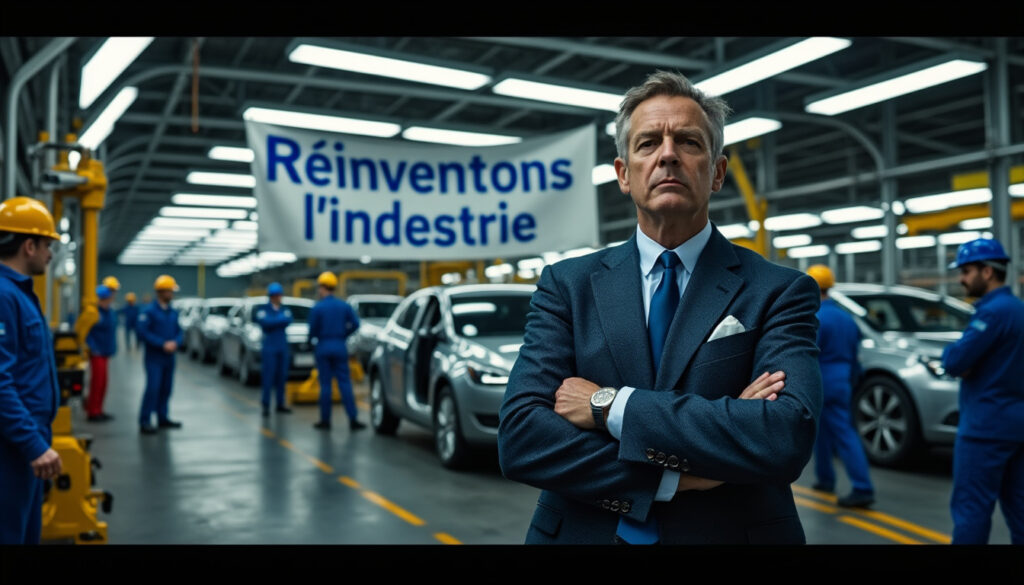

The days go by and the picture of the European automotive industry darkens. At the heart of this turmoil, John Elkann, interim chairman of Stellantis, raises the alarm. Faced with unprecedented challenges, the automotive industry may well find itself at a crossroads. Political decisions from both sides of the Atlantic raise deep concerns and pose burning questions. An opportunity for Europe to refocus on its priorities, or a slow poison for its industry? Elkann's words resonate with undeniable gravity: it is imperative to act before it is too late.
The European automotive industry facing unprecedented challenges
The current situation of the automotive industry in Europe is alarming. John Elkann does not mince his words when he highlights two destructive forces weighing on this historic sector. On one hand, the aggressive customs policies implemented both in the United States and in Europe, and on the other, unrealistic environmental requirements. This difficult situation leaves vehicle manufacturers, such as Renault, Peugeot, and Citroën, in a precarious position.
At the heart of this storm, the increase in tariffs in the United States is a major concern. From their implementation, these tariffs had a direct impact on the competitiveness of European manufacturers, including Stellantis, which has a significant portion of its production abroad, notably in Mexico and Canada. The new 25% tariffs on imported vehicles and components have become a formidable barrier, hindering growth and innovation opportunities. European manufacturers must also fight against new taxes on aluminum and steel, two crucial materials for automotive production.
European governments, for their part, are trying to respond to the challenges of energy transition. However, this willingness has often resulted in abrupt decisions, leaving industry players in uncertainty. Numerous purchase incentives have been removed, while the necessary infrastructure to support the transition to electric vehicles is struggling to exist. Consumers thus find themselves stuck, hesitant to make the leap to electric without an adequate charging network. John Elkann's reaction is swift: such scenarios threaten not only the survival of the European automotive industry, but also endanger thousands of jobs within this sphere.
To understand the scale of the situation, let's examine some key facts:
- Tariffs on imported automotive parts have increased by 25% in the United States.
- Incentives for the purchase of electric vehicles in Europe have been removed, leading to a decline in sales.
- Chinese manufacturers, such as BYD, are on the rise and could sell more vehicles than Europe and the United States combined.
It thus becomes crucial to ask: how can Europe reverse this dynamic? What strategy could breathe new life into an industry that is several decades old? Several avenues must be explored.
The echoes of the energy transition and their impacts on the sector
Alongside economic issues, environmental pressure weighs heavily on the automotive sector. Green policies, although necessary to address climate challenges, become a hindrance for an industry already plagued by numerous troubles. A paradoxical situation that John Elkann vigorously denounces.
Regulations on CO2 emissions impose drastic standards, often deemed impractical. The chairman of Stellantis speaks of an "unrealistic trajectory" that forces vehicle manufacturers to comply with increasingly demanding requirements. Meanwhile, the lack of adequate charging infrastructure makes it difficult for consumers to transition to electric vehicles. In this context, leading brands such as Volkswagen, BMW, Mercedes-Benz, and Audi find themselves on a tightrope, trying to balance between innovation and profitability.
Incentives to transition to electric have been severely affected following the European governments' decision to cut subsidies. According to estimates, the removal of incentives would have led to a nearly 25% drop in electric vehicle sales in 2023. This reveals the fragility of the transition, a delicate balance to maintain in order not to lose consumers. Brands must now rethink their strategy and firmly commit to the path of innovation while preparing robust infrastructures to support this shift.
To better appreciate the impact of these choices, a summary table of political decisions and their effects on the automotive industry could prove useful:
| Political Decisions | Impact on the Industry |
|---|---|
| Increase in tariffs | Increased production costs, loss of competitiveness |
| Removal of purchase incentives | Decrease in electric vehicle sales, market stagnation |
| Strict emissions regulations | Increased pressure on innovation, risk of non-compliance |
Despite this difficult situation, some experts believe that a radical change in direction could reverse the current trend. Opportunities are emerging for companies, particularly in terms of innovation and intersectoral collaboration. In other words, strategic alliances could be the key to the survival and even future prosperity of the industry.
The rise of China: a threat to Europe
In this complex dynamic, an emerging player is worryingly asserting itself: China. Chinese automotive companies, often supported by strong industrial policies and an innovative approach, are beginning to dominate the global market. So much so that by the end of 2025, they could sell more vehicles than the United States and Europe combined.
The contrast between the Chinese industrial approach and that of Europe is striking. While China promotes strong support for the automotive industry through subsidies and innovation policies, Europe finds itself bogged down by the weight of bureaucracy that sometimes seems incomprehensible. This gap raises the fundamental question: can Europe truly compete without a renewal of its strategy?
It is important to highlight a few key factors that promote the growth of the Chinese automotive industry:
- Massive government subsidies for innovation.
- A large investment in electric charging infrastructures.
- Strategic partnerships with technology companies.
The consequences are thus inevitable. Innovation is continuously reinvented, while Europe seems to be in a phase of adaptation and resistance to these rapid changes. Resistance to energy transition could limit the ability of European players to innovate. Historical brands like Fiat and Ford must reconsider their goals to avoid missing the boat. Solutions must involve a collective commitment to invest in new technologies, redefine political priorities, while preserving the growth of the industry.
To fully grasp this phenomenon, a comparative table between the European and Chinese approaches could prove enlightening:
| Criteria | Europe | China |
|---|---|---|
| Government Support | Strict regulations, less subsidies | Generous subsidies, encouragement policies |
| Innovation | Constrained by regulation | Encouraged and supported |
| Market | Instability and uncertainties | Rapid expansion and increase in sales |
Paths to renewal: a strategy for the future
In the face of such a panorama, it is imperative to imagine paths of renewal. John Elkann strives to be optimistic despite the challenges. Numerous initiatives are emerging to revitalize the sector, relying on strategic collaborations, targeted investments in essential infrastructures, and highlighting innovation.
Alliances between industry players and emerging technologies, for instance, can bring together resources and know-how. By leveraging synergies between traditional automotive manufacturers and innovative start-ups, the industry can regain a growth dynamic. The idea of inter-company cooperation seems increasingly relevant, particularly in research and development.
On the other hand, investment in charging infrastructures appears as an essential lever to address the challenges of energy transition. Collaboration between the public and private sectors could lead to the construction of a dense and efficient network, thus stimulating the adoption of electric vehicles by consumers, particularly those who are still hesitant to take the plunge.
To illustrate these innovation opportunities, examples of successful partnerships in the automotive industry could be mentioned:
- Collaboration between Renault and tech companies to develop innovative charging solutions.
- Partnership between Stellantis and data companies to optimize production.
- Local smart city initiatives to integrate electric vehicles into urban spaces.
These developments must be closely monitored and should involve a reassessment of traditional business models. Anticipating future consumer needs through a proactive approach could very well be the key to success.
A collective response: call to action
Ultimately, John Elkann calls for a collective response to the challenges faced by the European automotive industry. The future of the sector rests in the hands of political, economic, and social players. It is vital that governments, businesses, and consumers unite their forces to build a solid future.
This approach could involve a commitment to review market regulations and develop a national action plan to promote innovation. The example of the Nordic countries, where a more flexible regulatory framework is observed, is worth studying. Likewise, the importance of constant support for innovation must not be underestimated.
Time is of the essence, as the industry stands at a decisive turning point. Within this dynamic, it is essential that the European automotive sector seizes the opportunities that arise while proactively addressing the challenges. Indeed, it is all a matter of resilience and adaptability; two essential qualities for surviving and prospering in this complex environment. The implementation of significant changes could define the future of the sector, yielding benefits not only for the industry but also for the economy as a whole. A future to be built together.
Si vous souhaitez lire d'autres articles tels que The European automotive industry in peril: call to action from the president of Stellantis, consultez la catégorie News.
-
Célian Verdu says:
L'industrie automobile européenne doit vraiment s'unir pour relever ces défis. Les consommateurs attendent des solutions.
Leave a Reply to Célian Verdu Cancel reply
Articles relatifs