The decline in electric vehicle sales in La Réunion: professionals criticize the lack of political and strategic vision

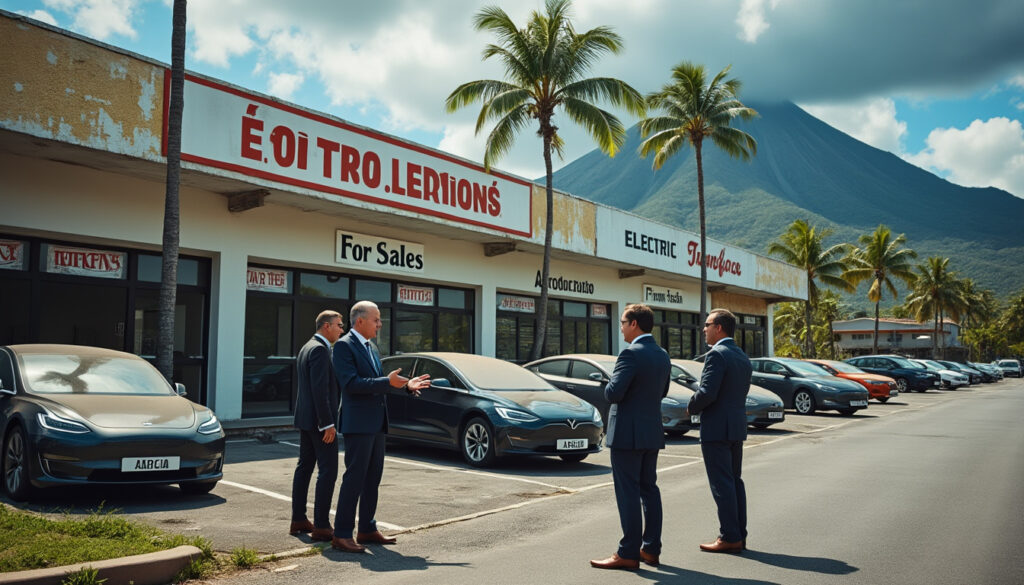

Electric vehicles, often presented as the future of sustainable mobility, are experiencing an alarming decline in La Réunion. While government incentives have historically encouraged the adoption of these technologies, today’s reality is marked by a collapse in sales that leaves both consumers and industry professionals perplexed. The lack of a clear political vision and an overarching strategy seems to be at the heart of the concerns expressed by stakeholders in the automotive market. Far from being a mere coincidence, this situation embodies deep issues for the local economy and the island's ecological commitment.
Current State of the Electric Vehicle Market in La Réunion
To understand the challenges facing the electric vehicle market, it is essential to assess the current state. Indeed, registrations of new electric vehicles have seen a drastic drop, from 850 to only 608 units in the first quarter of 2024. This decrease, representing nearly 30%, is part of a broader context of a continuous decline in sales, accompanied by a shrinking automotive market.
Factors Behind the Decline in Sales
Several elements explain this negative spiral:
- Reduction in purchase incentives: Government subsidies, which have made access to the market easier for many consumers, were reduced at the end of 2024. This change has mechanically affected the attractiveness of electric vehicles.
- Implementation of octroi de mer: Starting March 1, 2025, the implementation of a 24.5% tax on certain models has raised concerns among dealers. This measure increases the acquisition cost and discourages potential buyers.
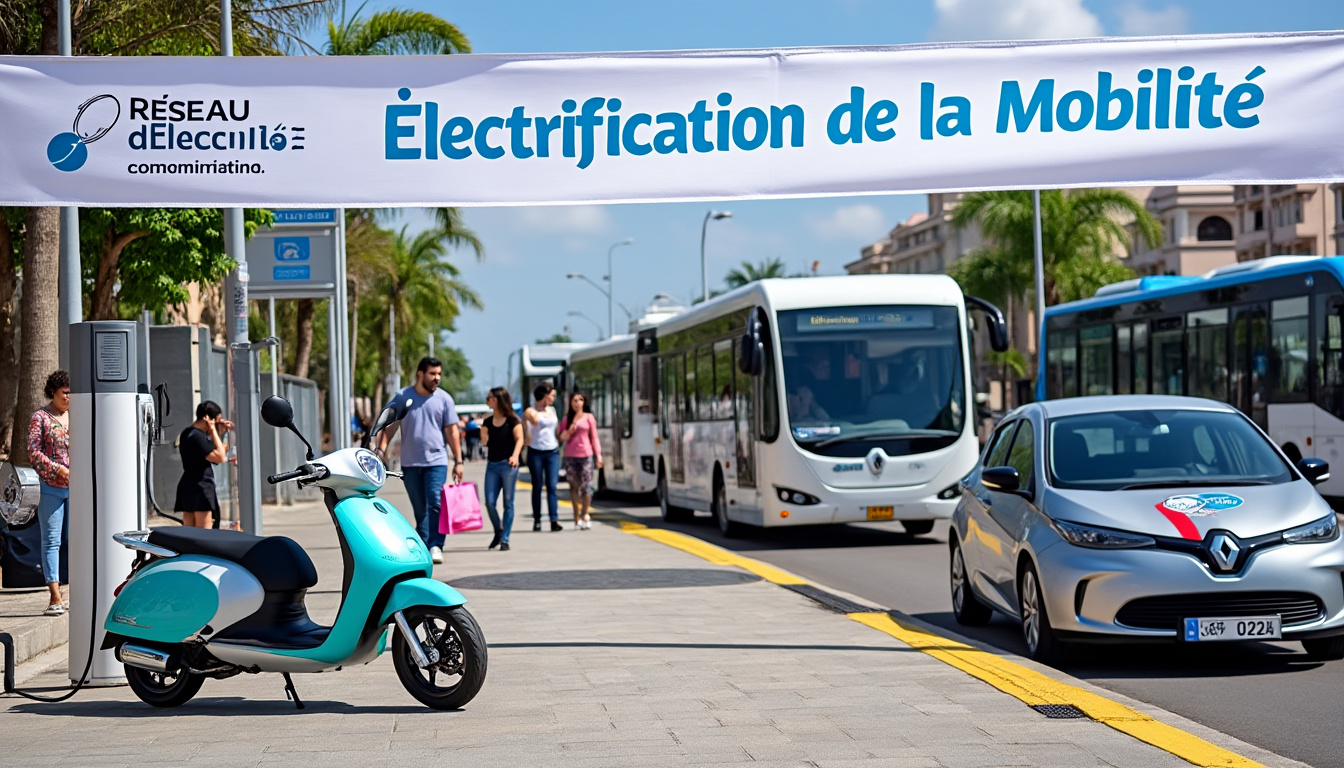
- Insufficient charging infrastructure: The lack of suitable charging stations, especially for collective housing, complicates the daily use of electric vehicles. According to Philippe Alexandre Rebboah, president of the import and trade union in La Réunion, “there are not enough charging stations, public stations”, which constitutes a major barrier.
Consumers' Perception
On the consumer side, an ambivalent feeling emerges. Many still show interest in electric vehicles, yet feedback highlights limitations. For example, a user, Anthony, mentions the challenges encountered after a cyclone that caused power outages: “With the cyclone, there was no electricity for a long time. You can't charge your electric car”. This lack of reliability encourages some to turn to hybrid alternatives that prove more suitable for island realities.
| Year | EV Sales (units) | Market Share (%) |
|---|---|---|
| 2023 | 850 | 19% |
| 2024 | 608 | 11.87% |
| 2025 (Forecast) | estimated decline | estimated at under 10% |
The Role of Professionals and Their Vision for the Future
Automotive professionals in La Réunion express legitimate concerns about this situation. The decline in electric vehicle sales is often seen as a consequence of an absence of strategic vision from the authorities. Philippe Alexandre Rebboah does not fail to emphasize that “what penalizes electric sales in the territory is politics and strategic vision”.
Professionals' Demands
Automotive professionals make several requests to revitalize the electric vehicle market:
- Reevaluation of incentives: An increase or return to more substantial purchase incentives could stimulate sales and give new momentum to the market.
- Charging infrastructure: Developing public charging stations and encouraging individuals to install chargers in collective housing should be a priority.
- Training and support: Market stakeholders expect support in training and raising consumer awareness of the advantages of electric vehicles.
Challenges of the Energy Transition
The energy transition in La Réunion relies on collective reflection. Regarding sustainable mobility, the responsibility lies with the State, local authorities, and economic players. It is fundamental to establish a genuine transport policy that integrates environmental issues and the needs of the Réunionais. In this regard, Rebboah emphasizes that “La Réunion offers all guarantees”, but that coordinated efforts are required. A dynamic of change must be established to restore confidence in electric vehicles.
International Best Practices and Their Applicability
To address the decline in electric vehicle sales, it may be relevant to observe certain international practices. Different countries have established strategies that can serve as models for La Réunion. Analyzing these models could, according to the professionals interviewed, offer viable solutions.
Examples of Practices Abroad
Some countries have successfully encouraged the adoption of electric vehicles through tailored strategies. Here are a few examples:
- Norway: This country is often cited as an example with nearly 54% of new registrations being electric vehicles, supported by tax incentives and a dense charging infrastructure.
- Mainland France: The government has implemented acquisition aids and subsidizes investments in charging stations.
- Germany: In addition to subsidies, cities pursue sustainability goals, promoting electromobility through local policies.
| Country | Market Share EV (%) | Purchase Aids (€) |
|---|---|---|
| Norway | 54 | 5,000 |
| France | 19 | 6,000 |
| Germany | 13 | 4,000 |
Responses and Initiatives to Implement in La Réunion
To reinvigorate the electric vehicle market in La Réunion, several initiatives could be considered. In a thorough analysis of international practices, it is possible to identify solutions that, if adapted to the local context, could provide an effective response to the decline in electric vehicle sales.
Proposed Action Plan
Industry professionals, in consultation with the authorities, could consider implementing an action plan structured around several axes:
- Financial incentives: Restore substantial purchase aids for electric vehicles, which could encourage consumers to engage in this transition.
- Improvement of infrastructures: An ambitious program for extending charging stations across the territory, allowing easy and quick access for all users.
- Cultivating sustainability: Launch awareness campaigns to inform and educate the public on the advantages of electric vehicles, emphasizing their role in the energy transition and ecological commitment.
Conclusion: A Path to Trace
As La Réunion moves toward a sustainable future, collective reflection is more necessary than ever to regain a positive dynamic regarding electric vehicles. Identifying obstacles and acting in a coordinated manner can help reverse the current trend. The responsibility is shared among professionals, consumers, and public authorities to build sustainable mobility that meets current and future challenges. In the pursuit of a harmonious development of the automotive market, synergy among all actors will become the key to success.
Si vous souhaitez lire d'autres articles tels que The decline in electric vehicle sales in La Réunion: professionals criticize the lack of political and strategic vision, consultez la catégorie Non classé.
-
Solal Merin says:
C'est dommage de voir une telle chute. On doit agir pour soutenir les voitures électriques ici.
-
Il est urgent de réagir pour sauver le marché des véhicules électriques à La Réunion.
-
Il est vraiment urgent de repenser notre vision des véhicules électriques à La Réunion.
-
C'est triste de voir une telle baisse des ventes de voitures électriques à La Réunion.
Leave a Reply to Solal Merin Cancel reply
Articles relatifs