The Citroën DS was almost the pioneer of active anti-roll.



One might think that in the world of cars, progress is a frantic race towards the ultimate invention, where each model is a promise of escape and emotions. Yet, reality is often much more absurd, as illustrated by the legendary Citroën DS. This French beauty nearly revolutionized the automotive landscape with an anti-roll system called Antigite, but alas… genius, one might say, brought its share of disasters.
The DS, an icon of comfort and innovation
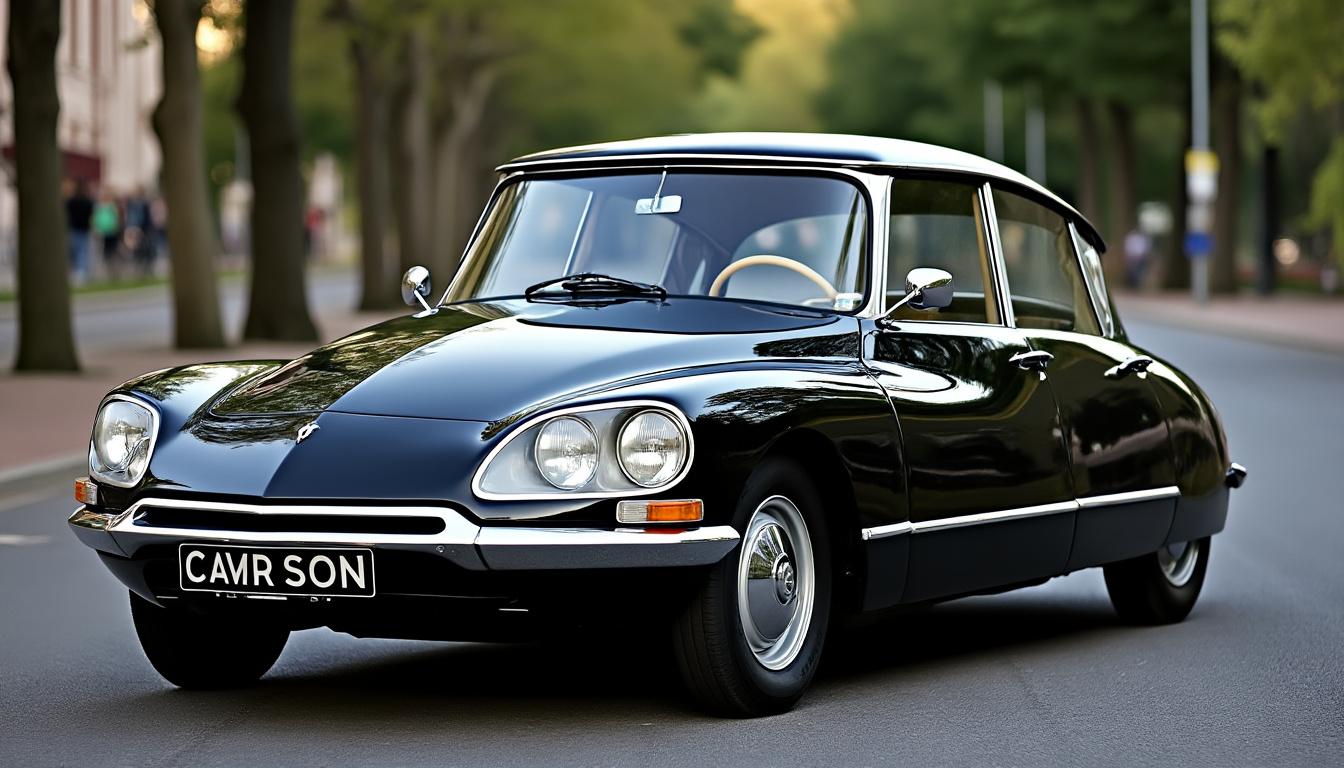
If we want to talk about refinement, the Citroën DS is a goddess on wheels, boasting elegant lines and an aerodynamic silhouette that would make any BMW or Mercedes-Benz green with envy. Unveiled at the Paris Motor Show in 1955, it was there to throw a stone into the pond and overturn the established order set by brands like Peugeot and Renault. But even a star does not shine without a shadow: its roll was comparable to that of an elephant on a trampoline.
The Antigite, the promise of a flat turn
Keeping in mind that comfort should precede any automotive adventure, engineer Paul Magès, the father of hydropneumatic suspension, bestowed upon us the Antigite. Imagine a system where a pendulum roams through resistors, thereby commanding solenoid valves and going so far as to believe it could transform the DS into a Ford Formula 1 car. Tests in 1961 thus offered roller coaster rides without the nausea, allowing the car to turn flat, as if it were on rails. What a brilliant idea, isn’t it? But where it gets complicated is that its creator found himself overwhelmed by the project's complexity.
An overly ambitious masterpiece
A masterpiece, yes, but a masterpiece that took its time. Magès, all while being a pioneer, was not in a hurry. Between perfectionism and the paranoia of Citroën's management who decided to change components without the engineer's approval, the Antigite was gradually sidelined in favor of duller projects. While the automotive world began to consider these advancements as unavoidable, Magès had good reasons to slow down the machine. Who would want to implement a patent on a car that leaks due to improvised lubrication?
A truncated legacy
With time, the Antigite fell into oblivion, joining the forgotten technologies of abandoned innovations, patiently waiting for its turn, like a failed theater actor. It wasn't until the famous Xantia Activa that the feats of anti-roll would finally be commercialized, representing an advance of at least two decades. In the meantime, Volkswagen and Audi laughed, comfortably seated in the armchair of recent successes.
The Citroën DS, emblem of French innovation, reminds us that ambition, even noble, can be accompanied by disillusionments. But isn’t that a beautiful metaphor for the automotive industry? A leap into the unknown, a moment of optimism, and then… Crack! Back to reality!
Si vous souhaitez lire d'autres articles tels que The Citroën DS was almost the pioneer of active anti-roll., consultez la catégorie Citroën.
-
Octave Léandre says:
La Citroën DS, un vrai chef-d'œuvre malgré ses défauts, reste emblématique de l'innovation française.
-
La Citroën DS est vraiment fascinante, son histoire est pleine de surprises inattendues.
-
La Citroën DS est un véritable chef-d'œuvre, alliant confort et innovation avec un style unique.
-
La Citroën DS est vraiment une beauté, mais quel dommage pour le projet Antigite !
Leave a Reply to Célestin Duval Cancel reply
Articles relatifs