Tesla stands out in Europe: a controversial feature works wonderfully, discover it in video

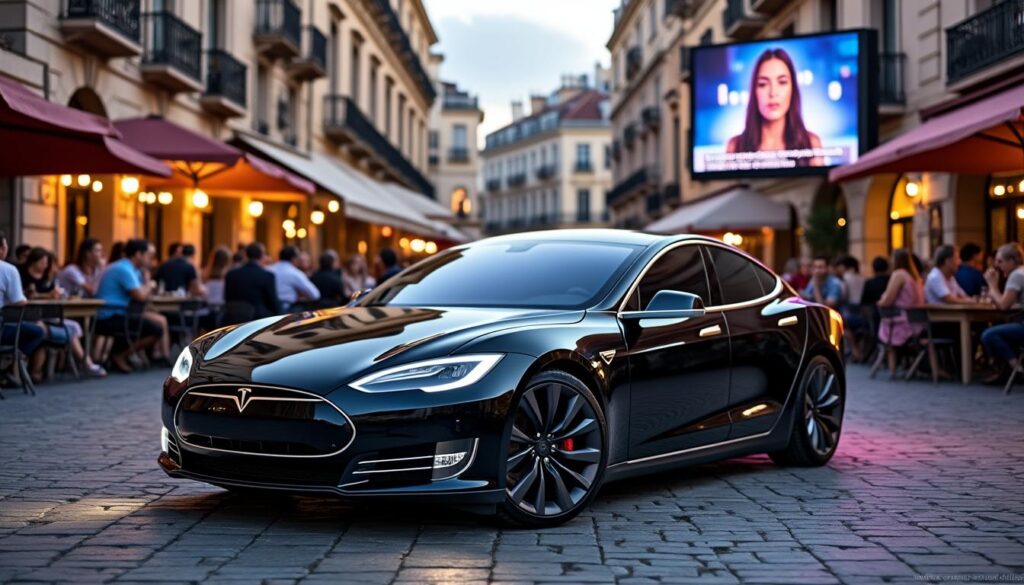

The Tesla brand continues to create buzz on the old continent with the introduction of its Full Self-Driving (FSD) autonomous driving feature. Despite regulatory challenges, this innovation stands out for its remarkable performance, captivating both technology enthusiasts and the general public. In a context where Tesla's image is being tested by fluctuating sales performances, it is crucial to consider the implications of this revolutionary advancement.
Tesla: A show of strength in the heart of Europe
Recently, sensational images circulated on social media, showing a Tesla Model 3 driving fully autonomously in Rome. This performance was highlighted in an official video published by Tesla Europe on X (formerly Twitter), where the subtitle stated: "Supervised FSD Test in Rome, awaiting regulatory approval." This type of staging aims to put pressure on European legislative bodies, which are still reluctant to adopt regulations that would allow broader use of this technology.
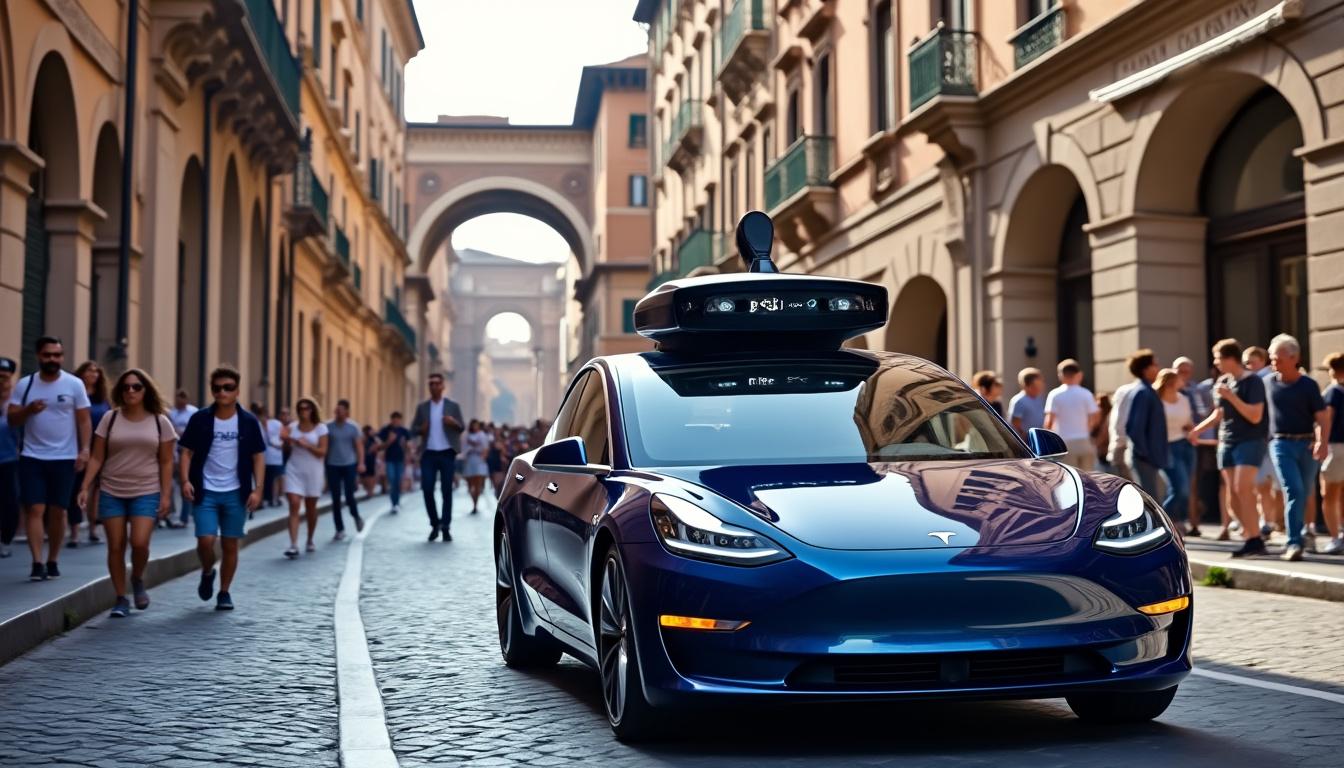
Before Rome, Tesla showcased the capabilities of its FSD in Paris and Amsterdam, testing the feature in various urban configurations. These demonstrations are not only technical tests but also marketing tools aimed at positioning Tesla as a pioneer in the field of electric vehicles and automotive innovation. Here's an overview of the results of these tests across Europe:
| City | Test Characteristics | Date |
|---|---|---|
| Paris | Collision-free driving at the Étoile roundabout | May 2025 |
| Amsterdam | Complex urban circuit with traffic lights | April 2025 |
| Rome | Diverse maneuvers, including roundabouts | June 2025 |
These demonstrations aim to prove not only the effectiveness of the FSD but also to highlight Europe's lag in adopting advanced technologies. While these advanced systems are already in use in the United States, European legislators shudder at the challenges posed by their regulation. As a result, the question remains: when will the approval come to fully legalize this feature on European roads?
The pressure on European legislators
Elon Musk, the CEO of Tesla, recently stated that regulatory delays are hindering not only the development of his technology but also the improvement of road safety. Based on internal data, he claims that activating advanced Autopilot could reduce the risk of injuries on the road by 75%. This figure is striking and raises questions about the logic behind current regulations.
- Accident avoidance: More sensors and algorithms allow for anticipating dangerous situations.
- Semi-autonomous driving: Although the FSD is considered an advanced system, it remains a level 2 according to the SAE scale, which means the driver's vigilance is still necessary.
- Proven technology: These systems, already in place in the United States, show positive results on road safety.
Nonetheless, the responsibility in the event of an accident still rests with the driver. This complex dynamic highlights the challenges faced by legislators. While the FSD could potentially transform driving across Europe, the slowness of decision-making processes could stagnate this innovation.

Challenges Tesla faces in Europe
Despite the success of technological demonstrations, the Tesla brand is encountering difficulties in the European market. In January 2025, statistics indicated a drop of 45% in its sales compared to the previous year, an alarming phenomenon that raises concerns about Tesla's sustainability on the old continent. Various factors are at play in this decline.
Among the identified reasons are market saturation, the emergence of competition, and Elon Musk's controversial image, which elicits mixed feelings among European consumers. The perception of Tesla, once synonymous with innovation and challenge, is slowly eroding, and many customers are now considering other brands as alternatives. Here is a list of the main challenges:
- Increased competition: Brands like Volkswagen and Renault are heavily investing in the electric vehicle segment.
- Controversial image: Elon Musk's political stances polarize public opinion. This affects sales.
- Regulations: New safety and emissions efficacy requirements complicate the introduction of certain models.
The electric vehicle market in Europe has become extremely competitive, and European brands are beginning to outpace Tesla in technology. For example, Volkswagen has developed innovations that other brands, like Renault, have already adopted. These advances are crucial for companies seeking to navigate this dynamic landscape while meeting growing consumer demand.
| Brand | Technology | Status |
|---|---|---|
| Tesla | FSD - Autonomous driving | Awaiting regulation |
| Volkswagen | Total Drive Assist | Deployed and approved |
| Renault | E-Tech Hybrid | Successfully marketed |
Diversity of European consumer needs
In Europe, consumer requirements for electric vehicles fluctuate greatly. Customers seek not only cars with cutting-edge features but also sustainable and practical long-term solutions. Consumers are increasingly aware of the environment and the impact of transportation on the climate. In response, manufacturers are focusing on:
- Sustainable innovation: Adding recycled materials and greener production methods.
- Increased range: Improving battery range for longer trips.
- Advanced connectivity: Integrating modern infotainment systems and remote updates.
Brands must quickly adapt to changing consumer expectations, a task that Tesla, initially at the forefront, sometimes struggles to achieve amid a plethora of new entrants to the market.
Technology: at the heart of Tesla's evolution
Tesla, with its technology-driven approach, is often at the forefront of discussions about autonomous driving and advanced systems. Full Self-Driving, although in a testing phase, represents a significant advance over other partial driving systems available on the market. In this section, we will explore the technological aspects that support these innovations.
The principles behind the FSD
The FSD relies on a multitude of sensors, including cameras, radars, and ultrasounds that provide real-time data to Tesla's artificial intelligence (AI) system. This system analyzes the environment in which the vehicle operates to make driving decisions. Key components include:
- Computer vision: Enables detection and recognition of traffic signs, pedestrians, and other vehicles.
- Machine learning: The system continuously improves thanks to data collected from thousands of vehicles on the road.
- Preventive features: Anticipation of traffic and environmental conditions to optimize safety.
These innovations make Tesla an indispensable player in the automotive industry, but their success also depends on consumer perception and the regulatory decisions of European institutions. If consumer acceptance of this innovation is essential, it is equally important for legislators to open their minds and hearts to these technological advances.
| Technology | Feature | Potential impact |
|---|---|---|
| Multiple sensors | Real-time object recognition | Increased safety while driving |
| Advanced AI | Continuous performance improvement | Increased user trust |
| Collective databases | Learning from real-life situations | Algorithm optimization |
Towards sustainable transformation
Beyond technological innovation, Tesla positions itself as an ambassador of sustainable tech. The advancements made in battery design, energy consumption optimization, and zero CO2 emissions are strong indicators of the company's commitment to the planet. In doing so, Tesla links not only technical innovation and performance improvement but also social responsibility. However, this requires regulations to keep pace and support the infrastructure needed for this transition.

This same device that allows us to move more freely and efficiently in our daily commutes poses a significant challenge to our legislators. In this dynamic, Tesla must not only convince its customers but also regulators to adopt a more proactive approach towards autonomous driving, so that it becomes not just an aspiration, but a tangible reality on European roads.
Si vous souhaitez lire d'autres articles tels que Tesla stands out in Europe: a controversial feature works wonderfully, discover it in video, consultez la catégorie Non classé.
-
Léandre Barbier says:
La technologie FSD de Tesla semble prometteuse, mais les régulations doivent suivre pour garantir la sécurité.
-
La technologie FSD de Tesla pourrait vraiment révolutionner notre façon de conduire. Hâte de voir les progrès!
-
L'innovation de Tesla pourrait transformer notre façon de conduire, mais il reste encore des étapes à franchir.
-
Tesla fait vraiment des choses impressionnantes, mais j'espère qu'ils seront vite réglementés en Europe.
Leave a Reply to Léandre Barbier Cancel reply
Articles relatifs