Tesla remains calm in the face of declining electric vehicle sales, and here are the reasons



While most car manufacturers struggle to maintain their market shares in an increasingly competitive sector, Tesla displays a disconcerting calm in the face of a significant drop in its electric car sales. The figures are indisputable: Tesla's sales have declined in many regions, especially in Europe, where the company has observed alarming decreases. Nevertheless, Elon Musk and his team remain confident. This attitude could be explained by a combination of strategic, financial, and marketing factors that, despite the storm, allow Tesla to stay the course.
Tesla in the storm: an Olympian calm
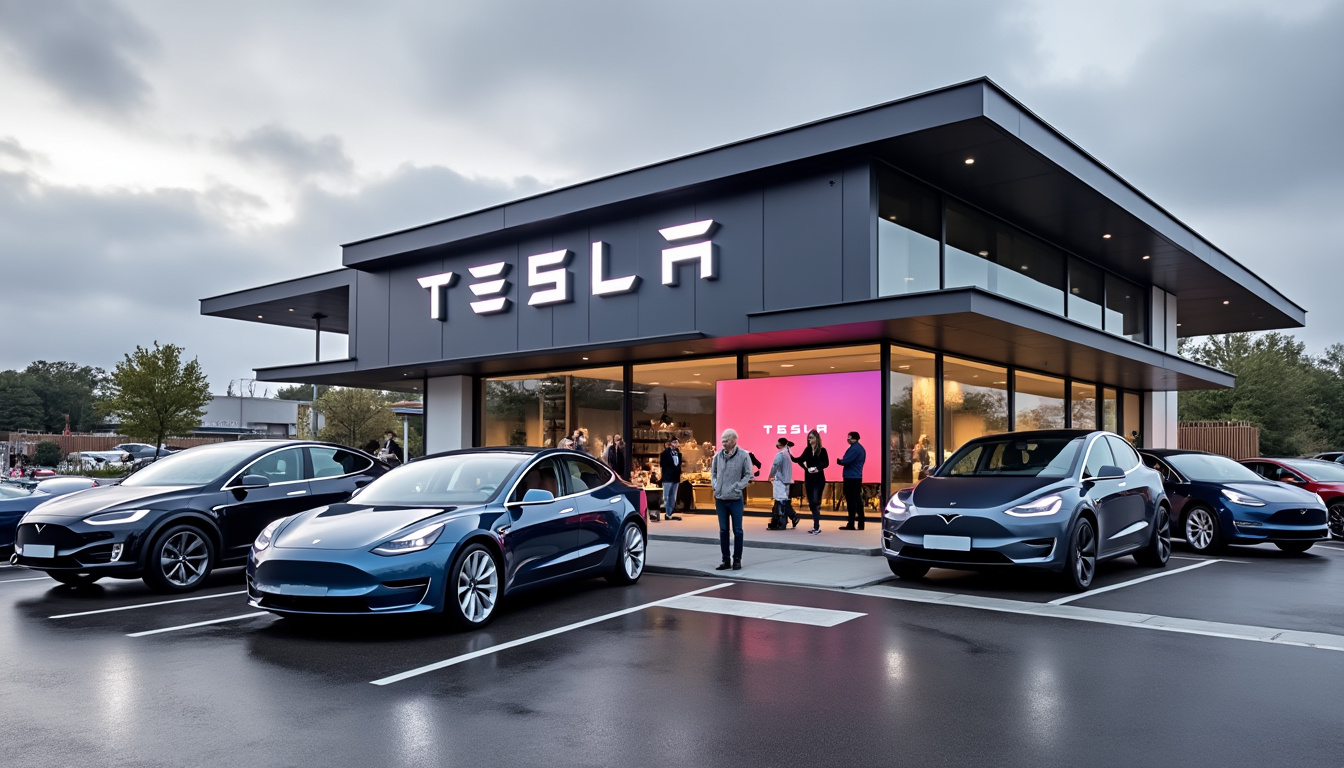
Since the beginning of 2025, Tesla's vehicle sales data show a concerning downward trend. Indeed, in Europe, Tesla deliveries have fallen by 70% in just one year, and forecasts do not indicate any immediate improvement. These figures, although alarming for other manufacturers such as Renault or Ford, do not seem to scare Tesla.
The reasons for this serenity
The first reason that could explain Tesla's serene attitude towards the decline in its sales lies in its revolutionary tax strategy. Unlike many competitors, Tesla has set up a complex financial arrangement that allows it to significantly reduce its tax obligations. The company relies on several subsidiaries abroad, such as Tesla Motors Netherlands, which generated a revenue of 26 billion euros while paying very little tax.
- Tax optimization through subsidiaries
- Use of tax credits for electric vehicles
- Focus on product innovation to maintain consumer interest
The perception of the market and consumers
The second reason could be at the level of the brand perception. Tesla enjoys a pioneering image in the electric vehicle sector. Consumers may be influenced by Tesla's status as a symbol of innovation. Despite declining sales, brand loyalty seems to remain strong. Recent models, such as the Model Y and the Model 3, continue to be among the most popular in Europe, despite increased competition from giants like BMW and Volkswagen.
Understanding the growing competition
With the increase in competition in the electric car market, particularly from brands like Nissan, Hyundai, and Audi, Tesla must confront crucial strategic choices. The rise of these traditional brands has created increased price pressure and has led Tesla to adopt a more moderate approach regarding its pricing. On the other hand, some analysts predict a price drop at Tesla in hopes of regaining market share.
| Brand | Model | Average Price (in euros) | Market Status |
|---|---|---|---|
| Tesla | Model Y | 55 000 | Leader |
| Renault | ZOE | 35 000 | Increasing competition |
| Nissan | Leaf | 30 000 | Stable |
| Volkswagen | ID.4 | 45 000 | Strong |
The internal challenges and innovation at Tesla
Despite this serenity, the challenges for Tesla remain very real. Criticisms mainly concern a lack of innovation in its new models. While other brands, such as Mercedes-Benz and Peugeot, regularly present new features and updates, Tesla appears to be lagging behind. The release of the Cybertruck, initially eagerly awaited, has been perceived as a commercial flop, adding to the need for a reevaluation of the product strategy.

Efforts to revitalize innovation
To overcome these challenges, Tesla could consider several approaches:
- Invest more in research and development
- Expand product ranges by targeting new market segments
- Increase collaborations with other tech companies to integrate advanced AI systems
An uncertain future: between opportunities and risks
The current situation of Tesla represents a dual reality: on one side, the company is well-positioned thanks to its tax strategy and brand image, and on the other, it must navigate an increasingly turbulent environment. Sales declines may lead to new price reviews, as rival brands like Ford and BMW continue to emerge with new offerings.
Market perspectives for electric vehicles
Looking ahead to 2025, the electric vehicle market is poised for substantial changes:
- The growing demand for sustainable and eco-friendly vehicles
- The emergence of new players in the electric vehicle sector
- The development and improvement of charging infrastructure
Evolving business strategies
In light of the current challenges, it is essential for Tesla to redefine its business strategies to adapt to a dynamic market. Innovation, flexibility, and a keen listening to consumer needs will be key factors to stay ahead of competitors like Renault, Nissan, and Hyundai. Tesla's ability to anticipate market movements will be crucial for its survival in the modern automotive landscape.

Si vous souhaitez lire d'autres articles tels que Tesla remains calm in the face of declining electric vehicle sales, and here are the reasons, consultez la catégorie Non classé.
-
Ezra Lemoine says:
Malgré la baisse des ventes, Tesla reste une référence dans le secteur des voitures électriques.
-
Tesla doit vraiment innover pour rester compétitif dans ce marché en pleine évolution.
-
Malgré la baisse des ventes, Tesla reste un leader dont l'innovation est attendue.
-
C'est fascinant de voir comment Tesla reste confiante malgré la baisse des ventes.
Leave a Reply to Elian Duschene Cancel reply
Articles relatifs