Tesla calls on human operators to oversee its autonomous robotaxis



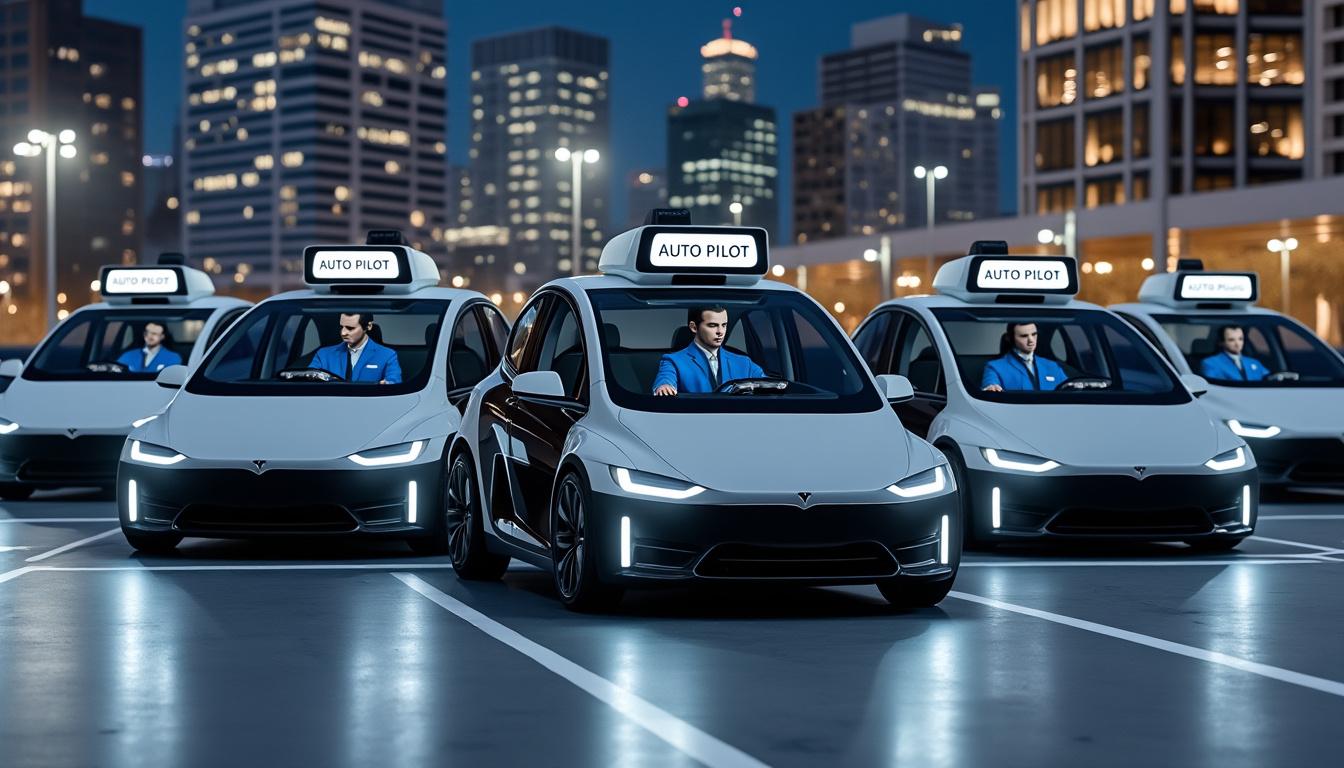
Tesla, once synonymous with 100% autonomous technology, is making an intriguing pivot in its strategy for deploying autonomous robotaxis. With the imminent arrival of its fleet in Austin, Texas, Musk's company is calling on human operators to monitor its vehicles. This decision raises exciting questions about the future of mobility and the balance between technological innovation and safety.
The Enigma of Autonomy Tesla Style
As the company prepares to deploy its driverless models by the end of June, a somewhat disenchanted reality appears: many technicians will be present, equipped with virtual reality headsets, to monitor these robotaxis in real-time. Is this an admission that the innovation promised by Elon Musk is less advanced than advertised?
- ✨ Massive recruitment of remote operators
- 🚗 Pilot fleet of 10 vehicles in Austin accessible by invitation only
- ⚖️ Human oversight to ensure the safety of passengers
This hybrid approach raises questions: how far should we trust technologically advanced interfaces while keeping a human eye on the road? The need for human oversight reminds us that even the most optimistic AI solutions must face the complexities of the real world.
The Reality in Numbers: Safety and Supervision
To delve deeper into this reality, it is essential to consider the implications of this human supervision. Analysts like Adam Jonas from Morgan Stanley highlight the importance of the presence of operators, which underscores the complexity of this technology. Indeed, data from the National Highway Traffic Safety Administration shows that thousands of accidents can be linked to assisted driving systems.
| Manufacturer | Technologies Used | Type of Supervision | Testing Area |
|---|---|---|---|
| Tesla | Cameras + AI | Remote Operators | Austin, Texas |
| Waymo | Lidar + Cameras + Radar | Response Agents | Several US Cities |

The Need for a Cautious Approach in Technological Deployment
With a forthcoming fleet of around a hundred robotaxis expected, Tesla's data acquisition and learning strategy should be commended for its caution. A strong integration of human operators allows for emergency interventions in complex scenarios while flooding the AI system with information to enhance its algorithms. Here are some roles of human operators in this context:
- 👷♂️ Development of an interface connecting humans and vehicles
- ⚙️ Design of collaboration between operators and AI
- 🚨 Emergency intervention on demand
- 📈 Data analysis to optimize driving
Lessons to Learn from Other Companies
Tesla’s model, while ambitious, is reminiscent of those of other players in the mobility sector. For instance, Waymo has already implemented “fleet response agent” systems capable of intervening in difficult situations. This human learning and adaptation capability in the face of AI could be the true future of autonomous transport.
| Interfaces | Technologies in Place | Examples of Situations |
|---|---|---|
| Tesla | AI + Cameras | Traffic complexity |
| Waymo | Lidar + Cameras + Radar | Avoiding unexpected obstacles |

A Step Towards Safer Autonomy
The path Tesla is taking with its robotaxis represents a serious step towards safer and more efficient mobility. The human operators, far from being a mere crutch, are a true assurance against potential risks, proving that the future of transportation relies on a clever collaboration between humans and machines.
To learn more about Tesla’s prospects in the field of autonomous robots, check out this exciting article: Tesla adjusts its commitments.
The landscape of autonomous transport is thus in full transformation, and the challenges that arise only amplify the excitement surrounding this burgeoning technology.
Si vous souhaitez lire d'autres articles tels que Tesla calls on human operators to oversee its autonomous robotaxis, consultez la catégorie Non classé.
-
Aelyx Vandreth says:
C'est intéressant de voir l'intégration des opérateurs humains pour garantir la sécurité des robotaxis.
-
C'est fascinant de voir comment Tesla allie technologie et intervention humaine pour assurer la sécurité.
-
C'est intéressant de voir Tesla adopter cette approche hybride, ça pourrait vraiment améliorer la sécurité.
-
C'est fascinant de voir comment Tesla intègre des humains dans ses robotaxis pour plus de sécurité.
Leave a Reply
Articles relatifs