Subaru innovates with an external airbag to ensure the safety of cyclists

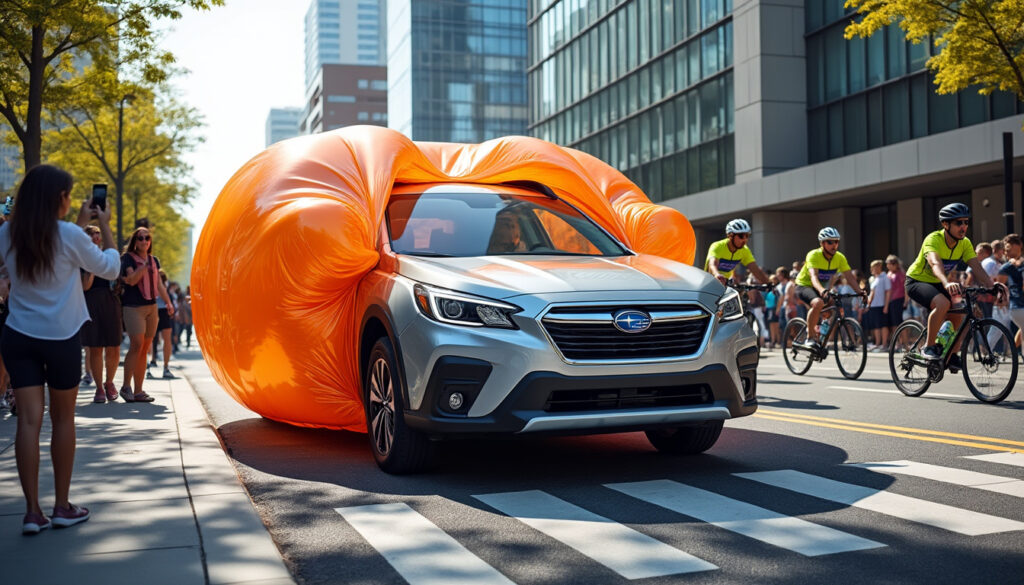

As urban mobility rapidly transforms, the safety of cyclists emerges as a crucial issue. Subaru, a renowned player for its commitment to automotive safety, offers a major innovation: an exterior airbag designed specifically to protect cyclists in the event of a collision. This revolutionary technology, which employs sophisticated equipment such as sensors, cameras, and radars, aims to reduce severe injuries often observed in accidents between vehicles and two-wheelers. In light of the explosion of soft mobility and the increase in interactions between cars and cyclists, this advancement appears as a new frontier in prevention and shared responsibility on the road.
Subaru deploys this device on its Forester model, embodying a technological turning point for 2025. Combining innovation and safety in a context of complex coexistence among users necessitates a reconsideration of driving and road behaviors. This unprecedented solution promises not only to protect cyclists but also to redefine global standards.
How Subaru's exterior airbag works to protect cyclists in urban environments
The heart of the system developed by Subaru is based on a fine understanding of accident dynamics between cars and cyclists. Traditionally, airbags are deployed only inside the vehicle to protect the occupants. Here, the innovation lies in the multiple sensors connected to the EyeSight system, a well-known technology from Subaru, extending protection to the outside.
Equipped with wide-angle cameras and radars, the system analyzes the immediate environment of the car in real time. When the sensors detect that a collision with a cyclist or pedestrian is imminent, the airbag located on the side reinforcements of the body deploys in a fraction of a second. This inflatable barrier then acts as a protective cushion between the vulnerable body of the cyclist and the rigid areas of the vehicle, including door frames and the chassis.
This innovation far exceeds the front airbags that deploy at the base of the windshield, often responsible for severe head injuries in accidents. By extending the coverage, the exterior airbag significantly reduces the risk of cranial and thoracic injuries, which remain major causes of death and severe disability.
The technical advantages of the EyeSight system integrated with the exterior airbag
The EyeSight system on which the airbag is based is the cornerstone of this success. It combines image processing and radar detection to analyze:
- The presence and behavior of cyclists around the vehicle
- The speed of approach of the vehicle and the cyclist
- The potential impact trajectory based on relative movements
This analysis allows for ultra-rapid deployment of the inflatable cushion, just in time to absorb the shock and promote effective prevention.
The challenges of implementation and their resolution
Integrating an exterior airbag system requires addressing several technical and human constraints:
- Differentiation of obstacles: The device must avoid unnecessary deployments in the face of fixed objects or small animals.
- Temporal precision: The cushion must deploy neither too early nor too late to ensure its protective impact.
- Aesthetic integration: The airbag must not alter the visual or aerodynamic aspect of the vehicle.
- Standards and regulations: Standards vary between markets, hindering immediate global adoption.
Subaru addresses these challenges with a combination of advanced software and innovative mechanical design, resulting in a technology that promises, with increased reliability, better safety for cyclists in busy streets.
| Feature | Description | Impact on safety |
|---|---|---|
| Camera and radar sensors | Dynamic analysis of the nearby environment | Early detection and precise differentiation of cyclists |
| Exterior side airbag | Deployment around the side reinforcements of the body | Reduction of cranial and thoracic trauma |
| EyeSight system | Intelligent fusion of visual and radar data | Optimal reactivity at the moment of collision |
Impact of Subaru's innovation on the coexistence between drivers and cyclists
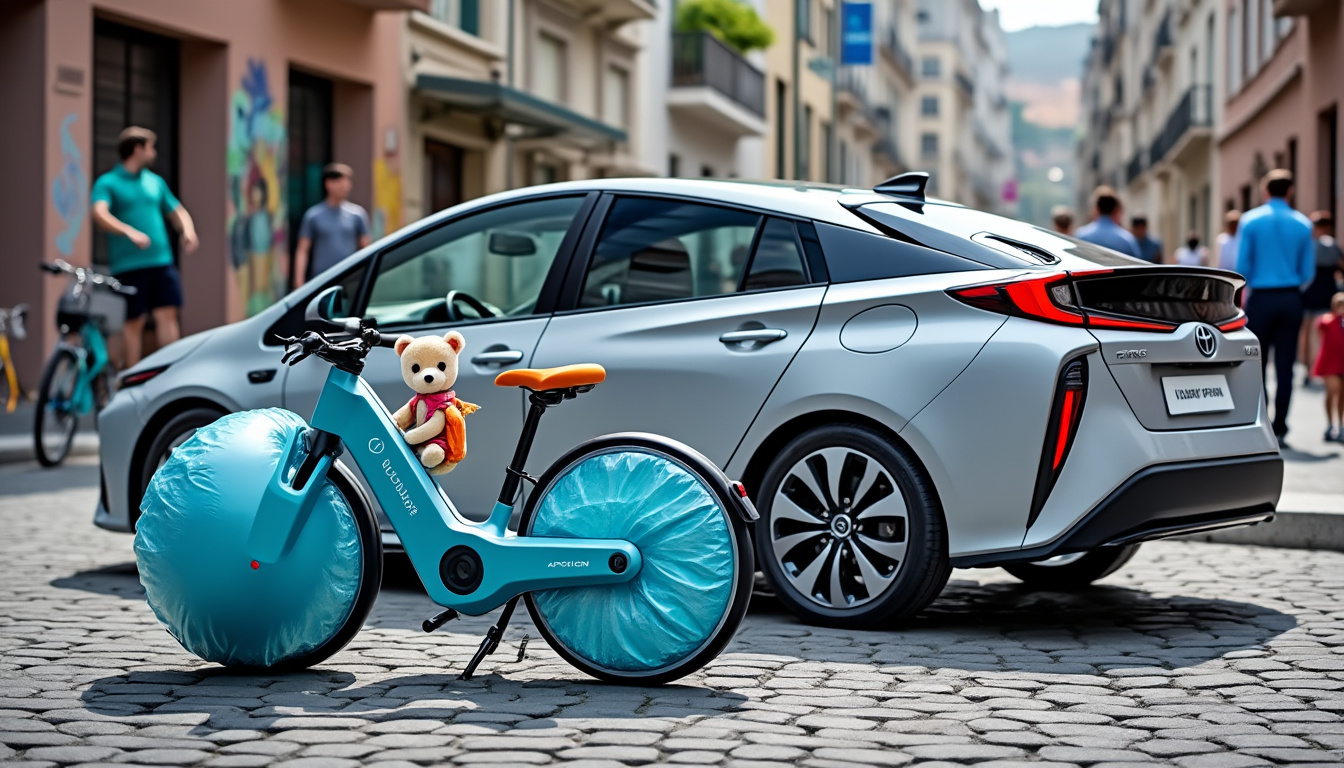
The rise of soft mobility is reinventing the traditional configuration of urban travel. While cars and cyclists now share certain spaces more harmoniously, this coexistence also generates increased risks, judging by the frequency of serious accidents.
This technological innovation is therefore not limited to a simple gadget but acts as a radical prevention device. It changes the way drivers approach their responsibility on the road and that of cyclists as vulnerable users. By integrating an exterior airbag, Subaru encourages a cultural shift aimed at valuing collective safety and mutual vigilance.
Concrete effects on cyclist safety
The initial data collected in Japan, a pioneering country in implementation, show a measurable decrease in severe injuries among cyclists involved in collisions with the equipped Forester. The device primarily affects:
- The reduction of serious mechanical trauma, particularly to the head
- The decrease in prolonged hospitalizations due to direct impact with the body
- The improvement in post-accident survival rates
- A better receptivity of drivers to anticipate risks
Transformation of behaviors in urban environments
This innovation also has an educational effect. By making Subaru's commitment to active safety visible, the associated campaigns raise drivers' awareness of the need to adopt more responsible driving. Some experts emphasize that this enhanced visibility, coupled with technical prevention, contributes to establishing a climate of increased trust among users.
The technology also indirectly influences public policies, particularly by inviting authorities to integrate cyclist safety more into vehicle approval standards.
| Consequence | Description | Impact on overall safety |
|---|---|---|
| Decrease in severe trauma | Fewer head and chest injuries among impacted cyclists | Significant reduction in mortality and disabilities |
| Awareness for drivers | Increased vigilance towards cyclists | Surer and more cautious behaviors |
| Influence on legislation | Incentive to strengthen external safety standards | Increased standardization and enhanced safety |
The future perspectives for exterior airbag technology in the automotive sector
As Subaru paves the way with its exterior airbag for cyclists, the question arises regarding its larger scale adoption and technical evolution. The integration of such innovation in the automotive industry could radically transform safety standards.
The complexity of the system, combining artificial intelligence and mechanical engineering, requires rigorous development to meet the specificities of each market.
Towards global and multidimensional adoption
- Adaptation to international regulations: Harmonizing standards to enable global dissemination of the system
- Extension to other vehicles: Possible integration on city cars, SUVs, and even heavy trucks
- Continuous improvement: Using machine learning to optimize detection and deployment
- Interoperability with other safety systems: Autonomous emergency systems and driver assistance
Innovation in the service of sustainable and responsible mobility
This advancement symbolizes a paradigmatic shift in the gradual improvement of safety practices on the road. By combining technology and responsibility, the exterior airbag encourages a collective awareness that fits into the logic of more respectful urban mobility.
Now more than ever, prevention relies on the development of small repetitive technical adjustments that, when combined, drastically increase cyclist safety. From this perspective, Subaru appears as a pioneer capable of inspiring the entire sector.
| Dimension of innovation | Potential for evolution | Impact on mobility and safety |
|---|---|---|
| AI technology for detection | Learning and adaptation in real-time | Optimization of collision prevention |
| Extension to other types of vehicles | Multiplication of uses and contexts | Broadening coverage of vulnerable users |
| Synergy with driver assistance | Complex but promising interactions | Reduction of accidents due to embedded technology |
How individual and collective responsibility is being reinvented through Subaru's security innovation
The advent of this exterior airbag illustrates a fundamental redefinition of responsibility in driving. It represents a giant step towards shared safety between motorists and cyclists, where each road user becomes more aware of the risks.
The success of such innovations depends primarily on a collective awareness that goes beyond merely technical innovation. It is about cultivating a responsible and proactive attitude, both in driving and in the very design of vehicles.
Principles of prevention and continuous improvement
- Small gestures, big results: Attentive and respectful driving multiplies safety at low human cost
- Technology serving vigilance: The exterior airbag does not replace the driver's attention; it complements it
- Sharing urban space: Responsibility extends to all users in an inclusive and supportive logic
- Education and training: For a better understanding of embedded technologies and their usefulness
A dynamic involving all stakeholders
This innovation also promotes involving public authorities, manufacturers, educators, and users. Together, they form a favorable ecosystem for sustainable progress in road safety. Changes rely on continuous improvement, nourished by experience and ground feedback.
| Actor | Role in safety | Expected impact |
|---|---|---|
| Drivers | Responsible driving that respects cyclists | Reduction of accidents and injuries |
| Cyclists | Respecting rules and constant vigilance | Better integration into traffic |
| Manufacturers | Development of innovative technologies | Material improvement of safety |
| Public authorities | Adapted regulatory framework and awareness campaigns | Strengthening standards and prevention |
Best practices to adopt for safe driving in the presence of cyclists
Beyond technological innovation, cyclist safety also depends on the behaviors adopted by drivers on a daily basis. Subaru's technology provides a valuable safety net, but it necessarily accompanies safe, respectful, and preventive driving.
Here is a list of concrete recommendations to integrate into your driving routine:
- Reduce speed in urban areas: Moderate speeds leave more time to react to unexpected situations.
- Anticipate cyclists' movements: Be attentive to blind spots and cyclists' turn signals.
- Maintain a safe distance: Keep a sufficient gap while overtaking to avoid any contact.
- Use mirrors and electronic aids: Technological assistance can complement natural vigilance.
- Avoid distractions: Phone, radio, or other disruptive elements should be controlled to not delay reaction.
- Promote courtesy: Patience and mutual understanding improve coexistence on the road.
Concrete example of an incident avoided through preventive driving
In a large metropolis, a driver was scrupulously respecting safety distances and had heightened attention. When a cyclist abruptly hit the side of the vehicle, the driver was able to brake, facilitating the deployment of the exterior airbag. The combination of responsible behavior and technology helped avoid serious injuries. This case illustrates the importance of synergy between innovation and vigilance.
| Good practice | Immediate advantage | Safety impact |
|---|---|---|
| Speed reduction | Better reactivity | Reduction of serious accidents |
| Anticipation of cyclists | Anticipating trajectories | Reduction of collisions |
| Respect for distances | Fewer direct contacts | Prevention of injuries |
Si vous souhaitez lire d'autres articles tels que Subaru innovates with an external airbag to ensure the safety of cyclists, consultez la catégorie News.
-
Tirian Valgorn says:
C'est une avancée incroyable pour la sécurité des cyclistes dans nos villes en pleine évolution.
-
C'est une avancée incroyable pour la sécurité des cyclistes. J'espère que cela se répandra rapidement!
-
Cette innovation de Subaru est vraiment impressionnante et pourrait sauver beaucoup de vies sur la route.
Leave a Reply to Lysandre Verne Cancel reply
Articles relatifs