Registration of new cars: a decrease of 1.2% in April 2025, with battery electric vehicles representing 15.3% of the market

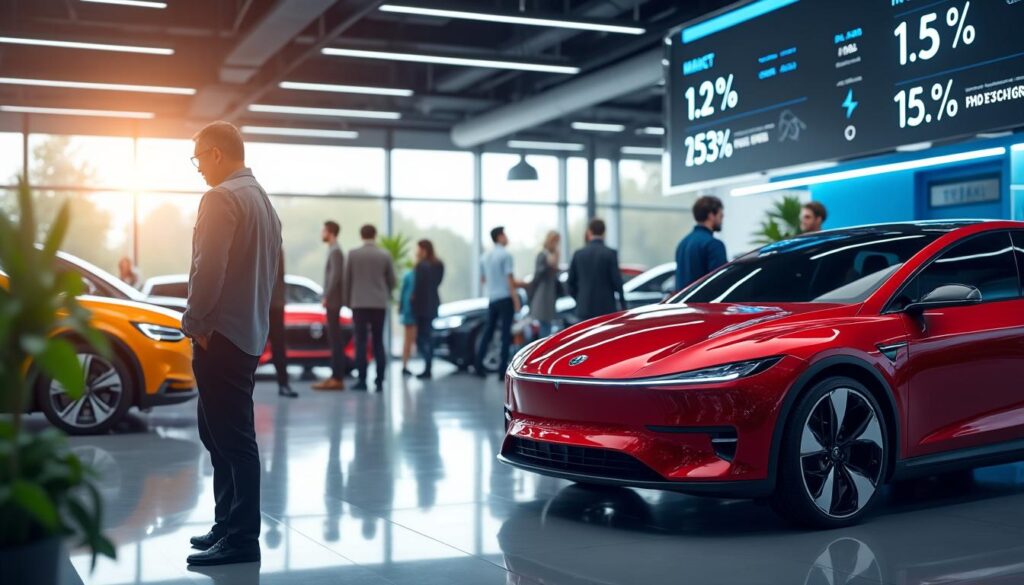

In a constantly evolving automotive landscape, the inspection of new car registrations reveals fascinating dynamics. In April 2025, despite an annual decrease of 1.2% in private vehicle registrations, a renewed interest is evident with a growth of 1.3% compared to the previous year. Electric vehicles, and particularly {{strong|battery electric vehicles}}, are asserting themselves with 15.3% of the market, reflecting a significant transformation in consumer choice. This article examines current trends in car sales, the impact of environmental policies, and changes in consumer preferences.
Analysis of New Vehicle Registration Data
The automotive market in Europe faces many challenges and dynamics. With the registration of 140,800 vehicles in April 2025, the market appears to have rebounded, although the overall figure remains lower than the previous year. This observed phenomenon warrants a thorough examination to understand its causes, implications, and future outlook.

Current State of Registrations in April 2025
To begin, a summary table of car registrations in April 2025 compared to 2024 can shed light on market evolution:
| Energy Source | Registrations April 2025 (units) | Market Share (%) | Change Compared to 2024 (%) |
|---|---|---|---|
| Battery Electric Vehicles | 558,262 | 15.3 | +26.4 |
| Hybrid Vehicles | 1,285,486 | 35.3 | +20.8 |
| Gasoline Vehicles | 1,041,176 | 28.6 | -20.6 |
| Diesel Vehicles | (Not Specified) | 9.6 | -24.4 |
The data reveals a contrasting situation with strong demand for {{strong|hybrid vehicles}}, while {{strong|gasoline}} and {{strong|diesel cars}} continue to decline. In particular, the drop in registrations of gasoline cars, which reaches -20.6%, underscores a paradigm shift among consumers. For example, in France, this decline is particularly pronounced with a decrease of 35.2%, raising questions about the future of the traditional combustion engine market in the country.
Impact of Policies and Consumer Trends
Environmental issues have played a crucial role in redefining consumer preferences. For instance, financial incentives for purchasing {{strong|electric vehicles}} have contributed to the surge in sales, as evidenced by brands {{strong|Tesla}} and {{strong|BMW}}, which focus on this segment. This dynamic is supported by the report from the European Environment Agency, which assesses the impact of CO2 reduction targets on automakers' choices.
With a future where electric vehicles are increasingly favored, the publication of data on CO2 emission reductions could further motivate consumers to opt for electric models. In 2025, forecasts suggest that the market share of electric vehicles could reach 20%, an ambitious yet achievable target if current trends continue.
Electric Vehicles: Rising Power
Battery electric vehicles stand out due to their rapid growth. At the beginning of 2025, {{strong|electric car sales}} increased by 26.4%, illustrating a growing interest in sustainable transport solutions. The breakthrough of these models in Europe is particularly notable in the United States, where iconic brands such as {{strong|Tesla}} hold a dominant market position.
Key Figures on Electric Car Sales
- 558,262 units registered in April 2025, representing 15.3% of the total market
- Sales saw an increase of 26.4% compared to the previous year
- Main markets include Germany (+42.8%), Belgium (+31.3%), and the Netherlands (+6.4%)
- France recorded a decrease of 4.4% despite an improvement in April
Challenges to Overcome for Electric Vehicles
Despite these encouraging results, challenges persist, especially regarding charging infrastructure, which must keep pace with this growing demand. Some brands, like {{strong|Nissan}} and {{strong|Renault}}, are heavily investing in the development of charging stations to facilitate this transition. Another challenge is managing battery lifespan and recycling, to ensure that the rise of electric vehicles does not generate new environmental problems.
The Weight of Hybrid Vehicles in the Automotive Market
Hybrid vehicles continue to be the most popular category, representing 35.3% of total registrations in April 2025. This segment plays a crucial role for those who want to reduce their carbon footprint without sacrificing the convenience of a combustion engine. As hybrid vehicle sales increase, major brands such as {{strong|Ford}}, {{strong|Peugeot}}, and {{strong|Volkswagen}} are making efforts to expand their offerings.

Exciting Data on the Hybrid Market
On one hand, key elements on hybrid vehicle registrations in 2025 include:
- More than a 20% increase was observed in the specific hybrid market.
- Hybrid models account for 1,285,486 units registered this month.
- Main player countries include France, Spain, and Italy, all recording significant growth.
Automakers' Vision on Hybrids
Many automakers, like {{strong|Toyota}}, have even committed to offering a wide range of hybrid models, driven by the success of their long-range hybrid initiative. However, this strategy also raises questions. While some manufacturers are betting on hybrids, others, such as {{strong|Hyundai}}, are pivoting towards hydrogen vehicles, facing the question of the future of hybrids in light of the rise of fully electric vehicles. These are the questions the automotive sector is contemplating.
The Decline of Combustion Engine Models: Gasoline and Diesel
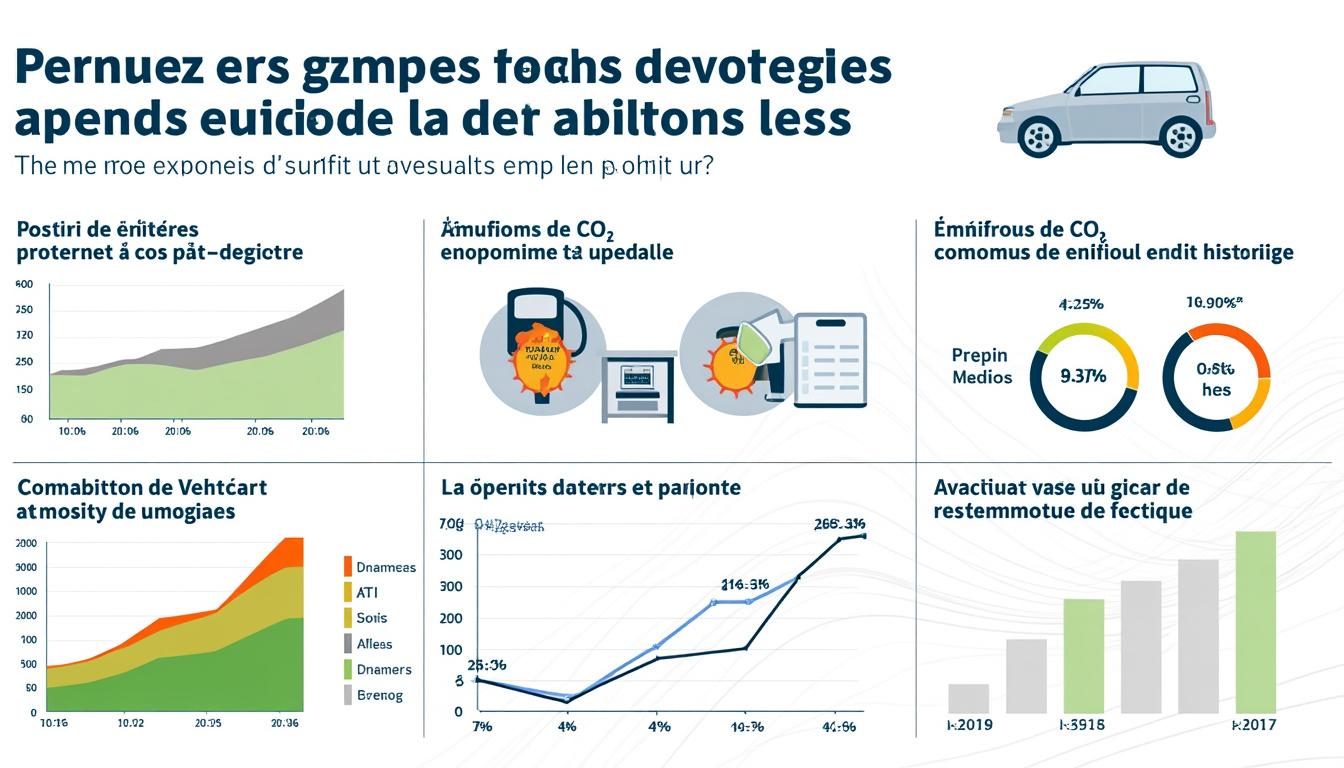
EU regulations on CO2 emissions, combined with awareness campaigns about environmental impacts, have led to a drop in registrations of gasoline and diesel models in April 2025. Sales of gasoline cars have decreased by 20.6% at the European level, with France being the most affected, experiencing a plunge of 35.2%.
Evolution of Registrations of Combustion Engine Cars
| Vehicle Type | Registrations April 2025 (units) | Change Compared to 2024 (%) |
|---|---|---|
| Gasoline | 1,041,176 | -20.6 |
| Diesel | (Not Specified) | -26.4 |
Consequences for Manufacturers
For manufacturers, this decline necessitates strategic reassessment. Brands such as {{strong|Volkswagen}} and {{strong|Ford}} must adapt to this new market reality. Significant investments are needed to increase the production of electric and hybrid vehicles. Furthermore, companies must consider transforming their production lines to reduce dependence on models that are rapidly declining.
Future Perspectives and Transitions in the Automotive Market
In conclusion, the European automotive market in 2025 clearly shows a shift towards less polluting vehicles. The necessity for an energy transition has become imperative, and the registration figures testify to this. Battery electric vehicles, while still in a growth phase, offer promises of the future, while hybrids stabilize as an invaluable alternative choice.
Si vous souhaitez lire d'autres articles tels que Registration of new cars: a decrease of 1.2% in April 2025, with battery electric vehicles representing 15.3% of the market, consultez la catégorie Non classé.
-
Sérénia Lorrain says:
C'est fascinant de voir comment les véhicules électriques gagnent du terrain si rapidement dans le marché.
-
C'est fascinant de voir la montée des véhicules électriques, mais des défis demeurent.
Leave a Reply
Articles relatifs