Podcast 347: the highlights of automotive news from week 22



Car enthusiasts know that every week brings a lot of exciting news. The podcast 347 highlights the key events of week 22, and the content does not disappoint. This week, the situation in the European market, announcements regarding low emission zones (ZFE), as well as remarkable successes in the technology sector, such as with Xiaomi, and stock market battles with BYD. Listening to this podcast helps to understand the current dynamics of the sector, both in terms of vehicles and the surrounding technologies.
The European automotive market in contraction: state of play
In April, the European automotive market recorded a slight decrease in new car registrations, amounting to 1.08 million units, according to data from the ACEA. This decline of 0.3 % affected major countries, notably Germany, France, and the United Kingdom. This phenomenon raises important questions about the factors influencing this trend.

Analysis of the figures
The declines in registrations can be attributed to several elements:
- Inflation and purchasing power: The rising cost of living plays a major role in the decision to purchase a new vehicle.
- Energy transition: Many consumers are waiting for more attractive offers regarding electric vehicles.
- Geopolitical conflicts: The global situation, notably the crisis in Ukraine, has repercussions on supply and automotive production.
For brands like Renault, Peugeot, and Volkswagen, this contraction is a warning. Yet, some manufacturers continue to innovate and adapt. The fact that consumers are cautious in their choices means they are now looking for real value, posing a challenge to traditional brands.
| Brand | Change in registrations in April 2025 |
|---|---|
| Renault | -2% |
| Peugeot | -1% |
| Volkswagen | -3% |
| BMW | -0.5% |
Thus, the figures illustrate a generalized trend, but it is crucial to ask: how will these brands respond to this trend? Innovation and resilience will be essential. For more analyses on this subject, one can consult sources such as GT Automotive.

The removal of low emission zones (ZFE)
The issue of ZFE raises an exciting debate. The traffic restrictions imposed in certain areas, based on the Crit’Air stickers, have drawn much criticism. The restrictions, although initially designed to improve air quality, have been contested for practicality reasons. Recently, the National Assembly voted in favor of the removal of these zones.

The removal process
To understand the scope of this decision, it is important to analyze the upcoming steps:
- The vote on the article as part of the simplification law.
- The full adoption of the law by the Assembly and the Senate.
- The concrete implementation of the removal of ZFE in around forty municipalities.
This development could redefine citizens' buying behaviors. Drivers will be able to hit the road without constraints, but it also reminds us that the fight for cleaner air is not over. Brands like Mercedes-Benz and Toyota, which invest in cleaner engines, could be the ones to benefit.
| Zone | Current state | Estimated date of removal |
|---|---|---|
| Paris | Active | Expected end of 2025 |
| Lyon | Active | Expected end of 2025 |
| Bordeaux | Active | Expected end of 2025 |
This type of change suggests that a new era is looming for the automobile, blending regulatory complexity with opportunities for innovation. It remains to be seen to what extent these changes will influence the fight against pollution.
Xiaomi: a giant striking hard
In the tech world, Xiaomi continues to amaze. The company recently published impressive financial results for the first quarter of 2025, with revenue of 14.5 billion euros, representing an increase of 47.4 % compared to the previous year. This success is driven notably by its efforts in artificial intelligence and in the electric vehicle sector.
The impact on the automotive market
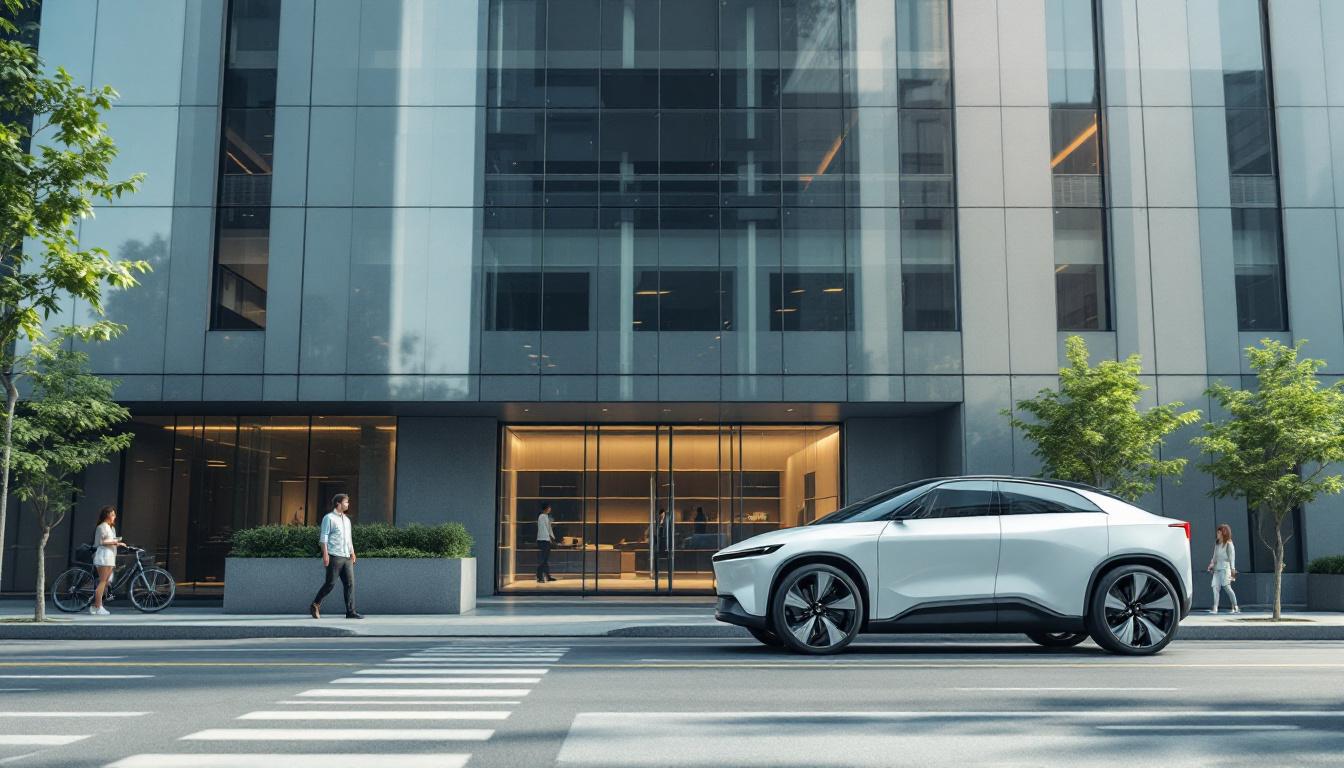
Xiaomi has crossed a milestone by releasing over 28,000 units of its SU7 model in April. This model has become the best-selling in the segment for vehicles over 26,000 euros in China. Could this phenomenon have repercussions on traditional manufacturers such as Nissan and Ford? Market competitiveness is expected to intensify.
- Xiaomi’s success can be explained by:
- A customer-centric approach.
- A commitment to cutting-edge products.
- An aggressive pricing strategy, attracting a wide customer base.
| Indicator | Q1 2025 Result |
|---|---|
| Revenue | 14.5 billion euros |
| Adjusted net profit | 1.39 billion euros |
Other companies now have to reassess their strategies. The market is undergoing a transformation, and historical players will need to adapt quickly. At this stage, the challenges for the automotive industry are therefore numerous.

BYD: a player in turmoil
In contrast to Xiaomi's successes, BYD is going through a difficult period in the stock market. The Chinese manufacturer recently suffered a decline in its share price of more than 10 % due to massive price cuts on its electric vehicles. This price war has implications for the entire industry.
Consequences of the price war
The price reductions, of up to 34 % on 22 models, aim to improve sales. However, this raises questions about the sustainability of this strategy.
- Short-term effects:
- Probable increase in immediate sales.
- Difficulties in maintaining long-term profitability.
- Long-term effects:
- Consolidate BYD's presence in the market.
- Risks for other companies, prompting them to do the same.
| Model | Price before reduction | Price after reduction |
|---|---|---|
| Model A | 40,000 € | 26,400 € |
| Model B | 50,000 € | 33,000 € |
While consumers may be attracted by these price cuts, the question remains whether this approach is truly sustainable in the long term. What solutions might BYD consider in the future?
Android Automotive and Stellantis: the digital future
While some companies are fighting to stay afloat, others are taking bold steps. Android Automotive is gradually becoming an industry standard, with ongoing strategic partnerships, notably with Stellantis. This marks a trend towards increased digitalization and the integration of technologies into automobiles.
Promising partnerships
This growing interest in Android Automotive is accompanied by adoption by various brands such as Renault, Polestar, Audi, and many others. Here are some of the brands exploring this technology:
- Renault
- Polestar
- Volvo
- General Motors
- Ford and Lincoln
| Brand | Partnership with Android Automotive |
|---|---|
| Renault | In development |
| Polestar | Implemented |
| Volvo | Implemented |
The new features offered by Android Automotive could transform the driving experience. What expectations do consumers have in this digitalization? The answer lies in the ability of these technologies to reinvent the automobile for the 21st century.
So, what awaits the automotive world in the coming weeks and months? To stay ahead, it is essential to follow trends and listen to discussions, such as those available on the podcast on automotive news and on Goodpods. This allows one to prepare for upcoming challenges and opportunities.
Si vous souhaitez lire d'autres articles tels que Podcast 347: the highlights of automotive news from week 22, consultez la catégorie News.
-
Lysandre Verne says:
Les tendances du marché automobile sont fascinantes, surtout avec l'essor des véhicules électriques.
-
L'analyse du marché automobile est très pertinente, surtout avec ces tendances technologiques.
-
Il est fascinant de voir comment le marché automobile évolue rapidement, surtout avec Xiaomi qui entre dans la danse.
-
Les enjeux du marché automobile sont fascinants, surtout avec la montée des technologies comme Android Automotive.
-
Il est fascinant de voir comment le marché automobile évolue si rapidement, surtout avec des acteurs comme Xiaomi.
Leave a Reply to Lysandre Verne Cancel reply
Articles relatifs