Podcast 345: the major news from the automotive industry for week 20



This week, the landscape of the automotive industry has been shaken by numerous significant events, including crucial business issues, contrasting performances from major players, and innovation that continues to emerge in a constantly evolving sector. U.S. tariffs, the evolution of Chinese brands in Europe, and the advanced results from Ferrari and Nissan each bring their share of lessons and reflections on the resilience of this industry and its upcoming challenges. The commitment and adaptability of manufacturers give rise to hope for renewed dynamics.
U.S. tariffs: a major impact on manufacturers
The recent changes in tariffs in the United States have led to difficult calculations for automotive manufacturers. Toyota, for example, faces additional costs of up to 1.2 billion euros for the months of April and May, prompting the Japanese giant to anticipate a 21% drop in its operating profit. Its case is not isolated. GM and Ford have also had to adjust their financial forecasts in light of these new realities, illustrating the challenge that international trade poses for automotive brands.

The calculations of impact do not stop there. Mercedes-Benz recently announced that its GLC model would be produced in Alabama starting in 2027, a strategic decision aimed at minimizing tariff-related costs. Audi is even seriously considering establishing production in the United States, a move that could redefine the balance of power in the industry. Conversely, the situation seems less concerning for British manufacturers. The newly signed trade agreement reduces tariffs to 10%, a development that breathes a sigh of optimism for Jaguar Land Rover, which has recently resumed its American deliveries.
The question that arises then is the future of these trade relations. The need for strategic agility to cope with fragile market conditions has become evident. The figures show the diversity of responses to pressure, on one side from third countries with strict requirements, and on the other, companies constantly reinventing themselves.
What are the alternatives to tariffs?
- Creation of local production sites
- Negotiation of new agreements
- Development of new vehicle models adapted to new tax requirements
| Manufacturer | Financial Impact | Actions Taken |
|---|---|---|
| Toyota | 1.2 billion € in costs | Revision of profits |
| Mercedes-Benz | No reported loss | GLC production in Alabama |
| Jaguar Land Rover | Increased productivity | New deliveries to the United States |

Chinese brands adapt their strategy in Europe
In response to a tightening of trade barriers from the European Union, including tariffs of up to 45%, Chinese brands are modifying their strategies for electric vehicle sales. Indeed, electric vehicle deliveries have plummeted, with sales in the first quarter of 2025 amounting to just 30%, the lowest since 2020. This has triggered a refocusing on hybrid and thermal models, which recorded a record total of 150,000 registrations during the same period.
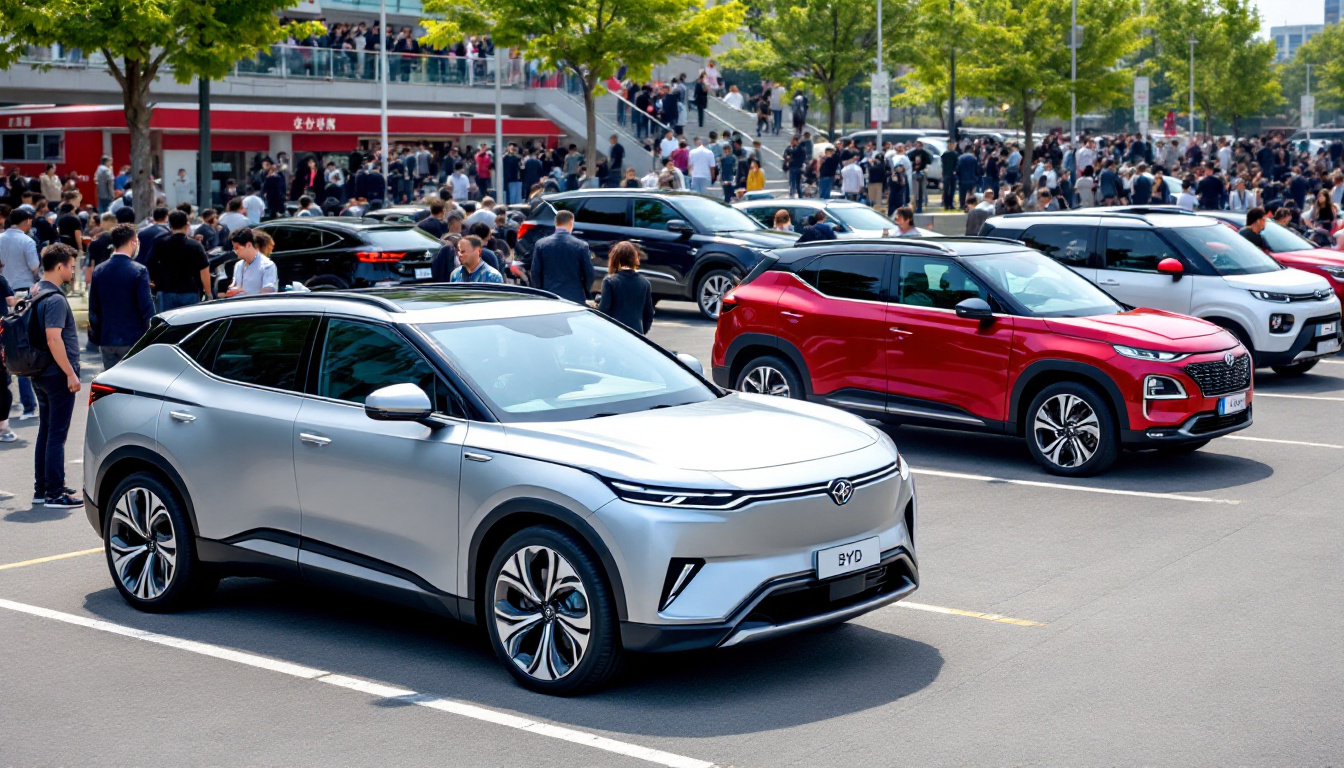
Companies like BYD and MG, the latter belonging to SAIC, stand out for their adaptability. MG has sold almost 47,000 hybrid and thermal cars in the EU and the UK in the first quarter of 2025, a figure that more than doubles that of 2024.
Why is this adaptation crucial?
The results from Chinese brands show that they must juggle new requirements while preserving their growth. The expansion of these brands in Europe could be a sign that the globalization of the automotive industry is not weakening despite some protectionism. The shift towards more traditional segments could prevent a complete collapse of sales.
- Adjusting the supply according to demand
- Technological innovation to keep up with competition
- Targeted marketing approaches to broaden their audience
| Brand | Type of car on the rise | Sales in Q1 2025 |
|---|---|---|
| BYD | Hybrids | Significantly increasing figures |
| MG | Thermals | 47,000 vehicles |

Ferrari and Nissan: two contrasting worlds
The world of automobiles presents striking contrasts between Ferrari and Nissan. While Ferrari begins 2025 with a stellar financial performance, reporting a net revenue of 1.791 billion euros, Nissan, on the other hand, plunges into a deep crisis.
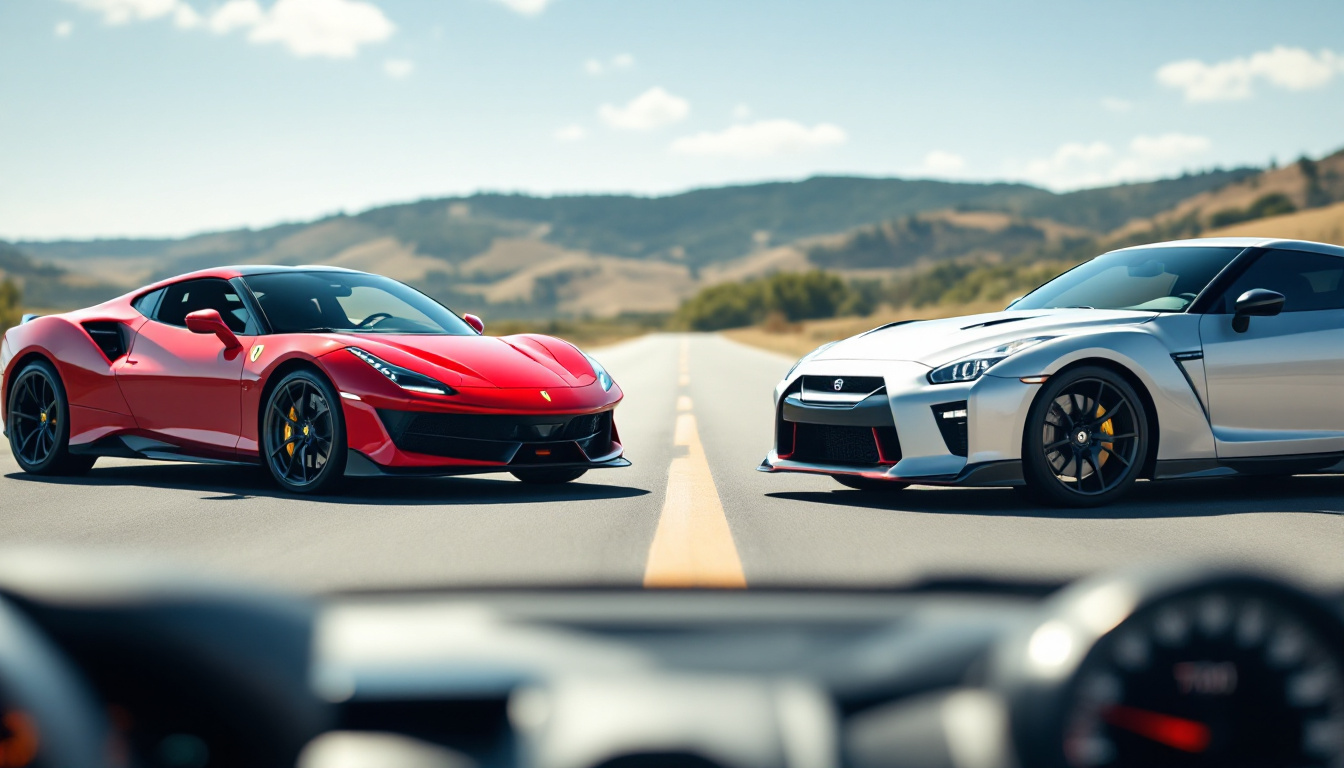
Ferrari recorded a 13% increase compared to 2024, solidifying its position through the shipment of 3,593 vehicles internationally, a slight increase that masks strong demand in China. To meet this, Ferrari also plans to launch its first 100% electric supercar, named Elettrica, scheduled for October. This demonstrates a commitment to proactively adapt to market changes.
In contrast, Nissan faces an earthquake related to restructuring its operations. Despite its history as a pioneer in electric vehicles, the company is contemplating a potential reduction of 20,000 jobs, representing 15% of its global workforce. This contraction is due to a massive net loss, estimated between 700 and 750 billion yen, or approximately 5.3 billion dollars.
Measures to take while juggling these contrasting results
The future is uncertain for Nissan. There is an evident need to innovate, both in terms of products and brand image. This reflects the necessity for a long-term vision. Ignoring consumers who are increasingly leaning towards more sustainable vehicles could be fatal for the company.
- Refine product offerings to attract a younger clientele
- Invest in EV technology
- Revive the brand image to regain consumer trust
| Manufacturer | Revenue (Q1 2025) | Estimated losses |
|---|---|---|
| Ferrari | 1.791 billion € | None |
| Nissan | To be confirmed | 700 to 750 billion yen |

This week's news: innovations and tests
Each week, innovation remains at the heart of the industry's concerns. With an uninterrupted momentum, new models are emerging, such as the Renault R4 E-Tech, which pays tribute to the legendary 4L. This 100% electric model is part of a range that showcases the brand's genuine commitment to the energy transition.
Models presented this month
- Toyota - bZ4X Tourer
- Renault - 4 Savane 4x4 Concept
- DS - restyled 4 (now DS No.4)
In the more exclusive vehicle segment, the release of models such as the Rezvani Knight, Mansory Gronos pick-up Evo S, Brabus XL 800, and The Exorcist by Hennessey provides a glimpse of the diversity that continues to attract a varied audience.
This week's test: a look back at the Renault R4 E-Tech
This week, this new version of the Renault R4 is under detailed review, appealing for its design while preserving the iconic silhouettes of the old model. This model embodies a mosaic of nostalgia and modernity, proving that the past can ally with the future in the automotive industry.
| Model | Type | Features |
|---|---|---|
| Renault R4 E-Tech | 100% Electric | Vintage design, modern technology |
| Toyota bZ4X Tourer | Hybrid | Optimal comfort, extended capacity |

Through this information, it is imperative to maintain a perspective on sustainability and innovation, two strategic axes on which the automotive industry must firmly engage. The creativity of manufacturers in the face of the complexity of a global market offers valuable lessons for a resilient and dynamic future.
Si vous souhaitez lire d'autres articles tels que Podcast 345: the major news from the automotive industry for week 20, consultez la catégorie News.
-
Lysandre Duval says:
Les nouvelles sur Ferrari et Nissan montrent bien la dualité de l'industrie automobile actuelle.
-
Les défis actuels montrent à quel point l'innovation est essentielle pour l'avenir de l'industrie automobile.
Leave a Reply to Lysandre Duval Cancel reply
Articles relatifs