Plan B, a new economic approach: fixing your car to travel cleanly with electric vehicles


In an increasingly environmentally challenged world, the question of sustainable mobility and the circular economy is becoming crucial. In the face of the climate crisis, repairing vehicles, especially electric vehicles, has become an essential solution to reduce environmental impact. At the heart of this approach, the concept of Plan B proposes an alternative that emphasizes sustainability and waste reduction while offering the possibility to travel cleanly through innovative means of transportation.
Repairing your car: a gesture for the environment
Car repair, particularly that of electric vehicles, represents a strong act in favor of a circular economy. Instead of opting for a systematic replacement of your car when it breaks down, it is now possible to choose to repair it. This not only helps to save money but also preserves our planet by extending the lifespan of vehicles.
The environmental impact of the automobile industry
The automotive sector is one of the main contributors to greenhouse gas emissions. According to recent research, the production of a car generates significant amounts of CO2. Thus, repairing instead of replacing is positioned as a viable solution to reduce carbon footprint. By extending the life of a vehicle, we avoid the production of new cars, which has a positive impact on the environment.
- Less waste: Every year, millions of cars are scrapped. By repairing vehicles, we significantly reduce automotive waste.
- Energy savings: The production of a new car requires energy for the extraction of raw materials, their processing, and then their assembly.
- Reduction of emissions: By extending the life of vehicles, the automotive industry can lower its overall emissions by reducing the demand for new production.
In this regard, many initiatives have emerged around the world to encourage sustainability in the automotive sector. Mechanics and collaborative workshops are increasingly offering repair services tailored to consumer needs, while emphasizing economic solutions.
Collaborative garages: a beneficial solution
Collaborative garages present an innovative alternative. These structures allow individuals to access professional repair equipment while being supported by experienced mechanics. For those who want to learn and save, this approach offers unique opportunities.

In terms of savings, studies show that clients can save up to 40% compared to a traditional garage. This participatory economy model not only involves financial savings but also encourages a sharing of knowledge and skills among automotive enthusiasts.
| Type of service | Average cost (in €) | Potential savings (in %) |
|---|---|---|
| Traditional oil change | 70 | 40 |
| Repair of an electrical system | 250 | 30 |
| Brake pad replacement | 200 | 25 |
| Battery replacement | 500 | 15 |
The challenges of electric vehicle repair
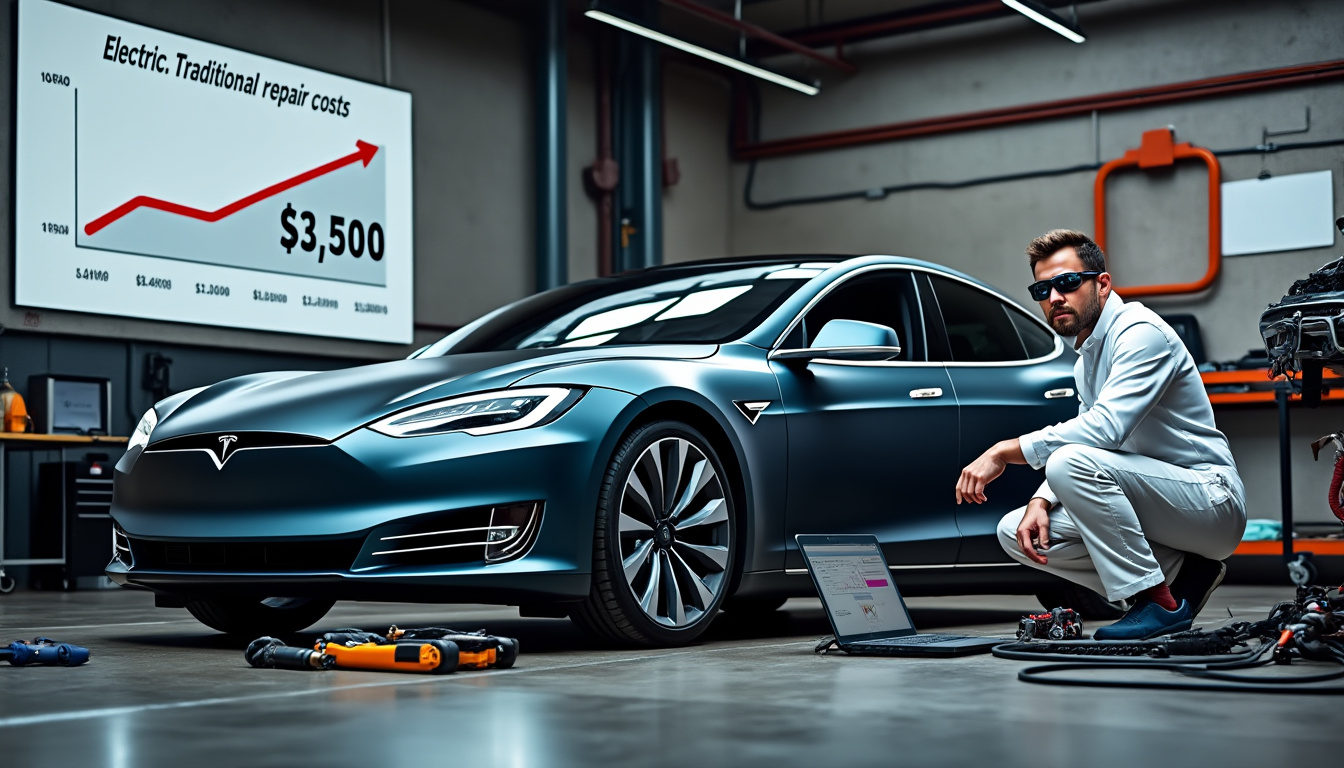
Despite the undeniable benefits of repair, certain challenges persist, particularly concerning electric vehicles. The repair costs of these automobiles remain generally high, exceeding on average by 15% those of internal combustion engine cars. In 2024, the specific repair costs for electric cars became a major concern for drivers.
The repair costs of electric vehicles
The advanced technology of electric vehicles requires specific skills and tools for maintenance and repair. Therefore, garages must invest in advanced training and appropriate equipment.
- Batteries: The batteries of vehicles such as Tesla or Nissan can be very expensive to replace, raising concerns among owners.
- Spare parts: Acquiring spare parts for brands like Renault, Peugeot, or BMW can incur considerable costs.
- Mechanic training: Repairing electric cars requires specific training to ensure the safety and efficiency of interventions.
Therefore, many drivers are turning to alternatives and innovative solutions. Companies such as Revolte are emerging in the automotive repair landscape, implementing initiatives aimed at reducing costs while maintaining high-quality service.
Initiatives to facilitate repair
There are several initiatives to facilitate access to the repair of electric cars. Specialized garages are beginning to develop, offering services adapted to vehicle models such as Hyundai, Kia, and Volkswagen.

These new structures focus on specific repairs, allowing for reduced intervention costs. Relating to the initiatives of Plan B, it is clear that the repair of electric vehicles is essential for traveling with ecological awareness.
| Car model | Average repair cost (in €) | Availability of parts |
|---|---|---|
| Tesla Model 3 | 600 | Good |
| Renault Zoe | 400 | Excellent |
| Nissan Leaf | 500 | Acceptable |
| BMW i3 | 700 | Variable |
Repair: an essential aspect of the circular economy
Within the framework of the circular economy, vehicle repair is part of a sustainable logic. Rather than simply throwing away, the automotive sphere is evolving towards a model where the refurbishment of vehicles is not only encouraged but necessary. Repair is transforming into a genuine civic act.
The advantages of the circular economy for the automotive sector
Adopting a circular economy mode of operation offers numerous benefits. Here are some advantages:
- Resource preservation: By repairing instead of replacing, we use fewer natural resources and contribute to reducing the extraction of raw materials.
- Job creation: Repair garages and collaborative workshops create new positions, supporting local economies.
- Innovation: The sector is also encouraged to innovate to develop less costly repair technologies.
Proactive companies, such as those collaborating with France24 to promote the circular economy, seek to educate consumers on the importance of repairing and maintaining their vehicles.
Eco-friendly repair workshops
Today, we are witnessing the emergence of garages and repair workshops that specialize in environmentally friendly practices. These players source recycled parts and use repair processes that minimize ecological impact.
With brands like Citroën or Dacia beginning to incorporate sustainable materials, these workshops align with the growing demand for environmentally friendly vehicles.
| Aspect | Common practices | Environmental impact |
|---|---|---|
| Use of recycled parts | Garages offering second-hand parts | Reduces the need for new production |
| Renewable energies | Garages powered by solar panels | Reduction of carbon footprint |
| Eco-friendly cleaning methods | Use of biodegradable products | Less soil pollution |
| Fluid recovery | Filtration and reuse processes | Reduction of waste and pollution |
Repair: a promising future for sustainable mobility
Car repair, whether electric or thermal, plays a major role in the transition to sustainable mobility. Through initiatives like those mentioned in Plan B, we are witnessing a growing awareness of the benefits of a circular economy.
The importance of education and awareness
To achieve widespread adoption of repair as a standard practice, it is essential to raise public awareness. In this regard, educational information campaigns can mobilize consumers to recognize the benefits of repairing instead of replacing.
- Information workshops: Organize events to explain repair processes.
- Partnerships with schools: Include automotive repair in school curricula.
- Media involvement: Use media platforms to promote repair.
In 2025, as technological innovation continues to evolve, the vision of a circular and sustainable automotive economy through car repair is shaping up as a model to follow. It is a challenge that requires the committed investment of everyone, be they industry professionals or consumers.
Innovations to watch in the repair field
As we move into 2025, several innovations are on the horizon. Among them, eco-friendly European batteries are taking a prominent place. These new technologies could offer sustainable solutions to maintenance challenges related to electric vehicles.

Innovative companies continue to emerge, aiming to reduce the cost of owning electric vehicles and improve their durability, particularly in the area of repair. A good understanding of these developments can prove crucial for consumers looking to travel clean.
Si vous souhaitez lire d'autres articles tels que Plan B, a new economic approach: fixing your car to travel cleanly with electric vehicles, consultez la catégorie Non classé.
-
Milo Theriault says:
C'est vraiment intéressant de voir comment la réparation peut aider l'environnement !
-
Réparer une voiture est un choix intelligent pour l'environnement et l'économie.
-
Réparer nos voitures est essentiel pour un avenir plus durable. J'adore cette initiative !
-
Réparer son véhicule est une excellente idée pour économiser et aider l'environnement.
Leave a Reply
Articles relatifs