Pedestrian lights featuring the voice of Elon Musk to guide pedestrians

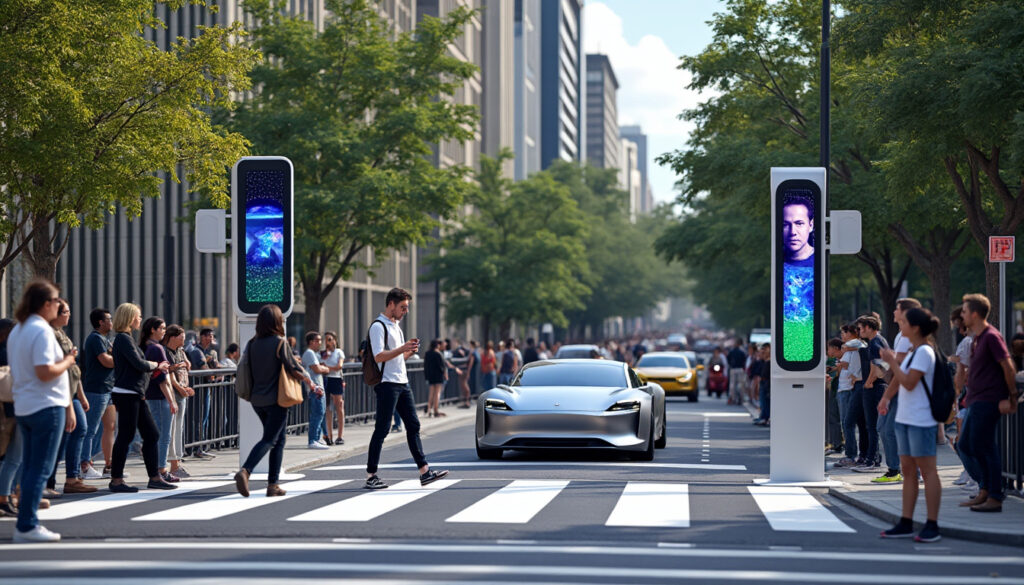

Imagine crossing a crosswalk and hearing Elon Musk's voice guiding you every step of the way. In California, this idea is no longer fiction but an astonishing news story that has made headlines. Traffic signals, normally silent or limited to a simple beep, have broadcast messages mimicking the voice and style of the famous entrepreneur, translating an unexpected phenomenon between technology, hacking, and urban life. This weekend, unlike any other, saw residents of several Californian cities crossing the streets under the vocal aegis of Elon Musk and Mark Zuckerberg, thanks to a hack of the audio systems of the traffic lights. Behind this humorous and slightly subversive twist, significant issues of cybersecurity and the perception of artificial intelligence in public spaces have come to the forefront.
When Traffic Lights Come to Life with Elon Musk's Voice: Evolution of Urban Sound Signaling
The traditional traffic light has long been limited to visual indicators and sometimes simple sound signals to assist visually impaired individuals. However, at several Californian intersections, the routine was broken by a series of new-type messages, blending technology and audacity. The traffic signals broadcast vocal instructions shaped by the artificial voices of Elon Musk and Mark Zuckerberg, straddling satire and provocation.
Instead of hearing the classic "walk" or "wait", pedestrians heard phrases like "Money can't buy happiness... God knows I've tried. But it can get you a Cybertruck, and that's pretty awesome, right?", spoken in Musk's characteristic tone. This kind of unprecedented intervention exposes both the potential of ultra-realistic voice synthesis — one of the flagship products of the AI revolution — and the inherent risks of their use in public spaces.
The Revolution of Audio Traffic Lights: Much More than a Simple Beep
Traditionally, traffic lights combine visual and auditory signals, allowing for better safety, especially for individuals with mobility challenges. The recent development of vocal AI offers an innovative palette for these systems, creating guided experiences that are much more engaging.
- Increased accessibility: detailed vocal messages can provide precise orientation for those who need it.
- Customization of instructions: adopting familiar or iconic voices facilitates memorization and captures attention.
- Use of humor: to ease traffic stress and make waiting at lights less tedious.
- Reduction of accidents: by attracting the attention of pedestrians through unique auditory stimuli.
Imagine the potential of a "MuskGuidance" system that, in addition to providing clear instructions, integrates emotional connection or a mark of personality, transforming the mundane urban ritual into a more human, even entertaining experience.
Example of a Comparative Table of Pedestrian Signaling Systems
| Feature | Classic System | AI Voice System (e.g., ElonPedestrian) |
|---|---|---|
| Type of sound signal | Short and repetitive beep | Natural language vocal messages |
| Customization | No | Specific voices (Musk, Zuckerberg) |
| Impact on pedestrian attention | Moderate | High due to originality |
| Accessibility usage | Simple assistance | Detailed and playful guidance |
This table reveals how the VoiceTraffic can renew the relationship pedestrians have with urban space while improving safety. However, as the Californian case demonstrates, novelty also introduces new challenges.
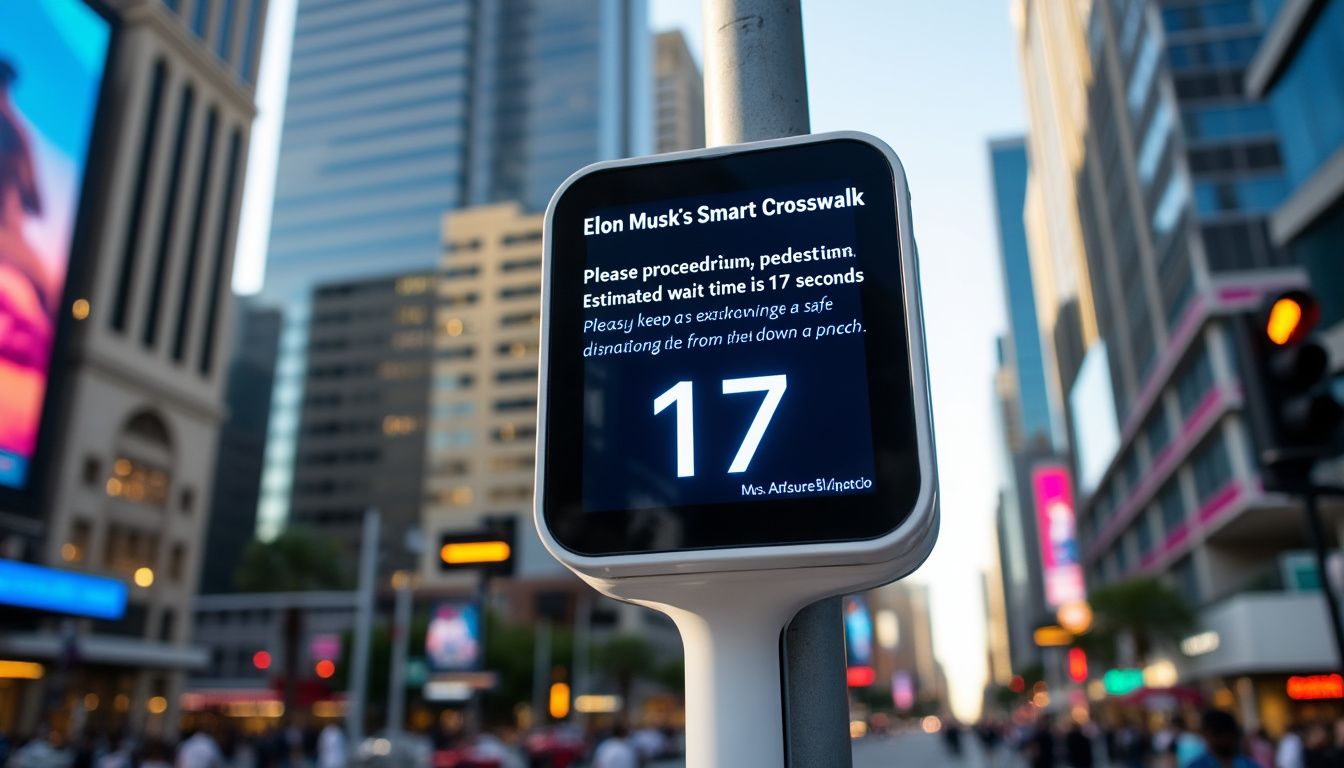
Hacking and Satire: Musk and Zuckerberg's Voices Hijack Traffic Lights
In California, the fact that several traffic lights began to speak unexpectedly reveals a flaw in urban infrastructures. This hack, both ingenious and provocative, has profoundly impacted public opinion. Instead of simple safety tones, satirical messages were broadcast, where dark humor intertwines with social critique.
This anonymous operation replaced traditional signaling messages with assertive phrases. For example, one light broadcast in Zuckerberg's voice: "I am proud to have undermined democracy... No one does it better than we do." These words, as absurd as they are chilling, show how hacking was employed to denounce the overwhelming power of tech giants, all while using their own vocal image for critical purposes.
How Did the Hackers Proceed? Mechanisms of the Hijacking
The hacking exploited the technical weaknesses of the sound boxes integrated into traffic lights. These systems, connected to sometimes vulnerable networks, were infiltrated to inject messages generated by artificial intelligence, particularly effective due to voice synthesis technologies.
- Identification of weaknesses: radio antennas and wireless interfaces were targeted to gain control.
- Use of vocal AI: very realistic voices were synthesized, making the intervention almost credible.
- Simultaneous injection: several intersections broadcast messages in a network, amplifying the shock effect.
- Satirical message: denounce surveillance, data manipulation, and the omnipresence of tech giants.
This episode sheds new light on the TrafficElon at the crossroads of security and freedom of expression. The irony deployed in this urban context reminds us that innovation can also carve its path through contestation.
Lessons Learned for Urban Infrastructure Cybersecurity
Beyond the humorous aspect, this intrusion highlights major vulnerabilities that could become real threats. A hijacked traffic light is no longer just a gag; it poses a potential risk to public safety. In 2025, with the proliferation of connected objects, the VocalLight has become a prime target for hackers.
| Threatened Aspects | Possible Consequences | Recommended Measures |
|---|---|---|
| Integrity of the vocal message | Confusion, misinformation for pedestrians | Audio stream encryption |
| Remote control | Takeover of lights by malicious third parties | Enhanced authentication |
| Network access | General vulnerability to intrusions | Strict segregation of urban networks |
It is imperative that local authorities quickly adapt to the challenges related to the MuskSignal. Investing in the security of connected traffic lights is now just as crucial as maintaining roads or vehicles. This situation also calls for a rethinking of current protocols, prioritizing resilience and prevention against cyberattacks.
Psychological and Behavioral Impact of Elon Musk's Voice on Pedestrians
Beyond the technical aspect, the broadcasting of messages in Elon Musk's voice reveals a particular influence on pedestrian behavior. Why does this voice resonate so much? Human voices associated with figures of innovation evoke strong emotional reactions, which can be harnessed to effectively guide behaviors.
The concept of PedestrianVoice connected in this context opens new perspectives on how to capture attention in dense urban environments where environmental noise and saturation of information are constant.
The Social Psychology Behind the Reception of Familiar Voices
Research in behavioral psychology shows that the familiarity of a voice significantly increases attention capacity and message memorization. Elon Musk's voice, like a sound brand, creates a cognitive halo effect:
- It instantly attracts the pedestrian's attention.
- It facilitates understanding of the message through clarity and engaging tone.
- It generates implicit trust, even if the content is humorous or unexpected.
Therefore, integrating a familiar voice into urban guidance systems can greatly increase the effectiveness of signaling for road safety.
Application Examples in Other Cities and Perspectives for 2025
Several cities around the globe are now experimenting with voice customization at crosswalks, ranging from celebrities to local voices, all within the framework of a broader ConnectedPedestrian project. For example:
- Tokyo uses singing voices that rhythm the steps of passersby.
- London is testing messages in multiple languages to promote multiculturalism.
- Sydney adapts its messages according to the time to optimize safety at night.
Even after the hacking incident, California is considering exploring an official use of iconic voices like Elon Musk to create a MuskGuidance that would make pedestrian traffic both safer and more appealing.
| City | Voice Used | Main Objective | Observed Result |
|---|---|---|---|
| Tokyo | Rhythmic and musical voice | Improve fluidity | 15% decrease in crossing violations |
| London | Multilingual | Social inclusion | Better community understanding |
| California | Elon Musk's voice (pilot project) | Safety and uniqueness | Strong media coverage and debate |
Towards a New Era of Connected and Gamified Traffic Lights
The hacking of traffic lights in California underlines an undeniable reality: connected technology today transforms every detail of the city, including traffic signals. However, while vulnerability is a threat, innovation also signifies progress. By 2025, integrating personalized synthetic voices into traffic lights could revolutionize the way pedestrians interact with their urban environment.
Imagine a world where every intersection is equipped with a RedGreenVoice system capable of delivering context-adapted messages, tailored to time, and even to weather, with enhanced precision and user-friendliness. A universe where vocal guidance is no longer limited to simple crossing instructions but becomes a vector of comprehensive information, inclusion, and entertainment.
Technical Aspects and Expected Innovations
Advancements in the field of vocal artificial intelligence, combined with IoT systems, will enable:
- Increased personalization: voices tailored to the audience, by age, language, and even personal preferences.
- Interactivity: integrating vocal feedback and real-time adjustments according to pedestrian flow.
- Multisensory integration: combining voice, light, and vibrations for optimal safety.
- Predictive maintenance: early detection of any dysfunction or potential hacking.
| Innovation | Expected Impact | Example of Use |
|---|---|---|
| Personalized voices | Improved engagement | Messages for children with a gentle voice |
| Interactive response | Adaptation to traffic conditions | Crossing times adjusted in real-time |
| Multisensory sensors | Reduction of accidents | Enhanced sound signal in low visibility conditions |
This transformation aims not only to protect but also to enhance the daily experience of the connected pedestrian, offering greater safety and a different connection with the city.
Ethical and Social Challenges Posed by Elon Musk's Voice in Pedestrian Signaling
Beyond technological prowess and opportunities for renewing urban signaling, the insertion of voices from iconic figures like Elon Musk raises many ethical questions. The appropriation of the voice, its context of use, and its impact on the public pose a major challenge that invites reflection.
The Californian case demonstrates how ConnectedPedestrian is not just a technical issue, but a sensitive subject that intertwines public image, rights, and potential manipulations. What does it really mean to hear the voice of a billionaire entrepreneur in one's daily life without consent?
Questions of Consent and Identity in the Age of Synthetic Voice
It is now possible to perfectly mimic anyone’s voice thanks to AI. This capability raises massive stakes: unauthorized use, risks of identity theft, or psychological manipulation. For example:
- Using a famous voice to convey a message not approved by its holder.
- Creating messages that could influence behaviors and public opinion.
- Blurring the line between real and fake in the media and urban landscape.
The very example of the hacking of traffic lights illustrating the versatility and dangers of this technology.
Social Consequences and Recommendations for Responsible Use
For the future, a clear regulatory framework is imperative, tied to:
- Protecting the image and voice rights of public and private figures.
- Ensuring transparency of synthetic voices used in public space.
- Establishing citizen oversight on content disseminated to pedestrians.
- Educating the public on the existence and limits of vocal AI in daily life.
In the absence of these safeguards, we expose ourselves to numerous abuses, misappropriations, and widespread distrust of technology, which would undermine both safety and the acceptance of innovations essential for improving our daily lives.
Si vous souhaitez lire d'autres articles tels que Pedestrian lights featuring the voice of Elon Musk to guide pedestrians, consultez la catégorie News.
-
Zéphyrine Luminis says:
C'est vraiment incroyable de voir la technologie transformer nos rues de cette manière!
-
C'est incroyable de voir comment la technologie transforme notre interaction avec la ville !
-
C'est incroyable comme la technologie peut transformer notre quotidien, même au feu rouge!
-
C'est fascinant de voir comment la technologie peut transformer nos interactions quotidiennes en ville.
Leave a Reply to Talon Venturi Cancel reply
Articles relatifs