Leclerc ventures into the world of electric charging with attractive prices

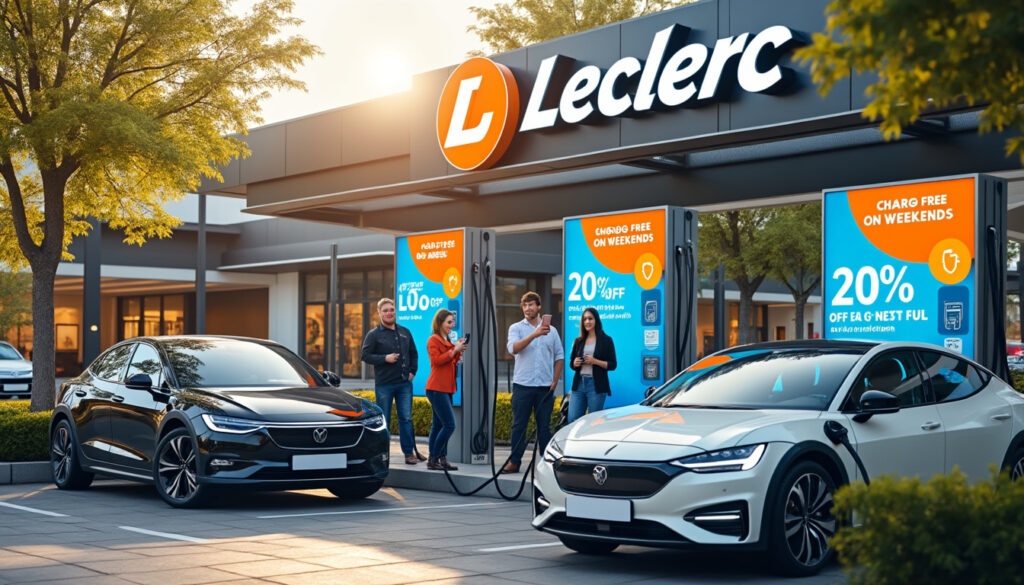

In a world where energy transition is becoming a pressing necessity, French retail is taking a decisive step to commit to this path. In this year 2025, Leclerc, one of the leaders in large-scale distribution, is set to revolutionize the electric charging market with a new offer called Charge E-Lec. By the end of the year, customers will be able to take advantage of attractive rates for charging their electric vehicles while enjoying unprecedented loyalty-related services, all within a framework that promotes sustainable mobility. This movement, which aligns with a stated desire to reduce carbon footprints, demonstrates how players in responsible commerce can play a crucial role in the adoption of green energies.
Charge E-Lec: a tailored offer for electric charging
The Charge E-Lec initiative clearly positions itself as a response to the growing needs of an increasing number of motorists opting for electric vehicles. Indeed, the global market is buzzing, with forecasts indicating that one in five new cars sold in 2024 will be electric. This context drives Leclerc to establish a strong infrastructure to support this transition, making electric charging not only accessible but also economical.
When examining the structure of the offer, several elements stand out:
- Competitive Prices: Leclerc commits to offering the lowest rates in the market, which could alleviate the fear of high charging costs, often cited by potential electric car buyers.
- Loyalty System: By charging their vehicle at one of the supermarket stations, customers will accumulate euros in their loyalty account. This will encourage them to return for shopping while charging their car.
- Access to an Expanded Network: Currently, Leclerc has 4,300 charging stations. The company plans to double this number by 2030, with stations adapted for different uses, ranging from standard chargers for long charges to ultra-rapid stations for those in a hurry.
This approach is not just about increasing the number of stations but also diversifying the types of charging. Indeed, European regulations impose specific requirements regarding fast charging stations, positioning Leclerc in compliance with these directives. In Europe, the use of fast chargers (with a minimum output of 150 kW) should increase as the demand for rapid charging grows, making Leclerc's vision all the more relevant.
| Type of Station | Usage | Estimated Charging Time |
|---|---|---|
| Standard Charger | Charging during shopping | 2 to 4 hours |
| Ultra-Rapid Station | Charging for drivers in a hurry | 30 minutes |
An infrastructure network for energy transition
Leclerc is not only providing charging stations; the company makes this initiative a cornerstone of its energy transition strategy. By integrating responsible commerce techniques, it commits to reducing its carbon footprint. Alongside Charge E-Lec, Leclerc is exploring alternative fuels, focusing on solutions like superethanol E85 and HVO100, a biofuel derived from organic waste, already in use in its truck fleets.
Today, corporate environmental responsibilities are not just limited to simple statements of intent. Tomorrow's consumers will demand that their trusted brands make concrete, tangible decisions in favor of the environment. Thus, by committing to this path, Leclerc positions itself not only as a leader in responsible consumption but also as a model for other major distributors to follow.
The impact of Charge E-Lec on sustainable mobility
Beyond the services offered, the establishment of Charge E-Lec addresses a pressing societal need: that of sustainable mobility. Indeed, as awareness of the environmental impact of transportation increases, Leclerc has understood that it is crucial to anticipate market trends. With an action framework that encourages the adoption of electric vehicles and reliance on green energies, this initiative could transform the automotive landscape.
The repercussions of this commitment go far beyond the physical infrastructure:
- Encouraging the adoption of electric vehicles: With affordable rates and an incentive system, Leclerc encourages consumers to switch to electric.
- Reduction of CO2 emissions: Transitioning to less polluting fuels helps to diminish carbon footprints, contributing to the fight against climate change.
- Promotion of short circuits: By integrating less polluting transport methods for its products, Leclerc promotes a sustainable and environmentally friendly economies of scale.
Meanwhile, Leclerc's project proves to be innovative and future-oriented. Indeed, the company's energy policy does not simply recognize the need to act; it is integrated into the very heart of its business strategy. A shift in approach that embeds it within a collaborative economy, where small changes can lead to significant impacts.
| Environmental Objective | Leclerc Initiatives | Expected Impact |
|---|---|---|
| Reduce CO2 emissions | Integration of HVO100 for heavy trucks | 30% reduction in emissions |
| Promote electromobility | Doubling the number of stations by 2030 | Facilitation of access to charging infrastructure |
The challenges to overcome for a successful transition
Despite these significant advancements, challenges persist. Designing a true sustainable mobility system is not just about infrastructure, but also involves changes in consumer behaviors and habits. This adoption must be supported by incentive public policies that encourage the private sector to engage more in sustainable practices. In fact, as part of a successful energy transition, several elements need to be taken into account:
- Accessible charging infrastructure: Charging stations must be easy to access and visible to encourage the use of electric vehicles.
- Consumer education: Raising public awareness about the benefits of electric vehicles and renewable energies is essential for generating real acceptance.
- Strategic partnerships: Collaborating with specialized actors would accelerate the development of effective and suitable charging infrastructures.
Charge E-Lec represents a crucial step in evolving the relationship between large-scale distribution and sustainability. By multiplying initiatives, Leclerc not only encourages its customers to take the leap towards electric vehicles but also positions itself as a leader in the transition towards a sustainable economy.
A dynamic of energy innovation
The dynamic of energy innovation that Leclerc is engaged in is characterized by a rapid adaptation to market changes. With the rise of electric vehicles, a recent study revealed that 70% of French consumers are considering switching to an electric car in the next five years. By offering a suitable and desirable charging solution, Leclerc aligns itself with this emerging trend.
Such innovation also involves exploring new technologies. Several key elements could integrate this innovation:
- Smart charging technologies: Integrating charging solutions that can optimize charging time based on user needs.
- Dedicated mobile application: Offering a centralized platform where customers can locate stations, check availability, and manage their charges.
- Dynamic pricing: Implementing pricing that adapts to demand, promoting a more efficient use of energy resources.
By promoting such initiatives, Leclerc demonstrates a long-term vision that is not solely focused on increasing profits but also on creating a sustainable ecosystem. The importance of energy innovation in this context goes well beyond accessibility; it also encompasses the desire to fundamentally change how consumers perceive and use energy.
| Type of Innovation | Description | Expected Benefit |
|---|---|---|
| Smart Charging | Optimization of power based on demand | Energy savings and reduced charging time |
| Mobile Application | Use of a platform to locate and manage stations | Ease of access to information for users |
The impact on the collaborative economy
Beyond technical and logistical aspects, Leclerc's approach to electric charging may also stimulate the collaborative economy. By utilizing a network of supermarkets, the brand fosters the creation of synergies between various local initiatives, while reinforcing the importance of short circuits. This not only helps to reduce transport costs but also creates local jobs.
To sustain this dynamic, it will be crucial to involve consumers in this model. Several initiatives can be envisioned to encourage their participation:
- Awareness workshops: Organizing information sessions on the use of electric vehicles and the benefits of responsible consumption.
- Partnerships with local startups: Collaborating with innovative young companies to propose even more sustainable charging solutions.
- Community events: Promoting local activities that highlight responsible commerce and green energies.
By integrating the principles of collaborative economy into its strategy, Leclerc paves the way for an innovative business model where the customer becomes a key player in the energy transition.
Towards a responsible energy future
Leclerc is not just addressing the issue of electric charging; it is engaging in a deeper reflection on the future of energy and its relationship with responsible consumption. With the Charge E-Lec initiative, the brand demonstrates that it is possible to combine economic profitability with environmental responsibility. Every detail matters in this relentless quest for a greener future, and every action, no matter how small, can have a real impact.
The choices that Leclerc makes regarding energy and automotive services could become the norm for many other companies as pressure for sustainable practices increases. The energy transition, once seen as the purview of startups, is now the business of traditional market leaders.
With a clear vision, firmly established values, and a willingness to innovate, the brand is headed toward a future where green energy and the collaborative economy are not just concepts, but real experiences lived daily by consumers. Ultimately, the future of sustainable mobility depends on the ability of companies like Leclerc to innovate while placing social responsibility at the core of their economic model.
Si vous souhaitez lire d'autres articles tels que Leclerc ventures into the world of electric charging with attractive prices, consultez la catégorie Non classé.
-
Zelena Montrose says:
C’est inspirant de voir une grande enseigne s'engager pour l'écologie. Hâte de voir les résultats!
-
C'est super de voir une grande surface s'engager pour l'environnement avec l'offre Charge E-Lec.
-
C'est encourageant de voir des initiatives comme Charge E-Lec pour la mobilité durable.
-
C'est une belle initiative qui encourage vraiment l'adoption des véhicules électriques pour un avenir meilleur.
-
C'est une excellente initiative pour encourager l'usage des véhicules électriques et réduire notre empreinte carbone.
Leave a Reply
Articles relatifs