He is trying to escape from the law enforcement in a Renault Espace with a flat tire!

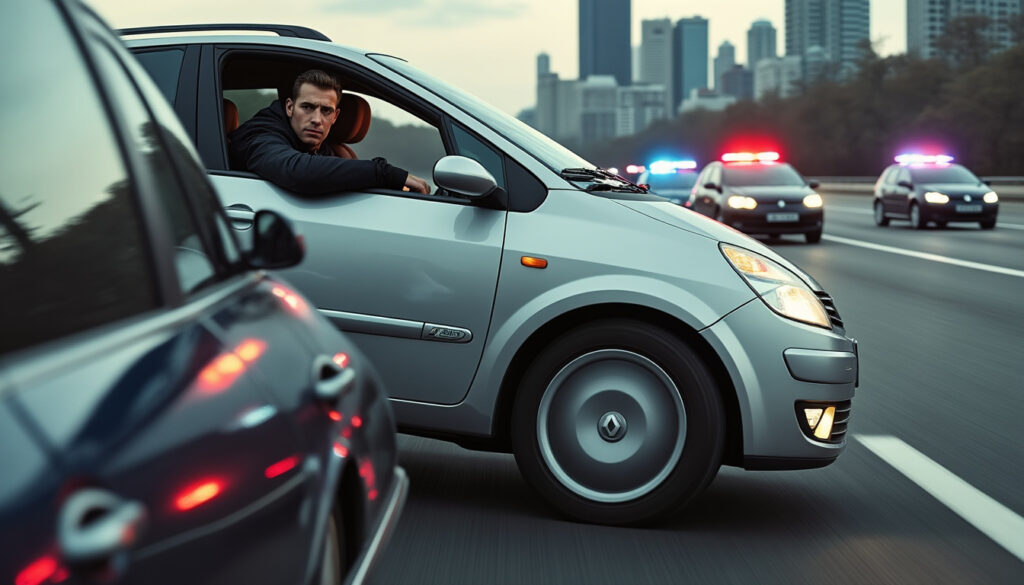

A tumultuous night in the Lyon metropolitan area recently illustrated how determination can drive a driver to defy all laws while behind the wheel of a vehicle that is quite improbable in this type of scenario. In Saint-Priest and Bron, a 30-year-old man challenged law enforcement aboard his Renault Espace, embarking on an astonishing chase, despite having a flat tire. Such events, combining audacity and evident danger, not only illustrate the limits of behavior on the road but also raise essential questions related to road safety and the psychology of risk.
While the Espace is known for its robustness and family comfort, it paradoxically finds itself at the heart of a wild getaway, defying expectations linked to its purpose. What can motivate such an irrational approach, even pushing the mechanical limits and maneuverability of the vehicle? This case highlights several facets: the relationship to control, stress management in emergencies, and the challenges linked to public safety. The incident, which has gone viral on social media, allows for a fresh examination of these dynamics.
An unprecedented chase with a Renault Espace: challenge and recklessness on the road
The Renault Espace, often regarded as an icon of family cars, is not a vehicle designed for high-speed chases. Yet it is indeed aboard this road monster that this crazy flight took place in eastern Lyon. The contrast between the imposing silhouette of the Espace and the daring behavior of its driver accentuates the unusual nature of this episode.
The fact that the driver decided to hit the accelerator to escape the police despite having a flat tire indicates extreme audacity, surpassing simple panic related to a traffic stop. This extraordinary determination highlights complex behavioral mechanisms: the immediate fear of being stopped, the desire to maintain control at all costs, and sometimes an underestimation of the risks involved. In this context, the choice of vehicle also becomes a fascinating point of analysis.
The characteristics of the Renault Espace in a critical situation
Known for its modularity and comfort, the Espace is a minivan that excels in urban traffic and long family trips. However, its size and high center of gravity do not predispose it to great maneuverability, especially at high speeds. In the case of a flat tire, handling is even more compromised, making this initiative particularly dangerous.
- Weight and size: The Espace is imposing, primarily targeting families and not drivers seeking sporty agility.
- Defective tire: A flat tire drastically reduces braking ability and stability, particularly in tight turns.
- Passive safety system: Although equipped with airbags and modern assistance, these systems do not compensate for deficient mechanical control.
- Maximum speed: Reaching high speeds with such a fragile minivan is a risky bet, almost suicidal.
| Aspect of the Renault Espace | Impact on driving in an emergency situation |
|---|---|
| High weight | Reduces responsiveness, difficulty executing sharp maneuvers |
| Large size | Limitation in tight urban spaces and complicated emergency braking |
| Flat tire | Pronounced instability, risks of aquaplaning or loss of control |
| Driving assistance systems | Aid to safety but insufficient in case of mechanical failure |
Thus, the driver's frantic escape is an act of extreme risk-taking, driven by a motivation that likely surpasses mere fear of an identity check. The choice of the Renault Espace as an escape vehicle in these circumstances embodies a form of illusion of control on the road.
Psychology of escaping while driving: why take such a risk despite a flat tire?
The scene observed in Bron and Saint-Priest is not merely an episode of audacity behind the wheel. It reflects a deeper behavioral dynamic, where fear and stress take precedence over rational reasoning. In behavioral psychology, fleeing is an instinctive reflex in the face of danger. However, this reflex can lead to disproportionate decisions in relation to the actual threat, especially in emergencies.
The flight aboard a Renault Espace despite a flat tire embodies this tension between the desire to preserve freedom and the awareness of increased danger. This contradiction underscores how neuropsychology and the functioning of the reptilian brain can influence behaviors. In emergency situations, the brain favors quick responses—often simplistic—that do not take into account long-term consequences.
Cognitive mechanisms at play during a road escape
Several psychological mechanisms explain the driver's attitude:
- Reaction to intense stress: An adrenaline surge can disrupt decision-making, leading to impulsive behavior.
- Illusion of control: The driver may mistakenly believe that he is in control of the situation despite the degraded state of the vehicle.
- Minimization of danger: Under pressure, the perception of risk is often distorted, making escape seem less risky than it is.
- Group effect or social pressure: In some cases, the desire to appear strong in front of law enforcement or witnesses.
| Psychological mechanism | Effect on driving behavior |
|---|---|
| Intense stress | Triggers rapid actions without deep reflection |
| Illusion of control | Takes unreasonable risks based on erroneous confidence |
| Minimization of danger | Overestimation of personal abilities and the vehicle's capabilities |
| Social pressure | Aggressive or spectacular behavior to impress |
These mental processes, well described in various studies in cognitive psychology, help to understand why many accidents occur in similar circumstances. In summary, the escape in a Renault Espace with a flat tire becomes the symbol of a behavior where rationality is undermined by emotion and the urgency felt.
The road safety issues related to this type of escape in a Renault Espace
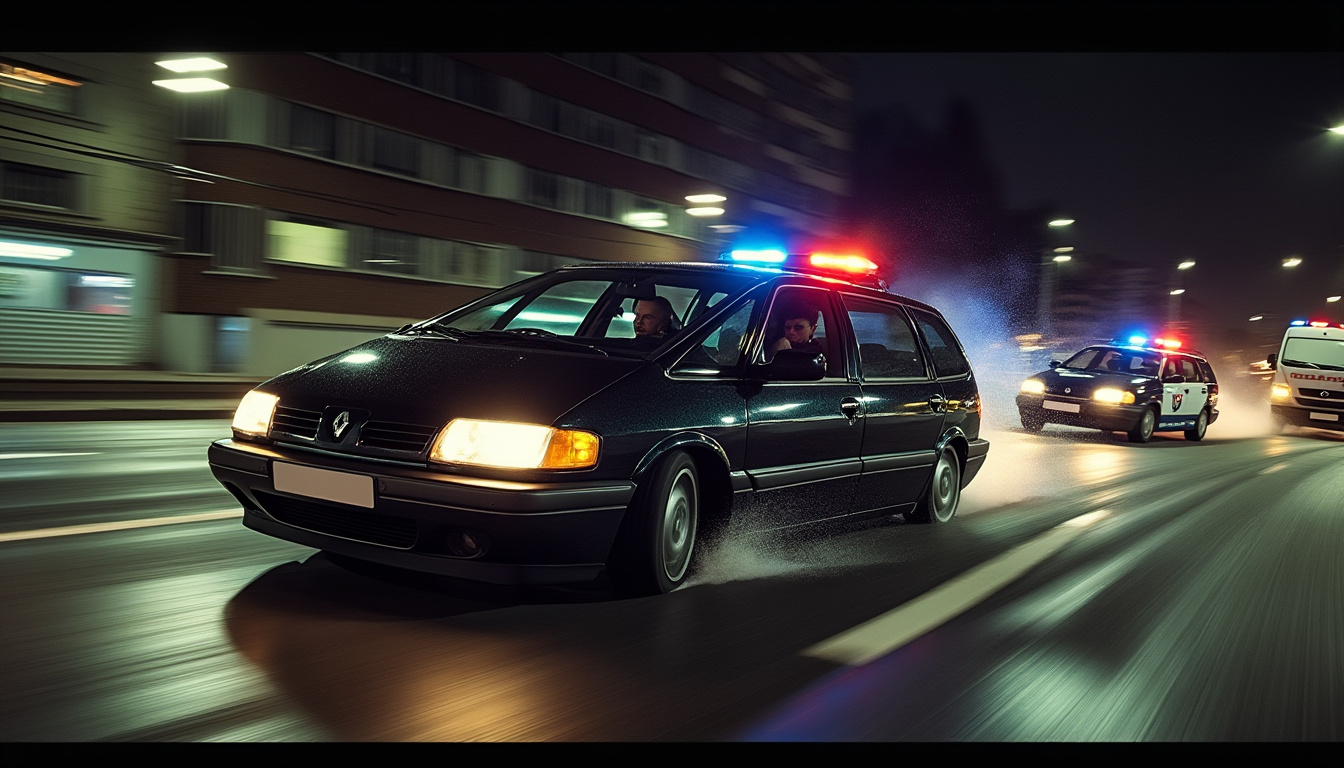
Fleeing on the road with a large vehicle suffering from technical failures not only jeopardizes the safety of the driver but also that of other road users. A significant portion of serious accidents, especially during chases, stems from this heightened desire to escape authority.
In a dense urban context like Lyon, the presence of multiple pedestrians, cyclists, and other cars increases risks. The case of the Renault Espace precisely illustrates this constant danger. By driving at high speed despite a flat tire, the vehicle ran several red lights, ignored signage at roundabouts, and took priorities with no regard for safety. These maneuvers compromise order and safety on the road.
Direct consequences for public safety
- Increased risk of accidents: Reduced control of the vehicle with a flat tire multiplies the chances of collision.
- Impact on law enforcement: Their duty to intervene in such dangerous circumstances puts their own safety at risk.
- Traffic disruption: The chase through residential areas creates an atmosphere of insecurity.
- Effect on witnesses: The panic generated can provoke unpredictable reactions from other road users.
| Consequence | Description | Recommended actions |
|---|---|---|
| Serious accident | Collision due to loss of control from the flat tire | Enhanced technical inspections and safety awareness |
| Injuries to law enforcement | Exposure to physical risks during interventions | Specialized training for urban pursuits |
| Traffic chaos | Traffic interruption and neighborhood disruption | Deployment of emergency plans and enhanced communication |
| Citizen fear | Feeling of insecurity in affected neighborhoods | Increased police presence and community actions |
The management of these situations requires rapid coordination, strategic decisions, and a delicate balance to avoid turning urgency into tragedy. Each flight is therefore also a severe test of the effectiveness of contemporary road safety protocols.
Unexpected discovery: the illicit cargo in the Renault Espace reveals the reasons for this escape
At the end of this chase, the driver's arrest shed light on the true motive for his tumultuous escapade. In the trunk of the Espace, law enforcement discovered several packages of industrial quantities of cigarettes, presumably intended for illegal resale. This crucial point sheds new light on the psychology and motivations of the individual.
Cigarette trafficking remains an offense pursued rigorously by French law, particularly due to its frequent connections with other criminal activities. The fear of being caught in possession of this illegal merchandise explains the reckless risk-taking of the fugitive, ready to endanger public safety to escape a simple check.
Why cigarette smuggling drives some drivers to escape
The colossal financial stakes linked to the black market for tobacco encourage extreme behaviors:
- Economic pressure: Quick gains attract and compel individuals to flee from authorities.
- Fear of sanctions: Arrest and confiscation can lead to severe penalties.
- High risk-reward: Some believe that evasion is worth more than taking responsibility.
- Contagion effect: The rapid spread of videos on social media nurtures the perception that fleeing is possible.
| Factor | Impact on driving escape |
|---|---|
| Economic pressure | Increased motivation and hasty behavior |
| Legal fears | High-risk taking to avoid arrest |
| Impact of social media | Amplification of the imitation phenomenon |
| Financial stakes | Attraction to rationally risky behaviors |
Lessons and areas for improvement: what can we learn from this unusual chase?
This news item, as surprising as it is, offers an opportunity for in-depth analysis on several essential fronts: driving behavior under stress, preventing chases, and the importance of road safety adapted to today’s realities. More broadly, it is about understanding how to minimize risks related to driver psychology and the mechanical characteristics of vehicles used for escape.
Clear lessons can emerge from this story:
- Enhanced awareness: Increase information on the real dangers related to risky driving, especially with a defective vehicle.
- Targeted checks: Use advanced technologies to quickly detect violations and prevent prolonged pursuits.
- Adapted training: Improve training for law enforcement to manage the specific situations created by this type of escape.
- Civic communication: Involve the public in prevention through effective campaigns and constructive exchanges.
| Measure | Objective | Expected impact |
|---|---|---|
| Awareness | Reduce dangerous behaviors | Decrease in risky chases |
| Targeted checks | Quickly identify violations | Reduction of escape risks |
| Police training | Preserve the safety of interveners | Safer interventions |
| Communication | Mobilize civic society | Better community prevention |
Each measure applied gradually can generate a cumulative positive effect. Like a series of small adjustments aimed at strengthening overall road safety, these initiatives contribute to a continuous improvement that benefits everyone.
Si vous souhaitez lire d'autres articles tels que He is trying to escape from the law enforcement in a Renault Espace with a flat tire!, consultez la catégorie Non classé.
-
Orion Cassini says:
C'est incroyable de voir jusqu'où certaines personnes sont prêtes à aller pour échapper à la loi.
Leave a Reply to Orion Cassini Cancel reply
Articles relatifs