France facing a deficit of 300,000 electric cars: concerning figures



As France resolutely commits to decarbonizing its automotive sector, an alarming observation emerges: a deficit of 300,000 electric cars. This figure translates into a significant delay in the ecological transition, with a striking gap between government ambitions and market realities. Through political initiatives and incentive mechanisms, authorities are trying to stimulate the adoption of zero-emission vehicles. But what is the actual situation on the ground? Let’s examine the different aspects of this major challenge.
The alarming figures of the electric car market in France
In 2024, France found itself at a critical stage regarding its transition objectives towards electric vehicles. The figure of 300,000 missing electric cars highlights a significant structural delay. This situation is not the result of decreased consumer demand, but rather a slow adoption by companies in the fleet sector.
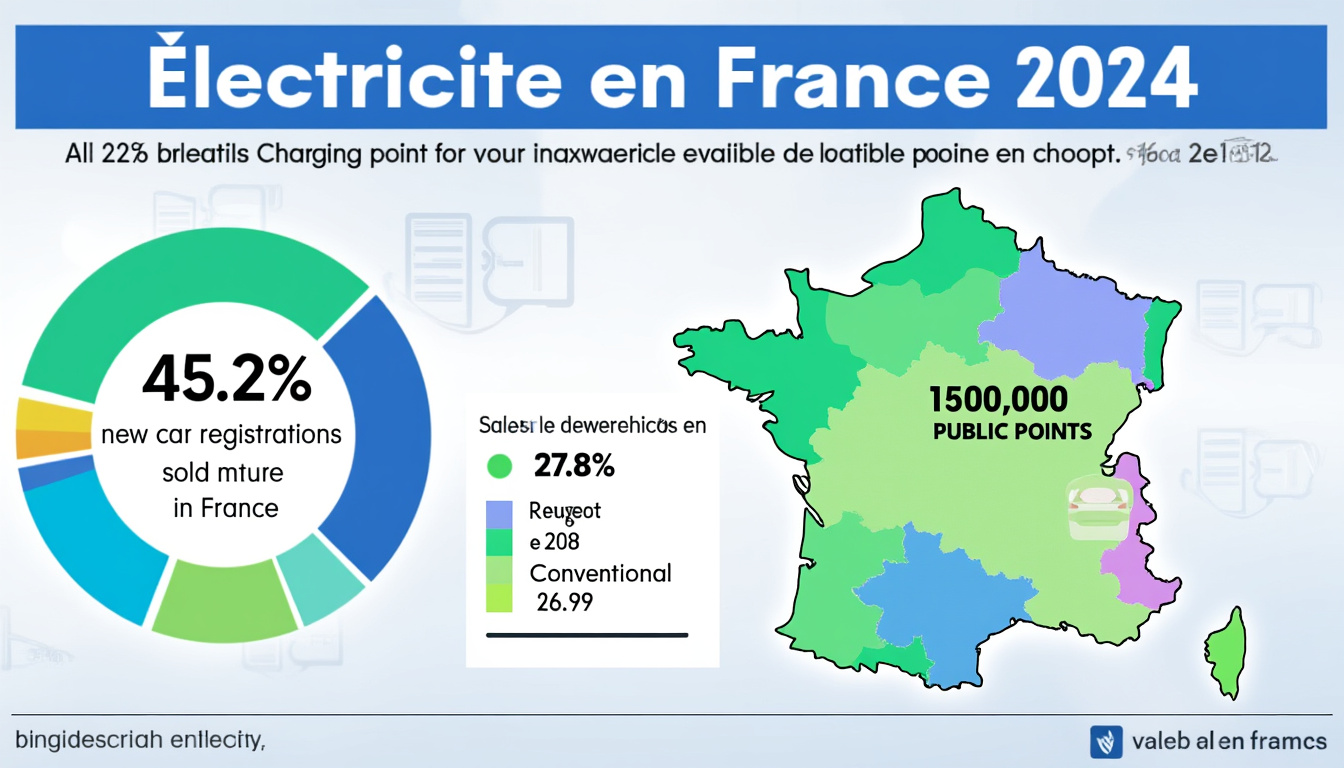
A recent report from the Directorate General for Energy and Climate (DGEC) revealed that France was not aligned with its ecological objectives. This is evidenced by the fact that around 11% of new registrations of company vehicles in 2023 were 100% electric models, whereas this proportion should theoretically be much higher to meet the standards set by the LOM and Climate laws.
Market characteristics in 2024
The figures for 2024 regarding electric car registrations are as follows:
| Type of vehicle | Registration rate (%) | Average target (%) |
|---|---|---|
| Individuals | 24% | 35% |
| Company fleets | 11% | 30% |
| Total electric vehicles | 17% | 50% |
There is thus a notable gap between the targets set by authorities and the reality of the sector. The government must find solutions to encourage companies to accelerate their transition to electric vehicles.
The stakes for car manufacturers
For car manufacturers such as Renault, Peugeot, Citroën, BMW, Nissan, Tesla, and others, the current situation poses major challenges. Investments in electric vehicle production are high, but the sales returns are not meeting expectations. This lack of corporate commitment to adopting ecological fleets represents a barrier to the overall electric ecosystem.
- Renault recently announced new electric models to boost its sales.
- Porsche and Tesla continue to dominate the premium market, but the question of accessibility remains.
- Volkswagen and Hyundai are developing electric vehicles at more competitive prices to attract a broader customer base.
The current crisis could also force manufacturers to rethink their sales strategies by emphasizing more attractive offers both financially and energetically.
The legal and regulatory framework for the electric transition
To correct course, France has established precise legislative mechanisms. The LOM and Climate laws of 2019 and 2021 clearly encourage the transition to less polluting vehicles. However, despite the purchase incentives, market reality shows that many companies are slow to adopt this transition.
For instance, a new decree establishes from March 2025 penalties for companies with more than 100 vehicles that do not meet the greening quotas: 20% low-emission cars this year, 40% by 2027, and up to 70% by 2030. Sanctions can reach €5,000 per non-compliant vehicle, which poses a significant challenge for many corporate fleets.
The impact of government aid
Purchase aid mechanisms such as the ecological bonus or social leasing programs aimed at low-income households play a crucial role, but their future is uncertain. A cost-saving plan of €40 billion for the 2025 budget potentially involves an adjustment or reduction of these incentives.
- The ecological bonus may be revised to become less generous.
- The second season of social leasing is planned, but it currently lacks clear details.
- The new eco-score system aims to harmonize energy performance at the European level.
Budget adjustments could lead to an influx of uncertainties such as the reduction of aids that should support households, especially those with low incomes.
The importance of company fleets in the electric transition
Company fleets are crucial for renewing the vehicle stock. Yet, only 11% of new registrations of company vehicles are electric. This figure must significantly increase to meet decarbonization objectives. The government has identified companies as essential levers for the transition, but their slow adoption raises questions.
The reluctance of companies to switch to an electric fleet can be explained by several factors:
- The initial acquisition cost of electric vehicles, often higher than that of thermal vehicles.
- A lack of awareness of the long-term operating savings that electric cars can offer.
- Insufficient charging infrastructure, creating a barrier to entry for some companies.
In light of this reality, the government and economic actors must collaborate to determine innovative solutions that will facilitate this transition. This includes the development of charging infrastructures, which are critical for the sustainability of electric vehicles.
Possible solutions to encourage electrification
To stimulate the adoption of electric vehicles in company fleets, several measures can be considered:
- Increased subsidies for small and medium enterprises (SMEs) choosing to electrify their fleet.
- Public-private partnerships for the deployment of charging infrastructures.
- Promotions of awareness programs illustrating the benefits of electric vehicles on sustainability and the economy.
Companies can become leaders in sustainability if they commit to renewing their fleet. This could also have a positive impact on the brand image of these companies as responsible players.
The challenges to overcome for a successful transition
As France aims to reach 15 million electric vehicles on the road by 2035, with about 1.5 million counted by the end of 2024, the path remains fraught with obstacles. The government must work proactively to address structural challenges, including business concerns.
The difficulties in adopting electric vehicles are compounded by an uncertain economic environment, and it is essential that government and industry actors collaborate to define a clear roadmap. This includes:
- Doubling the number of charging stations across the territory.
- Clarifying incentive policies for companies.
- Promoting better awareness of ecological choices.
The chances of success will depend on the ability of the involved actors to create a favorable ecosystem for electromobility and to build strong trust between the government and the private sector. The stakes are high, and France must increase its efforts to align with its ecological ambitions.

Si vous souhaitez lire d'autres articles tels que France facing a deficit of 300,000 electric cars: concerning figures, consultez la catégorie Non classé.
-
Elowen Montclair says:
Il est urgent d'accélérer la transition vers les voitures électriques en France.
Leave a Reply to Elowen Montclair Cancel reply
Articles relatifs