Electric car sales are experiencing explosive growth in Europe: analysis of recent figures


In 2025, the electric car market is experiencing a major turning point in Europe. Recent figures show an impressive dynamic that deserves close examination. This transforming sector, impacted by technological advancements and environmental policies, is becoming a true barometer of an ongoing energy transition. In this article, we analyze in depth the market trends, the performance of various players, and the issues that are emerging. Revealing numbers, international comparisons, and future prospects will be at the heart of our reflection.
The global electric car market: an impressive dynamic
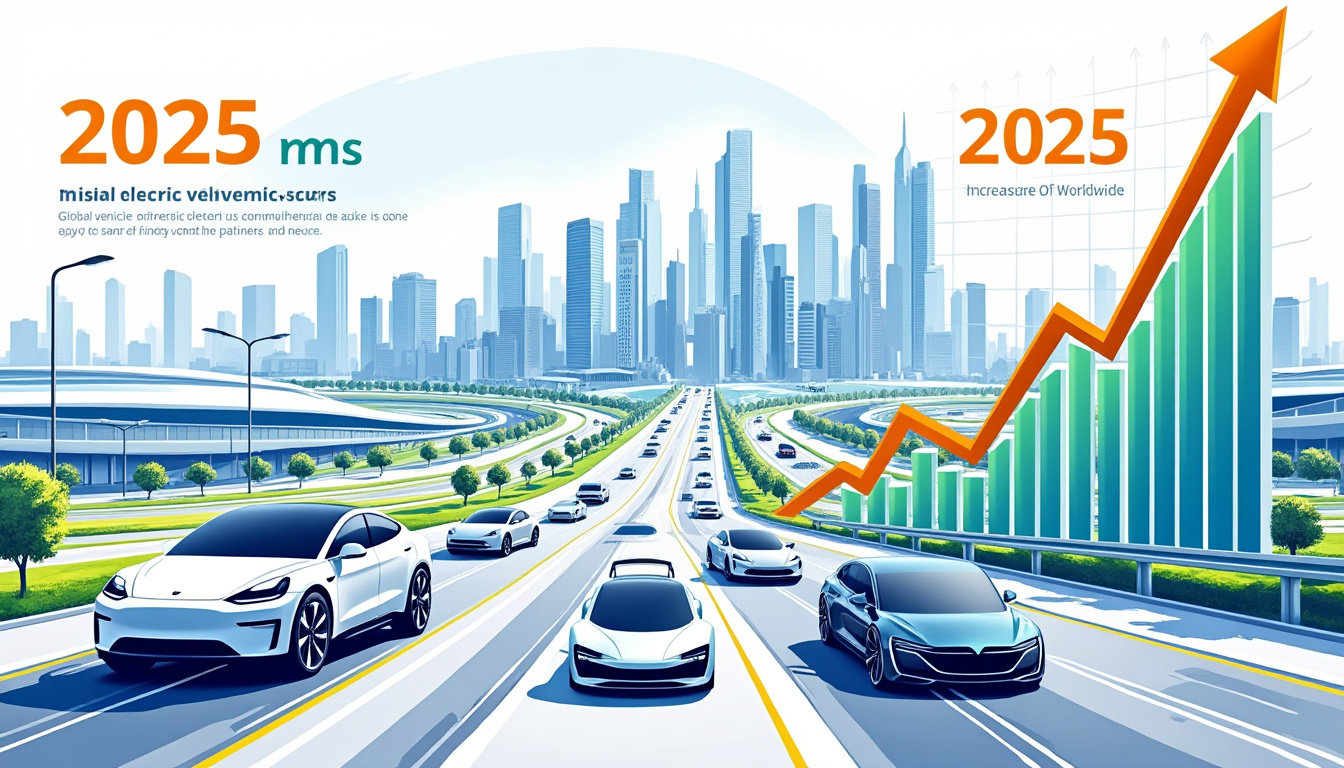
The global electric vehicle (EV) market continues to evolve at a breathtaking pace. In the first quarter of 2025, nearly 4.1 million electric vehicles were sold worldwide. This increase of 29% compared to the previous year illustrates a resurgence of interest in green technologies, despite an uncertain economic context.
The key figures of EV sales worldwide
Performance varies widely by region, with governments and companies vying for dominance in this emerging market. Among the most revealing statistics, we observe that China accounts for over 50% of global EV sales, with 2.4 million units sold, representing an increase of 36% compared to the previous year. This reflects an unprecedented enthusiasm for electric technologies, supported by government initiatives aimed at sustainable mobility.
Here is a summary table of electric vehicle sales by region for the first quarter of 2025:
| Region | Sales (millions) | Increase (%) |
|---|---|---|
| China | 2.4 | 36 |
| Europe | 0.9 | 22 |
| North America | 0.5 | 16 |
In the European context, the figures show some sluggishness. In Europe, the EV market recorded 900,000 registrations during the same quarter, representing a 22% increase. This dynamic, while positive, is largely driven by countries like Germany and Italy, which show growth rates of 37% and 64% respectively. It is worth noting that France is lagging behind with a 5% decrease, raising questions about the current effectiveness of policies encouraging electromobility.
The factors behind the growth of sales in Europe
The growth of electric vehicle sales in Europe results from a complex combination of factors. Government policies, technological advancements, and consumer expectations all play a crucial role in this dynamic.
Incentive policies and regulations
European governments have established a legislative framework aimed at encouraging EV sales. Among the most effective measures, we find:
- Purchase subsidies for individuals and businesses.
- Stricter emissions standards for manufacturers.
- The development of charging infrastructure.
The gradual removal of subsidies in some countries has raised concerns, however. In France, for example, the crisis of government aid has weighed on the market, leading to a drop in sales. Nevertheless, this could be offset by new initiatives expected for the second half of the year.
The impact of new technologies and upgrading
Manufacturers are competing to offer increasingly high-performing electric vehicles. Brands like Tesla, BMW, Volkswagen, and Nissan have managed to captivate an audience eager for innovations. New product ranges, such as the Volkswagen ID.4 and BMW iX, showcase increasingly high ranges, making these models more attractive to consumers. The rise of Asian brands, such as Hyundai and Kia, also contributes to energizing this sector.
Consumer expectations in light of the energy transition
Consumers, increasingly concerned about the environment, are adopting electric vehicles as a true alternative to combustion cars. In this context, expectations are placed on both the performance of the vehicles and their ecological impact. Recent surveys reveal that customers are looking for vehicles not only for their technical features but also for their commitment to the environment.
Predictions for 2025 and beyond
As we approach 2025, experts agree that the growth of electric vehicle sales is just beginning. Forecasts suggest a significant increase in sales in the coming years, which should further strengthen Europe's position on the global stage.
Nuances in sales forecasts
In a recent report, S&P Global Mobility predicted that worldwide electric vehicle sales could increase by 30% by the end of the year. Market players will intensify their efforts, with traditional manufacturers seeking to catch up with leaders like Tesla. Chinese brands, such as BYD, continue to flood the market with competitive models, while Europe, trying to strengthen its automotive sector, must intensify efforts to maintain its market share.
The key figures to consider revolve around several axes:
- Increase in production capacity: Factories producing EVs are emerging, increasing supply.
- Optimization of charging infrastructure: A more developed charging network will reduce range anxiety.
- Stricter standards: Accelerating the transition to electric while slowing down CO2 emitters.
Sales forecast table for 2025:
| Year | Projected Sales (millions) | Change (%) |
|---|---|---|
| 2025 | 11 | 30 |
| 2026 | 14 | 27 |
| 2027 | 18 | 25 |
The challenges ahead for a successful transition
Although the electric vehicle market is expanding, significant challenges remain, jeopardizing the speed of the transition. These obstacles must be overcome to ensure mass adoption of electric vehicles.
Charging infrastructure: an essential link
The densification of charging infrastructures remains a major issue. Indeed, without a sufficiently developed network of charging stations, adherence to electric mobility risks stagnation. Incentives to build new charging points must be reinforced. Consumers must feel secure regarding energy supply to guarantee their transition to less polluting vehicles.
Financial accessibility: too many disparities
Another difficulty lies in the still high cost of electric vehicles. While long-term profitability is a strong argument, the initial purchase remains a barrier for many potential buyers. Initiatives like social leasing and government assistance can help democratize access to these vehicles. The success story of social leasing in France in 2024 is an example of how to facilitate access to EVs for a population often seeking economic alternatives.
Market players' engagement
Finally, the commitment of automotive market players is essential to face these challenges. Manufacturers, whether European like Renault, Peugeot, or globally recognized brands, must collaborate with authorities to coordinate efforts to improve infrastructure and government incentives. Collaboration will be key to building an ecosystem conducive to electric mobility.
Comparison of automotive manufacturers' performances
Throughout this evolution, closely tracking the performance of key market players is essential. Each manufacturer presents unique characteristics that deserve special attention.
Traditional brands facing the rise of new companies
Traditional manufacturers like Volkswagen and BMW, already well-established in the automotive realm, are trying to firmly position themselves in the electric vehicle sector. However, against them, companies like Tesla continue to impose standards of performance and innovation. Sales data clearly illustrate this phenomenon: some new brands of Asian origin, notably BYD, are capturing more and more consumers due to their economic and high-performing models.
Here is a table of the performance of some key players in the market for the first quarter of 2025:
| Manufacturer | Sales (thousands of units) | Change (%) |
|---|---|---|
| Tesla | 300 | 30 |
| Volkswagen | 250 | 25 |
| BMW | 180 | 20 |
| Renault | 150 | 15 |
| BYD | 200 | 50 |
In summary, the performance of brands depends largely on their business strategies and the innovations they bring. Consumers are increasingly attentive to the associated services offered, such as fast charging and guarantees on battery lifespan, essential elements to reassure future purchases.
Si vous souhaitez lire d'autres articles tels que Electric car sales are experiencing explosive growth in Europe: analysis of recent figures, consultez la catégorie Non classé.
-
Lysandre Volta says:
L'augmentation des ventes de véhicules électriques est vraiment encourageante pour l'avenir de l'environnement.
-
Les chiffres de vente des voitures électriques montrent un intérêt croissant pour une mobilité durable.
-
C'est fascinant de voir comment le marché des voitures électriques évolue rapidement, même avec les défis.
Leave a Reply to Auréline Thibert Cancel reply
Articles relatifs