Could the Dodge Charger revive its sales with the return of the V8?

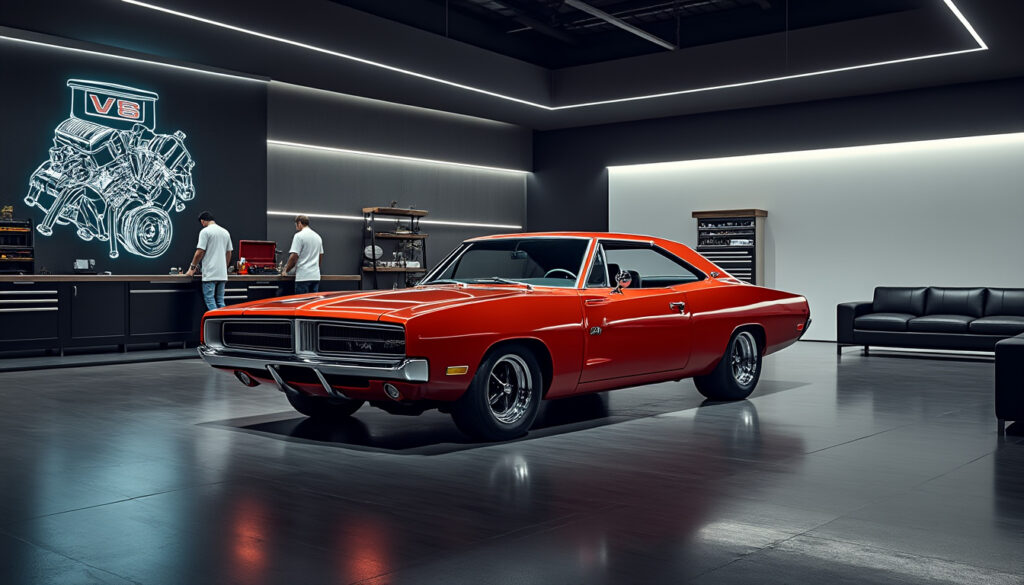

Sales stagnation, passionate debate around the internal combustion engine, and timeless nostalgia for muscle cars: the Dodge Charger, an icon of American cars, seems to be at a crossroads in 2025. Since its partial shift to electric, the legendary coupe has struggled to find its audience, and the announcement of a possible return of the V8 excites automotive performance fans. But beyond the mere nostalgic effect, could this return actually transform the commercial destiny of a legend that embodies raw power and automotive tuning? By examining market dynamics, the psychology of enthusiasts, and technical challenges, this analysis delves into the heart of a possible revival around a rumbling engine block, symbolic and prized.
Why the return of the V8 could rekindle the flame around the Dodge Charger
In the world of sports cars, the V8 represents much more than just an engine: it is a cultural icon, a hymn to power and emotion. For the Dodge Charger, the ultimate muscle car, removing or relegating this engine to the background is synonymous with a loss of identity. During the shift to an electric version and an alternative choice of a turbocharged inline six-cylinder engine, many purists felt a disconnection with the car's original soul.
The V8, with its multiple variations such as the famous 5.7, the 6.4 "Apache," or the supercharged 6.2 Hellcat, offers incomparable sensations. This range embraces both tradition, robustness, and extreme performance. The V8 engine not only serves to boost power, but it is also a vector of vocal and mechanical emotions, characteristics that resonate with automotive tuning enthusiasts as an irresistible call.
- Raw power and unmatched sound: The V8 is renowned for its unique roar, difficult to replicate with electric or smaller engines.
- Symbol of the muscle car: Purists directly associate V8 and muscle car, making this engine indispensable to the legitimacy of the model.
- Automotive resale value: A vehicle equipped with a V8, especially with a rich history, generally retains its value better in the market.
- Compatibility with the platform: The current structure of the Dodge Charger theoretically allows for the return of the V8, facilitating its comeback.
Adopting the V8 thus gives Dodge a significant advantage in reclaiming sports car enthusiasts and reigniting a somewhat dimmed commercial flame. This powerful engine does not merely make technical talk; it provokes a deep emotional connection, essential for such a legendary brand.
The technical and strategic limits of the return of the V8 in the Dodge Charger
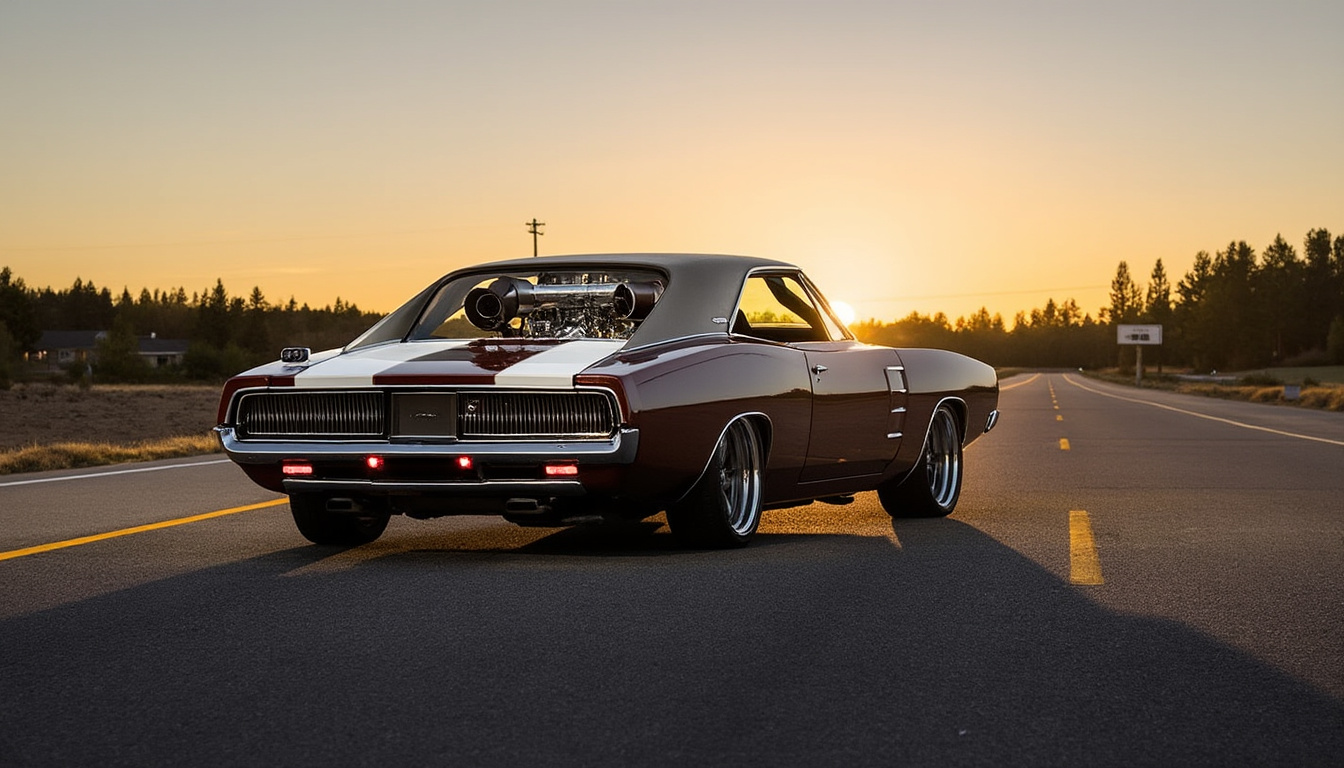
Although appealing on paper, reintroducing a V8 under the hood will not be a walk in the park. The new platform of the Charger, designed also for electric and more compact engines, requires structural adaptations that are not trivially manageable. Modifications to the chassis, reinforcement of engine mounts, and adjustments to the exhaust system are part of the challenges to be addressed.
From an environmental standpoint, re-integrating V8 blocks raises sensitive questions. At a time when anti-pollution regulations are becoming increasingly strict, powerful gasoline engines face growing penalties and restrictions, complicating access to certain markets, especially in Europe. Nevertheless, the muscle car segment retains a loyal customer base willing to invest in these performances, even with additional financial constraints.
- Costly technical adaptation: Modifying the platform to integrate the V8 requires time and a significant budget.
- Regulatory pressures: Strict emission standards limiting the widespread distribution of powerful gasoline engines.
- Changes in group strategy: The departure of CEO Carlos Tavares has modified the original roadmap focused on green technology.
- Balance between versions: Maintaining electric and six-cylinder options to diversify the offerings while revitalizing the V8 range.
This return of the V8 must therefore be approached pragmatically. It is a bet that, if orchestrated well, can prove to be winning in terms of market and image, but requires rigorous preparation and a good understanding of expectations.
The psychology of the consumer: why do muscle car fans want the return of the V8?
The passion for American cars such as the Dodge Charger is not only explained by their technical characteristics but also by a story, a lifestyle, and a memorable first sensory experience. The V8 engine, through its roar, releases an emotion that goes beyond simple mechanical function.
Psychologically, several factors explain this desire to return to V8 powertrains:
- Sensory gratification: The sound and vibration of the V8 act as a strong emotional trigger, stimulating the senses and creating nostalgia.
- Social identification: Owning a muscle car with a V8 is a symbol of status, belonging to a passionate and even rebellious culture.
- Habits and cognitive biases: A sudden transition to electric power may provoke a psychological rejection linked to the loss of habit.
- Brand storytelling: The Dodge Charger is enveloped in a rich narrative where the V8 holds a central place. Removing this engine seems to undermine the legend.
Ultimately, the return of the V8 is not just a question of power; it is an emotional reconquest, as valuable as the mechanics themselves in the world of sports cars. Enthusiasts are ready to embrace models that respect this history, and therefore support initiatives that combine power and authenticity.
Tips for enthusiasts wishing to maintain the value of their muscle car
Maintaining a sports car equipped with a V8 is not limited to driving. The value of a Dodge Charger also greatly depends on the care given to its mechanics and aesthetic appearance. Here are some practical recommendations to optimize automotive resale:
- Regular maintenance: oil change, injector checks, and care of engine parts.
- Respecting original characteristics: avoiding overly extreme modifications that might deter buyers.
- Complete documentation: keeping all invoices and certificates to reassure about the history.
- Impeccable aesthetics: taking care of the paint, the interior, and avoiding visible damage, especially on muscle cars.
These small gestures, when combined, make a significant difference in price and speed of sale. In a market of enthusiasts, authenticity and the preservation of original performances are paramount.
The impact of the V8 on automotive performance and the competitiveness of muscle cars in 2025
At the heart of sports car competition, power and technology are major levers. The V8 remains a reference engine for the Dodge Charger as it combines raw performance with proven reliability on road and track. Despite the rise of electric vehicles, tuning enthusiasts and fans of mechanical sensations still prioritize this type of block.
In 2025, several factors explain why the V8 retains its appeal in an industry undergoing transformation:
- Linear power curve: The V8 delivers consistent power and progressive acceleration, ideal for uniform performance.
- Smoothness and high torque: The availability of torque at low revs enhances sporty driving as well as comfort.
- Modularity for tuning: Ease of adaptation and potential for mechanical or electronic improvements to customize power.
- Presence in competitions: The V8 is still widely used in certain racing categories, reinforcing its image as a powerful engine.
| Engine | Power (hp) | Torque (Nm) | Particularity | Estimated year of return |
|---|---|---|---|---|
| V8 5.7 HEMI | 375 | 555 | Classic engine, economical for a V8 | 2026 |
| V8 6.4 "Apache" | 485 | 644 | Robust average power | 2026 |
| V8 6.2 "Hellcat" supercharged | 717 | 881 | Extreme performance with supercharging | 2026 |
This diverse panel allows Dodge to cater to a varied audience, from enthusiasts seeking the thrill of the V8 to drivers more sensitive to efficiency. Automotive resale in this segment remains boosted by this perpetual adaptation of performance.
How Stellantis adjusts its industrial strategy to relaunch the Dodge Charger with the V8
The Stellantis group has undertaken a major strategic readjustment to adapt to fluctuating market expectations and remedy the stagnation of Dodge Charger sales. The announced return of V8 engines at the Dundee plant marks a key turning point in this policy.
The key elements of this realignment are:
- Restart of V8 production by August 2025: This precise timing will allow for the introduction of V8 models at the peak of the 2026 sales season.
- Maintaining electric and six-cylinder powertrains: To cover a wide spectrum of customers, balancing performance and green modernity.
- Optimizing industrial costs: By adapting the existing platform to integrate the V8 while limiting investments.
- Meeting the expectations of enthusiasts: The marketing strategy is focused on the authenticity and legitimacy of muscle cars with powerful internal combustion engines.
This pragmatic approach aims to make the Dodge Charger a product that fully expresses its historical strengths while remaining competitive at a time when demand consolidates around powerful engines. In the long run, this could well become a benchmark model for automotive tuning and a safe value for automotive resale.
| Action | Planned Date | Objective | Expected Impact |
|---|---|---|---|
| Restart of V8 production | August 2025 | Reintroduction of V8 models to the market | Revival of sales and renewed interest |
| Launch of the Charger Sixpack 6-cylinder | May 2025 | Intermediate power offering | Maintaining presence in the muscle car segment |
| Promotion of electric versions | Ongoing | Raising awareness of green performance | Attracting new customers |
Si vous souhaitez lire d'autres articles tels que Could the Dodge Charger revive its sales with the return of the V8?, consultez la catégorie News.
-
Thétan Lumere says:
Le retour du V8 serait vraiment une excellente nouvelle pour les passionnés de muscle cars.
Leave a Reply to Thétan Lumere Cancel reply
Articles relatifs