Car manufacturers in Europe forced to close due to a shortage of rare earths

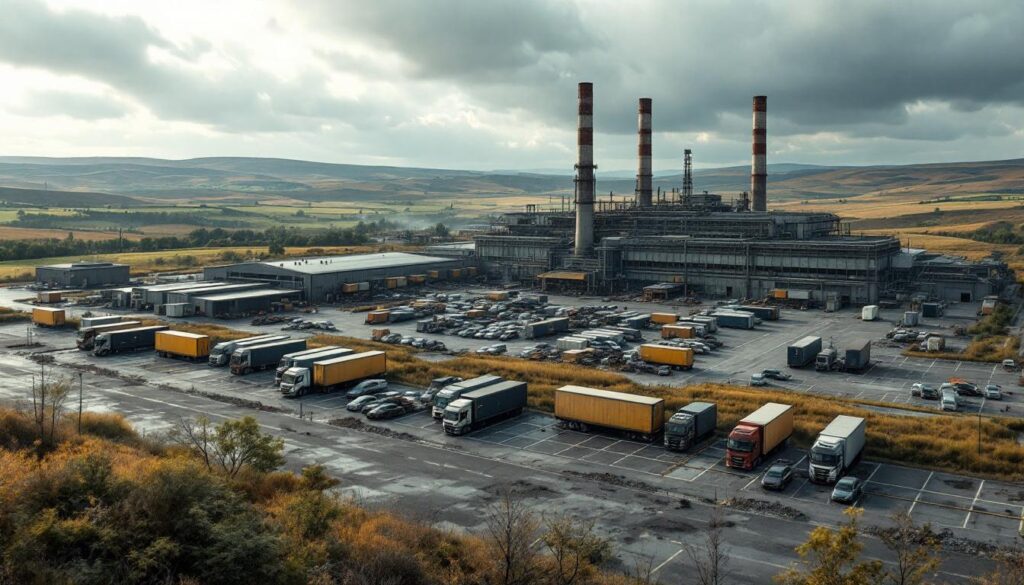

The global rare earth crisis is significantly affecting the European automotive industry. Many once-thriving factories are forced to pause their production lines. Why is this alarming situation occurring? A series of export restrictions imposed by China, ranked among the leading global suppliers of these essential resources, is the major cause. A genuine storm is looming on the horizon, affecting giants such as Volkswagen, BMW, and Mercedes-Benz. Furthermore, a myriad of spare parts suppliers in Europe are also suffering the severe consequences of this shortage. Here is a detailed overview of this concerning situation.
Impact of the Rare Earth Crisis on the European Automotive Industry
The automotive industry's dependence on rare earths is an undeniable fact. These materials are essential for the production of critical components such as electric motors and sensors, which are increasingly prevalent in modern vehicles. The rare earth crisis has plunged the sector into chaos, revealing the vulnerability of a supply chain that, until recently, appeared solid.
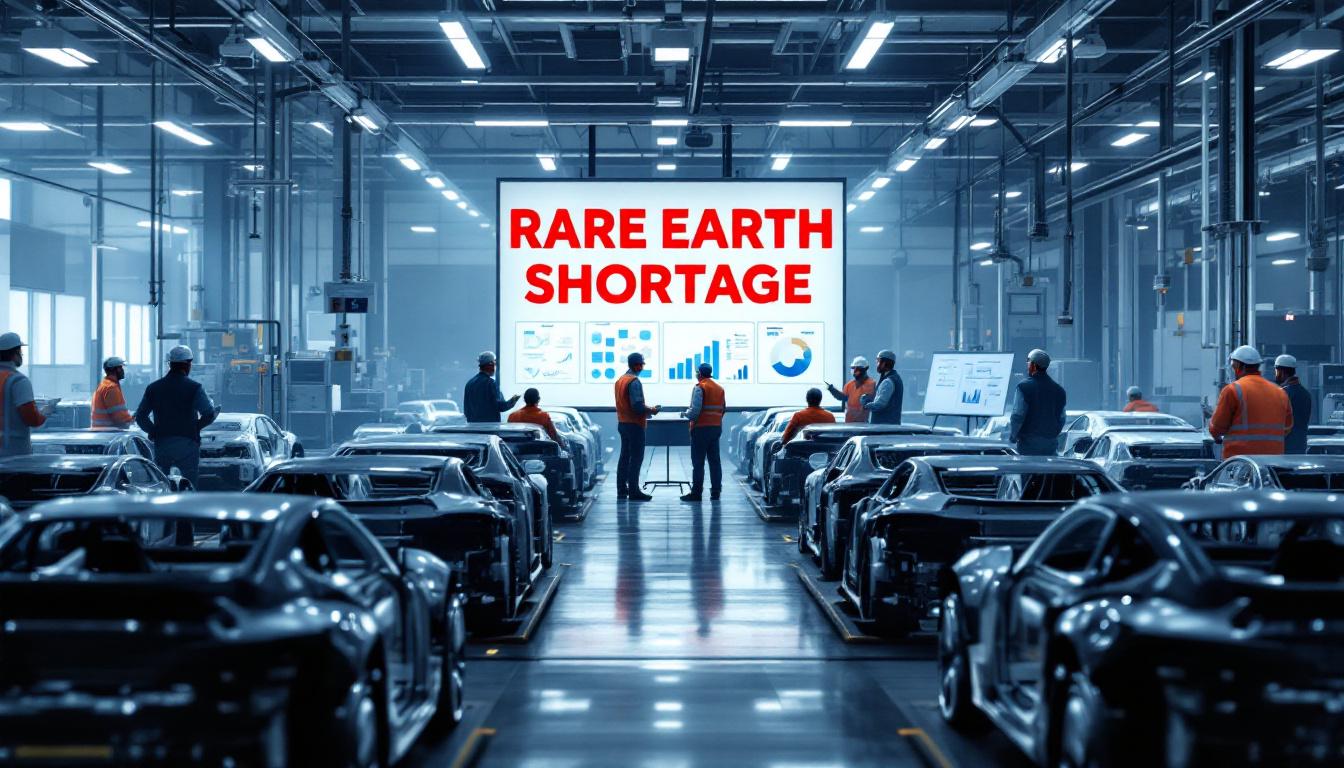
Companies like Renault, Peugeot, and Citroën are becoming aware of the urgency of the situation, finding themselves in a delicate position. With less than 25% of export requests approved by Chinese authorities, the situation is deteriorating rapidly. Factories must temporarily close or reduce their production, resulting in cross-cutting consequences for the supply chain.
The CLEPA (European Automobile Suppliers Association) warns market players of a potential worsening of this crisis in the coming weeks. Giants like Ford and Audi are not immune, risking significant losses.
- Production suspension: Several factories have been forced to cease operations.
- Job cuts: The closures lead to job losses.
- Financial impact: Significant economic losses for many companies.
The Causes of Export Restrictions and Their Consequences
The supply difficulties in rare earths largely stem from China's policies, which control a considerable share of the global market. The export restrictions on these resources were decided amid a trade conflict with the United States. The Chinese administration uses rare earths as a real political lever, exacerbating an already precarious situation. These policies have resulted in doubled customs clearance times, complicating the transport of critical parts to factories.
In light of this situation, several industry players encourage innovation and the development of alternative solutions. However, the transition to substitute materials is not without challenges, both in terms of cost and technical viability. Opinions are rising among policymakers and industry leaders: how to protect such an essential industry and reduce dependence on a single supplier?
| Company | Current Situation | Expected Consequences |
|---|---|---|
| Volkswagen | Temporary closures of production lines | Decreased supply in the market |
| BMW | Factories operating at reduced capacity | Risks of significant financial losses |
| Schaeffler | Reduced parts supply | Increased pressure on other suppliers |

The Economic Model of the Automotive Industry in Crisis
The fixed assets in automobile production make the industry a behemoth with slow movements. When a crisis occurs, the industry's flexibility is severely tested. Supply chains become weak links, exposing a hidden vulnerability. The immediate impact is felt in financial statements, but the long-term consequences could be catastrophic for the entire sector.
In this context, solutions are deemed necessary but complex. Automotive companies are beginning to consider various production models, including the recycling of rare earths and the development of new technologies. Projects are emerging that aim to reduce dependence on external resources. However, this requires significant investments and long-term visions.
- Diversification of suppliers: Expand the supply network to better manage risks.
- Investment in R&D: Increase research projects on alternatives to rare earths.
- Recycling: Implement rare earth recycling systems from end-of-life vehicles.
Strategies Toward Autonomy
Building a future where the European automotive industry is less dependent on rare earths goes through innovation. Several industry leaders share this common vision. Indeed, it is essential to ask the question: how to strengthen autonomy in these essential frameworks, in light of recent events?
European governments are beginning to consider more drastic interventions to protect their industries. This could include laws favoring local investments in the research and production of rare earths.
| Strategy | Objective | Action to be taken |
|---|---|---|
| Protect the industry | Create a relief fund to support businesses | |
| Innovation | Develop alternative materials | Research laboratories in collaboration with the industry |
| Public policies | Encourage local sourcing | Tax incentives for European producers |

Medium-Term Prospects for the Automotive Industry
As the European automotive industry grapples with this rare earth crisis, another crucial question arises: what will be the medium-term consequences for the sector? Expert estimates indicate that there could be a gradual recovery, but this will require concerted efforts at all levels. Bodymakers and parts manufacturers, such as Fiat or Opel, cannot face this storm alone.

Strategic alliances between manufacturers, suppliers, and even governments will be crucial. These initiatives will help build a robust ecosystem capable of meeting future challenges. Brands will need to move away from the old paradigm, where supply security relied exclusively on one or two sources. Rather, a diversified supply network will serve as the best defense.
- Partnerships: Strengthen collaborations between companies to combine efforts.
- Forecasts: Adjust production forecasts based on access to critical materials.
- Strategic adjustments: Modify product strategies to adapt to new market realities.
Moreover, innovations in hydrogen or battery technology will allow for the exploration of new horizons. Challenges related to sustainability will push companies to reinvent themselves. In this sense, the sector could find itself not only more resilient but also better prepared to face the realities of the future.
Key Players and Their Role in This Crisis
In this tectonic crisis, many players must play their role for the transition to a more sustainable and resilient industry to be possible. Companies like Volkswagen, BMW, Peugeot, and Citroën must mobilize, but the support of governments is crucial to drive viable initiatives.
The decisive point of this situation also rests on less visible actors, such as spare parts suppliers and recycling companies. The latter are at the forefront of innovating, exploring alternative solutions, and minimizing the impacts of the current crisis.
- Automotive manufacturers: Responsible for production and innovation.
- Suppliers: Essential to ensure continuous access to necessary materials.
- Governments: Must implement incentivizing and protective policies.
Viewing this crisis as an opportunity for transformation could be the key not only to face current challenges but also to build an automotive sector that meets the standards of the 21st century. Change is imperative.
Si vous souhaitez lire d'autres articles tels que Car manufacturers in Europe forced to close due to a shortage of rare earths, consultez la catégorie News.
-
Lio Vartel says:
Cette crise des terres rares met vraiment en lumière notre dépendance vis-à-vis des fournisseurs. À méditer.
-
La crise des terres rares est vraiment préoccupante pour l'avenir de l'industrie automobile en Europe.
-
Cette crise des terres rares est vraiment préoccupante pour l'avenir de l'industrie automobile en Europe.
Leave a Reply to Lio Vartel Cancel reply
Articles relatifs