Can the Xiaomi YU7 compete with the Tesla Model Y?

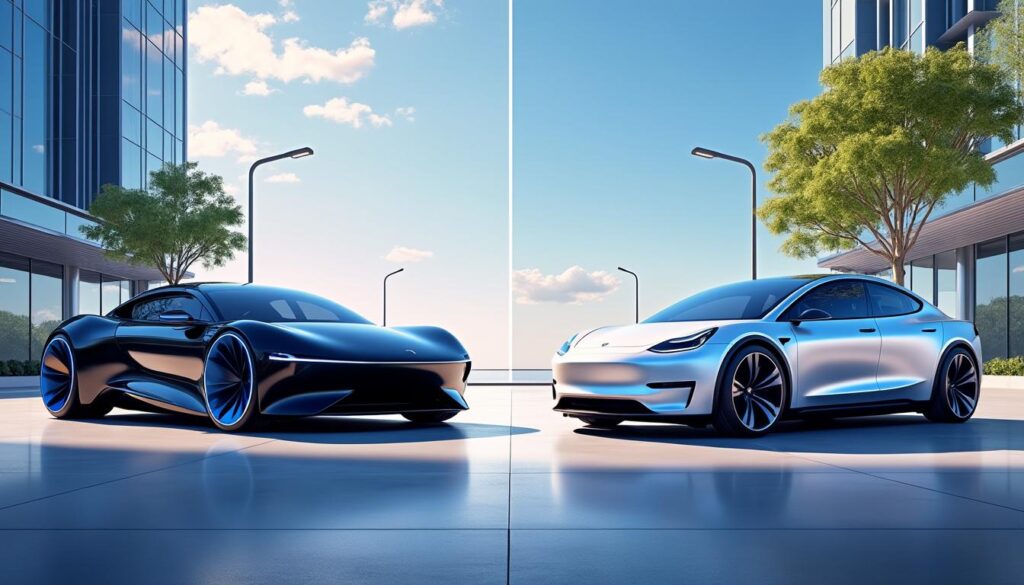

The electric car market is experiencing a real upheaval with the arrival of the Xiaomi YU7, an SUV aiming to compete with the benchmark that is the Tesla Model Y. This showdown promises to be captivating, not only for automotive technology enthusiasts but also for anyone interested in the future of transportation. With impressive features and cutting-edge technology, the YU7 seems ready to enter the arena and challenge Tesla's dominance in the Chinese market.
The technical face-off: impressive features
To fully understand the stakes of this competition, it is essential to explore the technical specifications of both vehicles. The Xiaomi YU7 stands out with its battery's impressive capacity, offering 96.3 kWh compared to about 62.5 kWh for the Model Y propulsion. This battery difference translates into an announced CLTC range of 835 km for the YU7, leaving the Tesla with its 593 km far behind.
| Specifications | Tesla Model Y Propulsion | Xiaomi YU7 Standard |
|---|---|---|
| Battery capacity | ≈ 62.5 kWh | 96.3 kWh |
| Range (CLTC) | 593 km | 835 km |
| 0 to 100 km/h | 5.9 s | 5.8 s |
Other key points
- 🚀 800V Architecture for faster charging, compared to 400V for Tesla.
- 🏁 Superior performance with a YU7 Max version going from 0-100 km/h in 3.2 seconds.
- 🌍 Space-saving with generous dimensions enhancing comfort.

A design focused on comfort and innovation
The interior design of the YU7 is both modern and functional. In addition to its increased space due to a longer wheelbase, the car incorporates a wide display surrounding the dashboard, contrasting with Tesla's minimalist approach. This focus on passenger comfort is also reflected in the integration of a heads-up display (HUD), enhancing driving by projecting crucial information into the driver's line of sight.
| Feature | Tesla Model Y | Xiaomi YU7 |
|---|---|---|
| Display | Central screen | Panoramic display |
| Interior space | 5 seats | 5 seats (7 optional) |
| Onboard technology | AI4 | HyperOS system with Nvidia Thor |
Cutting-edge technology
Both manufacturers are competing in the technology arena. While Tesla has solid experience with its driving assistance system, Xiaomi competes with impressive computing power and an operating system tailored for its vehicles.
- ⚡ Computing capacity of 700 TOPS with the Nvidia Thor chip on the YU7.
- 📱 Easy integration thanks to the existing Xiaomi ecosystem.
- 🔄 Connected environment enabling interactions between various devices.

Energy challenges and business approach
A crucial difference lies in the energy approach of both brands. Tesla prioritizes efficiency with less battery-intensive cars, while Xiaomi appears to bet on more powerful batteries to attract buyers seeking range. This strategy could be particularly effective in the Chinese market, where range is a determining criterion for buyers.
| Criterion | Tesla Model Y | Xiaomi YU7 |
|---|---|---|
| Energy efficiency | Optimized | Less optimal but more powerful |
| Sales strategy | Customer loyalty | Increased range |
| Market share | World leader | Rapid conquest |
In conclusion
The Xiaomi YU7 is a serious challenger in the electric SUV market and could redefine consumer expectations against established models like the Tesla Model Y. The performance, technological innovation, and comfort offered by the YU7 are already key elements in this battle. The coming months will be crucial to observe whether Xiaomi succeeds in establishing itself in the Chinese electric car market.
To follow the latest news, visit Xiaomi's automotive news and discover the impact of these models on the future of electric mobility. 🌟
Si vous souhaitez lire d'autres articles tels que Can the Xiaomi YU7 compete with the Tesla Model Y?, consultez la catégorie Non classé.
-
Célestin Vermeil says:
Le Xiaomi YU7 a l'air vraiment prometteur. Sa batterie impressionnante pourrait faire la différence.
Leave a Reply to Célestin Vermeil Cancel reply
Articles relatifs