BYD is set to develop a network of ultra-fast charging stations in Europe

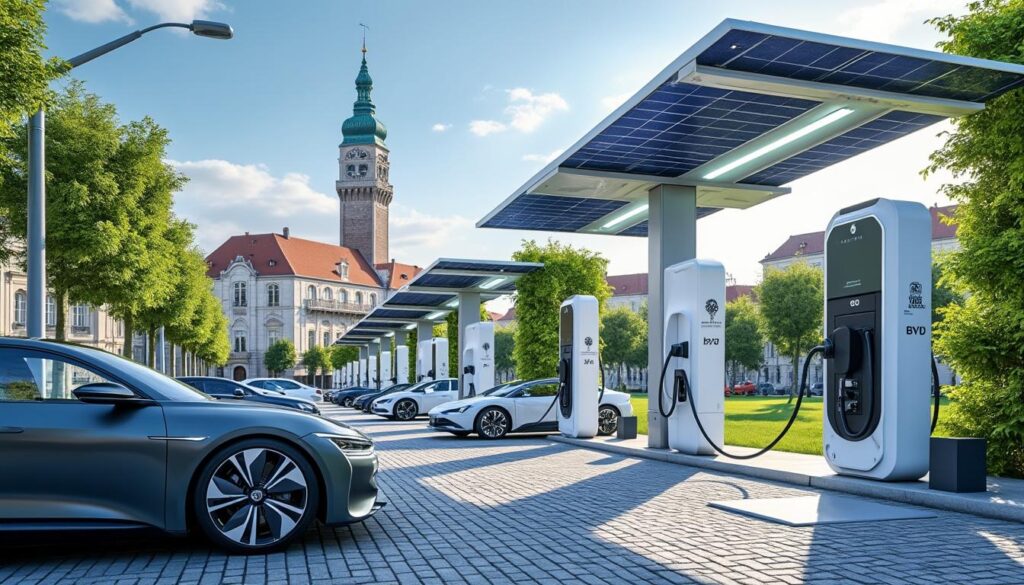

The Chinese car manufacturer BYD announces an ambitious project to transform the charging infrastructure in Europe. As electric mobility grows, the demand for practical and fast charging solutions is increasing. It is in this context that BYD, already present in the European market with its electric vehicles, plans to deploy a large network of ultra-fast charging stations. This project, unveiled by Stella Li, executive vice president of the company, promises to revolutionize the experience of electric vehicle drivers by offering charging times comparable to those of a full tank of gasoline.
Ultra-fast charging stations: BYD's ambitious project
With the rapid expansion of electric vehicles, BYD sees a considerable opportunity to meet the growing needs of consumers. The company plans to build a network of ultra-fast charging stations, or "flash chargers", capable of powering vehicles in record time. Thanks to a 1000-volt architecture, these terminals promise to charge an electric vehicle to travel up to 400 kilometers in just five minutes. This technological advancement could mark a paradigm shift in the automotive industry and in the public's perception of electric vehicles.
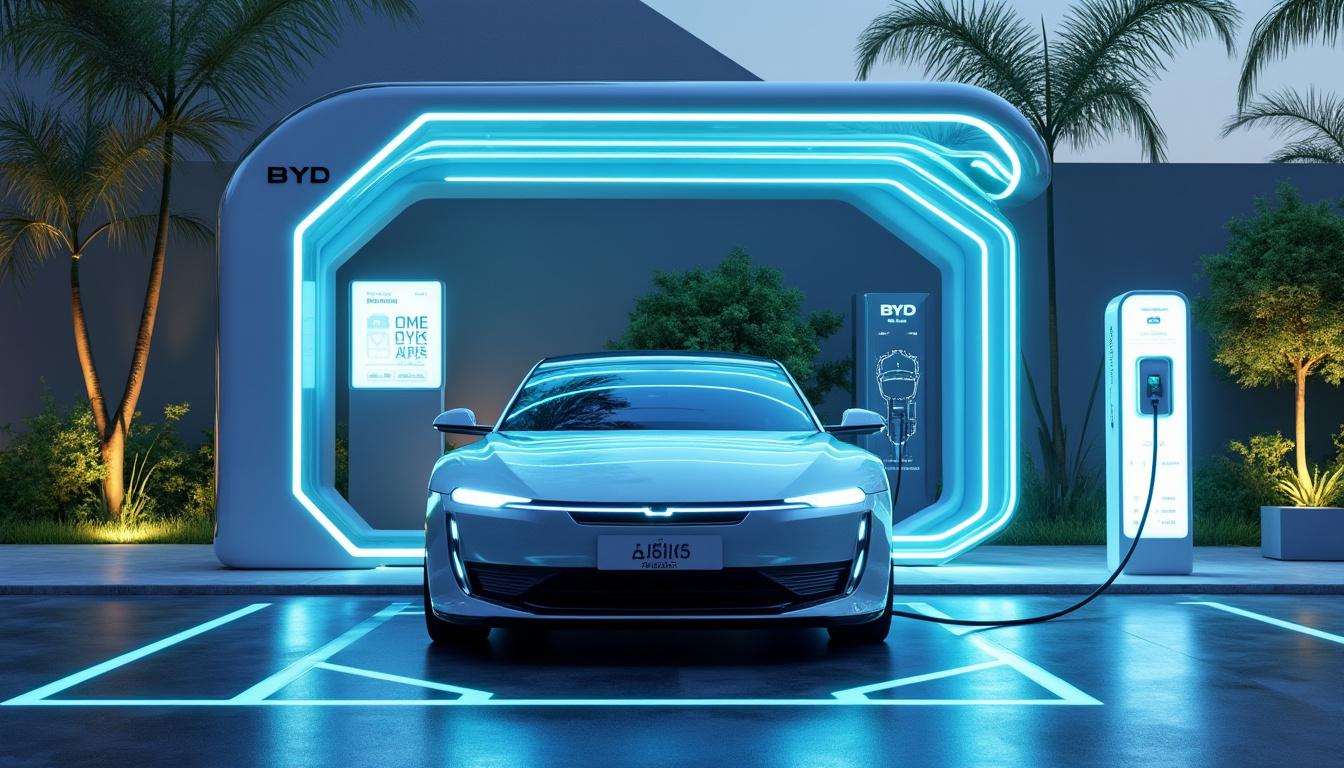
Charging technology: how does it work?
BYD's ultra-fast charging stations are designed to maximize speed while ensuring the safety of operations. By using advanced battery technology, these stations allow equipped vehicles to charge their batteries much faster than conventional systems. This results in efficiency gains, which are essential to convince traditional users to abandon their combustion engines.
Here are some key points about how these stations work:
- 1000-volt architecture: Allows high-voltage charging, significantly reducing wait times.
- Support for conventional batteries: Even vehicles with older technologies can charge 20 to 30% faster.
- Instant charging: Creates an experience similar to filling up with gasoline, which could reassure consumers.
A technological challenge for European infrastructures
The deployment of this charging station network in Europe will not be without challenges. European countries must adapt their existing infrastructure to accommodate this new technology. This includes updates to local electrical networks and the creation of a regulatory framework that facilitates the integration of these stations.
In the European context, several aspects must be considered:
- Safety standards: Stations must meet strict standards to ensure user safety.
- Cooperation with local partners: BYD must engage with local businesses and governments to facilitate the deployment of infrastructures.
- Integration of renewable energies: Promoting sustainable electric mobility linked to renewable energy sources.
| Features | Current charging standard | Ultra-fast charging (BYD) |
|---|---|---|
| Voltage (volts) | 400 V | 1000 V |
| Charging time for 400 km | 30-40 minutes | 5 minutes |
| Compatibility with older technologies | Limited | 20-30% faster |
BYD: a future-oriented strategy
Alongside its charging station project, BYD is developing a comprehensive strategy to establish its position in the European market. The company aims to become an essential player in the electric mobility sector, both for fully electric and hybrid vehicles.
Stella Li specified that BYD plans to open a production site in Hungary by the end of the year, as well as a research and development center in Budapest. This will not only solidify BYD's presence in Europe but also create local jobs and boost the economy.
Encouraging trends
BYD's sales continue to grow in Europe, with a 10% increase every month. If this trend continues, it could allow the company to consider opening new production units on the continent. This proactive approach is essential to ensure that BYD can meet the growing demand for electric vehicles.

The challenges of establishment
Despite the encouraging signals, BYD will face challenges during its development. The current charging infrastructure in Europe must be supported by a conducive regulatory and logistical framework. This includes combating the volatility of electricity prices, establishing a reliable and affordable network of charging stations, and managing consumer perceptions regarding these technologies.
Each European market presents specificities, so the deployment strategy will need to adapt to local realities:
- Analysis of regional needs: Each country has its own requirements and opportunities for infrastructure development.
- Strategic partnerships: Collaborate with local stakeholders for successful implementation.
- Awareness campaigns: Inform the public about the benefits of electric vehicles and fast charging.
Environmental and sustainable issues
The development of this network of charging stations is also part of a sustainable development approach. BYD aims to promote the use of renewable energies to power its stations, contributing to reducing the carbon footprint of electric vehicles in the long term. The transition to faster and more efficient charging solutions is a step towards a less polluting future.
The importance of sustainable commitment
To strengthen this vision, BYD is committed to integrating environmentally responsible practices into all aspects of its strategy. It is crucial to assess the benefits that such an initiative can generate:
- Reduction of emissions: The establishment of charging stations powered by green energy can decrease greenhouse gases.
- Resource conservation: Efficient use of natural resources through responsible production processes.
- Stimulating the circular economy: Encouraging the reuse and recycling of materials used in electric vehicles.
A bright future for electric mobility
By developing innovative charging solutions and reinforcing its commitment to sustainable development, BYD positions itself as an engaged leader in the energy transition. As Europe implements climate initiatives, BYD's network of ultra-fast charging stations could prove to be a valuable asset for all players in electromobility.
| Key objectives | Environmental impact | Socio-economic consequences |
|---|---|---|
| Deployment of charging stations | Reduction of CO2 emissions | Creation of local jobs |
| Use of renewable energies | Decrease of carbon footprint | Improvement of brand image |
| Partnerships with local businesses | Support for the circular economy | Strengthening business networks |
Towards electric mobility accessible to all
BYD's project is also accompanied by an inclusive vision, aiming to make electric mobility accessible to a larger number of people. This involves a network of charging stations that does not limit itself to privileged geographical areas but extends to all corners of Europe.
At the same time, BYD is committed to raising public awareness of the benefits of electric vehicles. By collaborating with governments and non-governmental organizations, the company hopes to break down prejudices surrounding electromobility and democratize its use.
Awareness and education initiatives
Awareness campaigns are crucial for changing consumer behavior. Indeed, the success of the transition to electric mobility largely depends on the public's perception of these vehicles. It is essential to address several aspects:
- Education on economic benefits: Highlighting the potential savings related to the use of electric vehicles.
- Promotion of technological innovations: Informing the public about advancements in range and charging times.
- Practical demonstrations: Offering test drives to familiarize potential users with the electric driving experience.

Through these efforts, BYD hopes to establish a deep connection with its customers while strengthening its role as a pioneer in the field of electric mobility. The success of its charging station network will also depend on its ability to go beyond just a product, by establishing a sustainable relationship with drivers.
In this dynamic, companies like BYD are at the heart of a major shift towards greener and more sustainable mobility. Ultimately, the future of the automobile could be written with electric vehicles, supported by a charging infrastructure that is innovative and tailored to contemporary needs.
Si vous souhaitez lire d'autres articles tels que BYD is set to develop a network of ultra-fast charging stations in Europe, consultez la catégorie Non classé.
-
Lyra Beauchêne says:
C'est une belle avancée pour l'électromobilité en Europe, la rapidité de recharge est impressionnante !
-
C'est une initiative incroyable de BYD pour rendre l'électromobilité plus accessible à tous.
-
C'est super de voir BYD investir dans des stations de recharge en Europe pour les véhicules électriques.
-
C'est impressionnant de voir BYD innover ainsi pour l'électromobilité en Europe !
-
C'est incroyable de voir BYD transformer l'infrastructure de recharge en Europe. Cela va vraiment aider les conducteurs.
Leave a Reply to Liora Vesper Cancel reply
Articles relatifs