BYD is establishing itself in Hungary to set up its European electric vehicle center and create 2,000 jobs

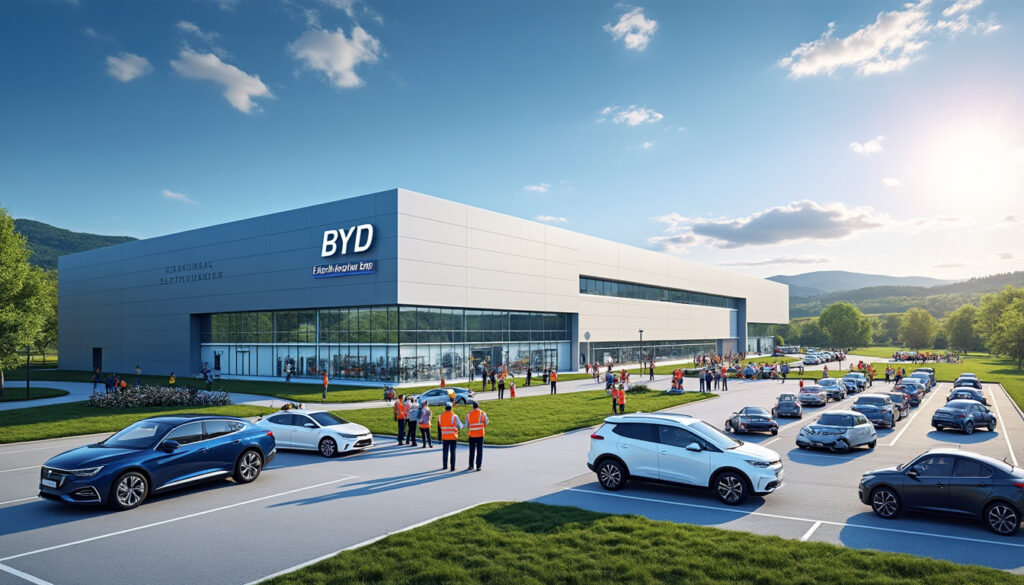

The Chinese automaker BYD, a global leader in the electric vehicles sector, recently announced a decisive step in its European development. An investment of 248 million euros marks its establishment in Hungary, aiming not only to set up its European center but also to create 2,000 jobs. This strategic move illustrates BYD's commitment to a dynamic transition toward sustainable mobility and intensive use of renewable energies.
BYD: A Key Player in Electric Automotive
Founded in 1995, BYD, which stands for "Build Your Dreams," initially proved its expertise in battery manufacturing before establishing itself in the electric vehicle sector. Today, BYD is recognized as the sixth-largest automaker in the world, having sold 4.2 million vehicles in 2024, accounting for about 10% of its international sales. This lead is not by chance but instead results from a strategy of continuous technological innovation and bold expansion into new markets. Geopolitical tensions have prevented some Western brands from breaking into the Chinese market, allowing BYD to capitalize on this opportunity to rise to the top of the global electric vehicle sales, surpassing Tesla for the first time.
A Strategic Establishment in Hungary
Hungary was chosen for several strategic reasons. First, this Central European country has already hosted many automotive giants, including renowned German brands, thus providing a solid infrastructure for production operations. This BYD initiative could also strengthen Sino-Hungarian relations, which have intensified since Prime Minister Viktor Orban took office in 2010. By meeting with Chinese President Xi Jinping, Orban expressed his commitment to strengthening ties with China.
The benefits of such an establishment are numerous. With a factory in Szeged expected to open by the end of 2025, BYD will not only create a significant number of jobs but also invigorate the local economy. By building a European center in Budapest, the company is betting on providing essential infrastructure for sales, after-sales service, as well as certification and development of new models tailored to European regulations and consumer preferences.
- Creation of a local economic dynamic through BYD's establishment
- Increased job opportunities in the automotive sector
- Strengthening of economic relations between Hungary and China
| Objective | Details |
|---|---|
| Total Investment | 100 billion forints (248 million euros) |
| Job Creation | 2,000 positions planned |
| Factory Opening Date | End of 2025 |

The Stakes of This Decision for BYD and Europe
The announcement of BYD's establishment in Europe raises many questions about the future of the automotive industry on the continent. With increasingly strict environmental policies, Europe is moving towards sustainable mobility and increased development of renewable energies. As an electric vehicle manufacturer, BYD is at the forefront of meeting this growing demand.
The advantages of a center in Europe are:
- Facilitated access to local partners and research and development infrastructures.
- Ability to respond more quickly to the needs of European customers.
- Reduction of import costs and delivery times for vehicles.
- Compliance with EU environmental standards.
Additionally, the current geopolitical dynamic may increase BYD's competitiveness against its rivals. In recent years, tensions between the Trump administration and China have resulted in restrictions limiting access for Chinese companies to Western markets. By asserting its presence in the European market, BYD could make a strategic move that will allow it to diversify and protect itself against potential political uncertainties.
BYD Facing Geopolitical Challenges
However, BYD's establishment in Hungary is not without challenges. The European Commission has launched an investigation into the subsidies that China could grant to its companies, a situation that could negatively impact BYD's projects in Europe. Transparency and adherence to free market rules will be crucial to establishing a solid foundation on the continent.
To face these challenges, BYD must ensure it maintains a positive image, aligned with European consumer expectations for sustainability and technological innovation. This is why the manufacturer is committed to designing models tailored to local specifics, a strategy that would allow it to stand out from its competitors. Furthermore, the development of charging infrastructure and after-sales services will be essential to support this expansion.
The Role of the European Center in BYD's Global Network
The creation of this European center is not limited solely to the sale and production of vehicles. It is part of a broader vision for the company, aiming to integrate innovation and sustainability into its operations on a global scale. The center will serve as a hub for research into new technologies, the integration of renewable energies into production, and the development of environmentally friendly mobility solutions.
Through this initiative, BYD also aims to enhance its image as a leader in the electric vehicles sector. By offering a varied range of models, from passenger cars to commercial vehicles, BYD is well-positioned to meet the diverse needs of consumers in the European market.
The success criteria for the European center include:
- The ability to innovate quickly to respond to market trends.
- The establishment of partnerships with major industry players.
- The deployment of optimal logistical solutions for distribution.
- An effective communication strategy with customers and partners.
| Objective of the European Center | Details |
|---|---|
| Local Design | Development of models tailored to the European market |
| Vehicle Testing | Certification and compliance testing with European standards |
| After-Sales Service | Creation of a network of service centers across Europe |

Outlook for the Future of Electric Vehicles in Europe
With BYD's establishment in Hungary, a new momentum is emerging for the European automotive industry. The increasing pressure in favor of electric vehicles and initiatives for sustainable mobility opens encouraging prospects for players in this segment. Massive investments in charging infrastructures and government incentives for electromobility are key elements in this evolution.
Consumers are becoming increasingly aware of environmental issues, and interest in zero-emission vehicles is rising. By adopting a proactive approach, BYD is prepared to capture a substantial share of the European market in the coming years. The implementation of cutting-edge technologies, commitments to sustainability, and the opening of new production sites are all factors that could transform the automotive landscape on the continent.
- Evolution of policies favoring electric vehicles.
- Increasing European investments in charging infrastructures.
- Growing consumer demand for sustainable vehicles.
- Strategic partnerships with other players in the automotive industry.
Through the opening of this European center, BYD demonstrates its commitment to establishing itself in the electric vehicle landscape while actively participating in the transition towards a more sustainable future. By integrating innovation and renewable energies into its operations, BYD could well become a major player in the automotive industry in Europe.
Si vous souhaitez lire d'autres articles tels que BYD is establishing itself in Hungary to set up its European electric vehicle center and create 2,000 jobs, consultez la catégorie Non classé.
-
Zia Verneuil says:
C'est une excellente nouvelle pour l'industrie automobile européenne et l'écologie !
-
C'est une excellente initiative pour l'économie locale et la transition énergétique en Europe.
-
C’est une belle avancée pour la mobilité durable en Europe. Hâte de voir les résultats !
-
C'est impressionnant de voir BYD investir massivement en Europe pour soutenir l'innovation verte.
Leave a Reply to Elowen Marceau Cancel reply
Articles relatifs