Brazilian F1 GP: Lewis Hamilton reflects on a challenging race and a difficult car to handle at the finish

The Challenges of the Brazilian GP: A Grueling Race for Lewis Hamilton
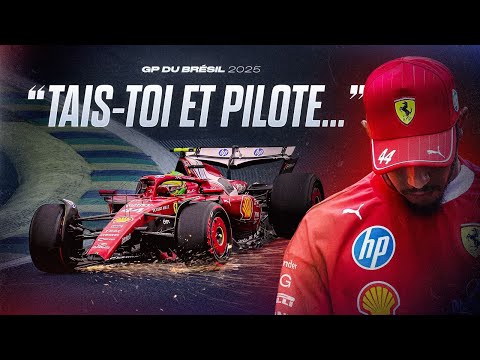
The Brazilian GP has always been an arena where challenges multiply for Formula 1 drivers. This year, Lewis Hamilton found himself at the center of the tumultuous action that marked the race. From the start, his hopes to shine on the São Paulo circuit collided with the reality of a difficult-to-handle car. A dramatic first lap led to his retirement after a collision with Franco Colapinto's Alpine. Such a situation is typical in auto racing, where a moment of concentration can flip the outcome of a race. When the starting signal sounds, adrenaline surges, and every driver must juggle speed, strategy, and responsiveness.
After the contact, Hamilton headed to the pits for urgent repairs. However, the reality was that the combination of car degradation and the extreme demands of the circuit became unbearable. "I was hit from behind at the start of the race, but I still don't know who it was. After that, the car was really difficult to drive," he stated after the race. These words resonate with a sense of frustration shared by many drivers who have experienced similar moments.
On a circuit as technical as that of São Paulo, driving requires impressive finesse. Hamilton tried to make the most of his situation, aware that every second counts. However, the inability to maintain a consistent performance was a blow to him and his team. Indeed, such a performance at such a prestigious event cannot be underestimated: "This retirement is completely devastating for the team," Hamilton added. A sentiment echoed by the rest of the team, which hoped for crucial points in the standings.
Emotional management is an essential aspect for drivers like Hamilton. The pressure is immense, and every mistake, even those that are not entirely within their control, can lead to a series of consequences. "All I can say is that we won't give up and we will continue to attack," he insisted, reflecting his persistent commitment despite adversity.
| Key Events | Consequences |
|---|---|
| Collision on the first lap | Car damage and necessitating a pit stop |
| Driving difficulties | Drop in the standings and retirement from the race |
| Premature retirement | Loss of crucial points for the Ferrari team |
The Brazilian GP highlights not only the physical resilience but also the mentality of Formula 1 drivers. It is a poignant reminder that, no matter the preparation and experience, each race is a new episode where the unexpected can arise at any moment.


Performance Analysis: An Evaluation of Hamilton's Car
In the world of auto racing, a car's performance is crucial. It determines not only a driver's race pace but also their ability to navigate through the challenges of the track. Lewis Hamilton's car at the Brazilian GP was described as "difficult to handle," revealing weaknesses that were exploited by other drivers. This observation is not surprising, especially in the context of evolving F1 car performances over the seasons.
Technical adjustments, tire choices, and the car's balance are critical elements. The combination of these factors can make the difference between a successful race and a retirement. For Hamilton, a series of characteristics complicated his journey on the circuit:
- Tire degradation: Rapid tire wear can drastically alter handling.
- Suspension settings: Inadequate adjustments can make the car unstable.
- Engine response: A disappointing engine response during acceleration can cause significant time losses.
Despite these obstacles, Hamilton demonstrated exemplary resilience. His experience as a world champion allowed him to maintain some focus, even when the situation became critical. F1 drivers must constantly juggle these variables, turning each race into a strategic battle. The ability to react under pressure and make quick decisions is what sets great champions apart.
This pressure is even greater when it comes to the Ferrari team. Their recent performances had raised high expectations, and a disappointing result like this only increases the tension surrounding the team. The rivalry with teams like Mercedes and Red Bull further enhances this dynamic. Moreover, Hamilton expressed his gratitude towards his team while emphasizing the need to improve the car for upcoming races: "We will need to deliver great performances in Las Vegas, Qatar, and Abu Dhabi," he stated.
| Key Components of Car Performance | Impact on the Race |
|---|---|
| Tires | Influence speed and handling |
| Suspension | Determines the car's ability to absorb shocks |
| Engine | Plays a crucial role in acceleration and top speed |
In summary, the performance of Lewis Hamilton's car was a determining factor during the Brazilian GP. Every component plays an essential role, and the team's ability to manage these challenges is crucial for success in the cutthroat world of Formula 1.
The Implications for the Ferrari Team and the Future
The Brazilian GP is not just a race; it represents a turning point for the Ferrari team. Lewis Hamilton's retirement, coupled with that of Charles Leclerc, has severe consequences for the constructors' championship standings. Currently, Ferrari finds itself in difficulty, slipping to 4th place with 362 points. In comparison, Mercedes has extended its lead with 398 points, seeking to solidify its strong position in this 2025 season.
This situation has profound implications for the future of the team. The team must reassess its priorities and understand how to bounce back. Here are some elements to consider:
- Performance reevaluation: Analyze what did not work during this race.
- Strategic planning: Develop a more robust approach for upcoming races.
- Technical optimization: Make improvements to the car's components.
- Team consolidation: Strengthen the bonds between drivers and technical staff.
The road ahead requires great performances and deep reflection on recent failures. The objective for Ferrari is to surpass Mercedes and give the team the necessary momentum before the end of the season. Hamilton has clearly indicated the need to attack: "It's not over till it's over and I really believe in that."
The repercussions of this race are such that Ferrari's leaders must consider making bold and innovative decisions to regain their standing. This fight is not just about points; it is also about the future and the perception of the team in the world of Formula 1.
| Current Constructors' Standings | Points |
|---|---|
| 1. Mercedes | 398 |
| 2. McLaren | 366 |
| 3. Red Bull | 364 |
| 4. Ferrari | 362 |
The work begins now. For Ferrari, every race is an opportunity to outpace its rivals and write a new story. Without a doubt, the spirit of competition is still there, even in the face of adversity.

Lessons to Learn from the Brazilian GP for Future Drivers
The Brazilian GP provided a multitude of lessons not only for current drivers but also for those aspiring to auto racing. The challenges faced by Lewis Hamilton and his team are reflective of the reality of Formula 1: each race is a battle where strategy, preparation, and driving skills align. The key elements that emerge from this race can serve as a guide for future drivers.
Understanding how to manage adversity and the unexpected is paramount. Drivers must train not only to drive but also to maintain a positive mindset in the face of difficulties. Here are some essential lessons that young drivers can take from this experience:
- Resilience: The ability to bounce back after failure is fundamental. Every driver must learn to move past their mistakes.
- Anticipation: Being able to foresee the movements of other drivers and unexpected events on the track can prevent collisions.
- Communication: Good relationships with the team and clear communication are essential. A good dialogue can lead to better strategic decisions.
- Adaptability: The ability to adjust one's driving according to conditions and car settings can make a difference during races.
By incorporating these aspects into their training, aspiring drivers can prepare to navigate the demanding world of Formula 1. The Brazilian GP is a living example that, even in the face of insurmountable challenges, passion and determination can lead to a bright future.
| Lesson | Importance |
|---|---|
| Resilience | Essential for overcoming failures |
| Anticipation | Prevents collisions and manages traffic |
| Communication | Improves team strategy |
| Adaptability | Enhances race performance |
The Brazilian GP, with its ups and downs, is a microcosm of the challenges all drivers face. For Hamilton and Ferrari, the future depends on their ability to learn from this experience and come back stronger.
Si vous souhaitez lire d'autres articles tels que Brazilian F1 GP: Lewis Hamilton reflects on a challenging race and a difficult car to handle at the finish, consultez la catégorie News.
Leave a Reply
Articles relatifs