Automakers facing challenges from shortages caused by Chinese restrictions

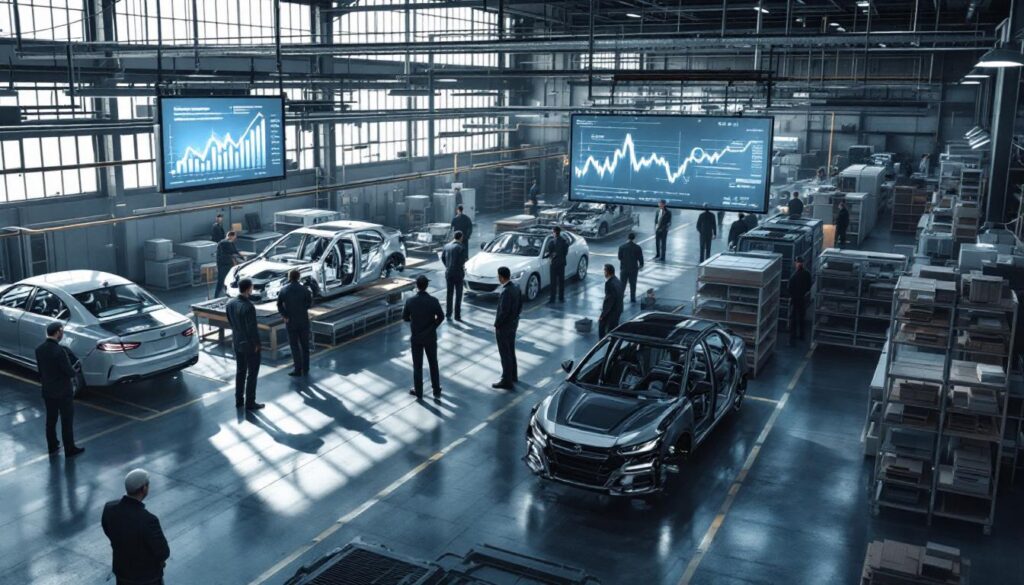

In an increasingly interconnected world, the global automotive industry finds itself at a crossroads. China's restrictions on the export of rare earth elements and essential minerals threaten an already challenged sector. What are the real impacts for giants like Ford, Volkswagen, and Renault? The necessity to reinvent itself has never been more pressing.
The consequences of Chinese restrictions on the automotive industry
The consequences of Chinese restrictions are already visible. They have disrupted supply chains, causing production stoppages at several automakers. Rare earth-based magnets, essential for the manufacture of electric motors and other components such as windows and speakers, are at the heart of this crisis.
Shortages of critical components
The current situation has led companies to make difficult decisions. Iconic brands like Suzuki and Ford have had to suspend production of some of their vehicles. For example, Ford halted the production of its Explorer SUV at its Chicago plant for a week. A break that may seem minimal, but which has serious consequences in an environment where demand is already high.
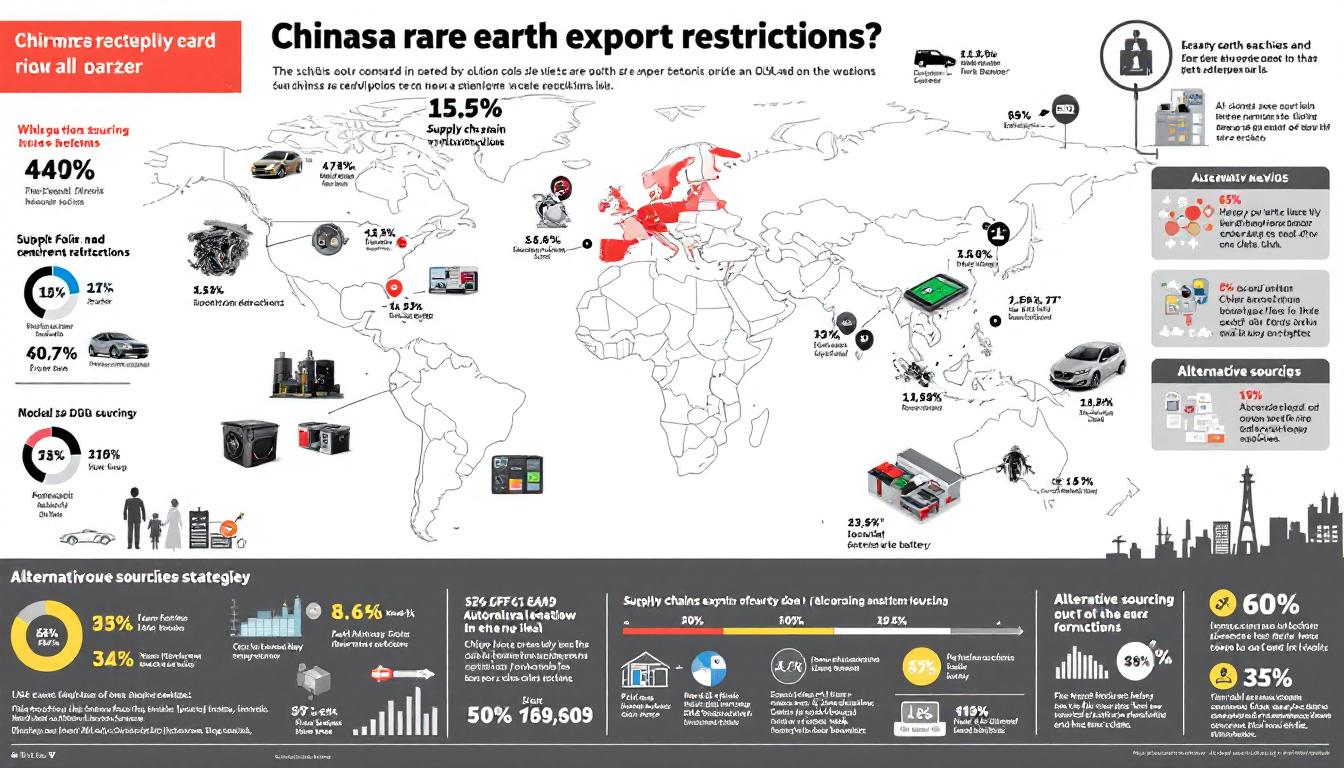
The restrictions have revealed an inherent fragility in the supply chain. Export license requests submitted by suppliers to Chinese authorities are not being fulfilled, intensifying delays. Between 70% and 75% of requests remain unanswered or are denied, plunging manufacturers into uncertainty. Many European suppliers, already under pressure, see their supply chains paralyzed, threatening not only production but also jobs.
- Ford: suspension of Explorer production.
- Suzuki: temporary closure of the Swift plant.
- Renault and Peugeot: awaiting impact on their plants.
Update on affected plants
Assessing the affected plants highlights the extent of the crisis. Many European suppliers, including giants like BMW, have reported that their suppliers are experiencing bottlenecks. All these companies find themselves juggling the need to innovate while adapting to this disrupted new reality.
| Manufacturers | Actions taken | Suspension duration |
|---|---|---|
| Ford | Production of the Explorer suspended | 1 week |
| Suzuki | Swift production halted | Until June 16 |
| Bajaj Auto | Warning about the impact of delays | Potentially immediate |
The decisions made by companies illustrate an urgent need for reconfiguration. Who would have thought that a rare earth could influence the fate of so many factories? The industry is forced to reassess its dependencies and think about alternative solutions.
Towards a reindustrialization of the old continent: the fight for "Made in Europe"
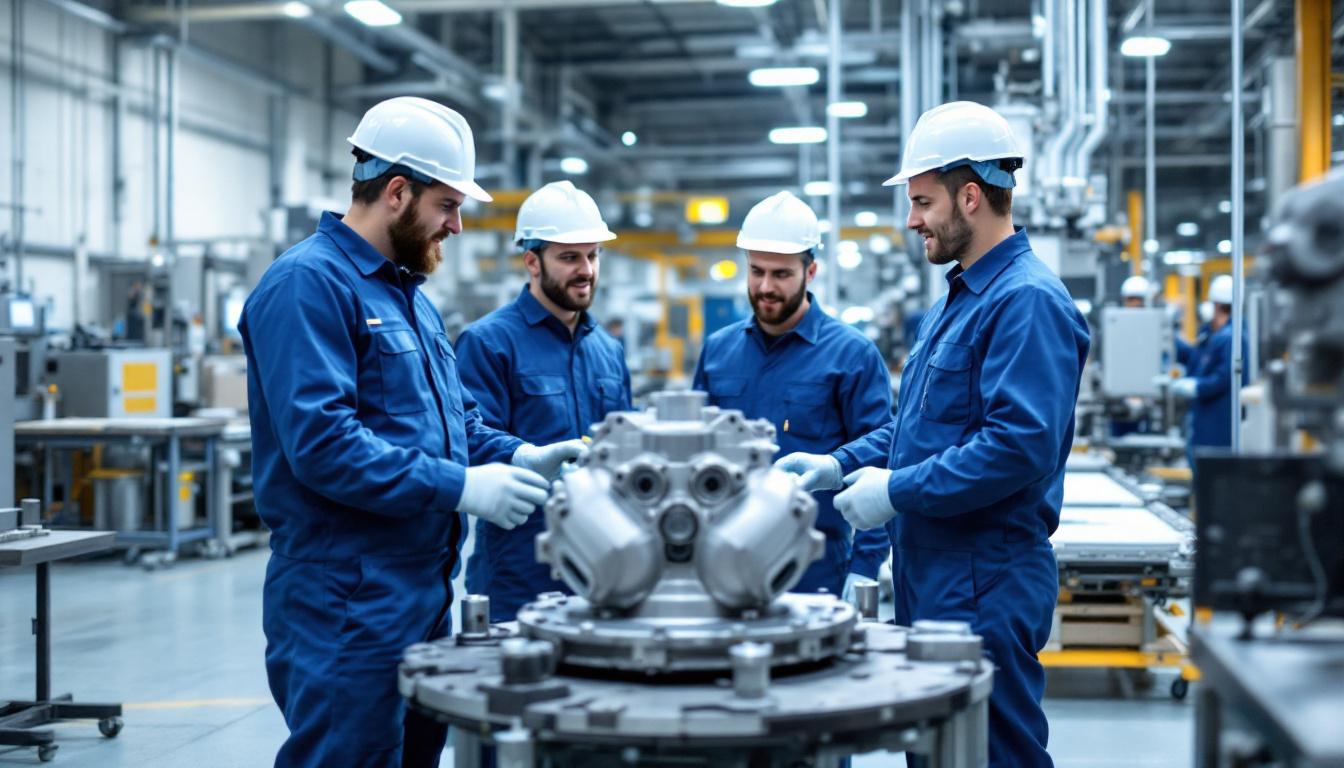
As the issue of rare earths intensifies, several players in the automotive industry are advocating for reindustrialization in Europe. The current crisis shows that relying solely on the Chinese market for strategic materials is not a viable long-term strategy.
A willingness to relocate production chains
The growing demand for electric vehicles poses an additional challenge. Batteries, which require raw materials from China, are particularly affected. These must be secured and produced locally to ensure continuity of production. Entities like the European Association of Automotive Suppliers (CLEPA) are calling for urgent measures.
European manufacturers must be agile and ready to pivot towards more local solutions. Establishing local production of essential components could help reduce this dependence. But this will not happen without government support and strategic planning.
- Government incentives to support the local industry.
- Collaboration between companies to develop regional supply chains.
- Investment in recycling technologies for materials.
The stakes of the energy transition
The transition to sustainable mobility requires increased reflection. European governments, aware of geopolitical issues, are seeking to build industrial autonomy. This is not just about reacting to the current crisis, but about anticipating the future and investing in infrastructure suited for an era of electric vehicles.
| To do | Expected impact |
|---|---|
| Invest in recycling infrastructure | Reduce dependence on rare earth imports |
| Collaborate with local startups | Develop innovations in production |
| Raise public awareness about sustainable mobility | Increase adoption of electric vehicles |
It is imperative for the industry to capitalize on this crisis and turn it into an opportunity for transformation and modernization. Each player must reposition itself in a logic of sustainability, or risk disappearing in an increasingly competitive market.
The impact on jobs in the automotive sector
The consequences of shortages concern not only the productive aspect of companies but also raise crucial questions about employment. According to recent analyses, in a few years, between 35,000 and 40,000 jobs could be threatened in France within the automotive industry if no action is taken to address this issue.
The struggles of workers
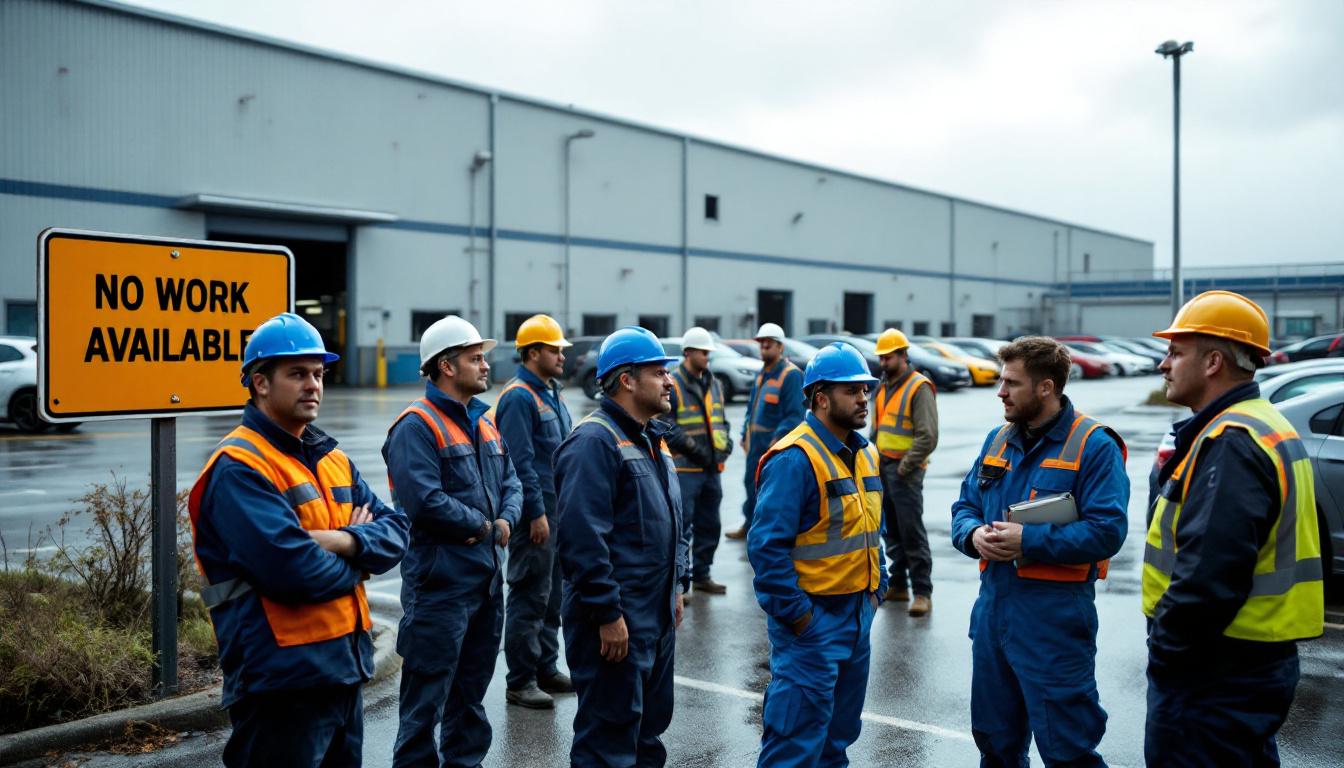
Workers in the industry are already on alert. The suspension of productions leads to direct income losses. Unions are beginning to sound the alarm, warning about the impact of restrictions on jobs at manufacturers like Mercedes-Benz and Toyota.
Companies must manage the balance between profitability and social responsibility. Each day of production stoppage can lead to a loss of trust in the brand, and customers feel it. As a result, employee retention becomes more critical than ever.
- Training and reskilling employees for new jobs.
- Awareness around pensions and social protection measures.
- Constant dialogue between management and workers to minimize impacts.
Preparing for the future
Companies must consider the long-term impact of these crises. To build a resilient industry, efforts must be made both at the level of internal processes and external relationships. In collaboration with governments, a whole incentive framework must be established to increase education and professionalization of future generations in the automotive sector.
| Improvement proposals | Concerned sectors |
|---|---|
| Create educational partnerships with schools | Technologies and engineering |
| Establish support programs for employees | Human Resources |
| Innovations in continuous training | All sectors |
Every player in the sector has a role to play, both in preventing crises and responding to them. The road ahead is fraught with challenges, but it is imperative to engage in this path to ensure the sustainability of the industry.
The necessity to innovate in times of crisis
The challenges posed by shortages and restrictions invite a deep questioning of usual practices. Companies must adapt and innovate not only to survive but to thrive in a transformed world.
Creativity and agility: the key terms of the industry
Reinventing the supply chain becomes a necessity. The key lies in the adaptability of companies, which must be ready to change their operating modes to meet new challenges. Adopting a collaborative approach is essential. Innovation does not just come from research laboratories: it can emerge from the ground up, from field employees who understand daily problems.
Brands must also be proactive regarding new technologies. With the emergence of artificial intelligence and the Internet of Things, companies can leverage these tools to improve their production processes, optimize logistics, and try to minimize costs.
- Establish internal hackathons to stimulate innovation.
- Foster a research and development-oriented corporate culture.
- Invest in automation technologies to increase productivity.
A call for social responsibility
The current crisis is also an opportunity to rethink corporate social responsibility. Beyond the pursuit of profit, it is time to consider the impact on communities and the environment. Sustainability must be at the heart of every player's concerns in the sector. Today's consumers choose brands that share their ethical values.
| Sustainability Principles | Examples of application in the automotive industry |
|---|---|
| Use of recycled materials | Production of vehicles with recycled plastics |
| Reduction of carbon emissions | Adoption of hybrid and electric technologies |
| Community engagement | Support for local sustainable mobility initiatives |
Companies must not only fight for their survival but also for the health of their ecosystem. This struggle must be conducted with a long-term vision, as only a sustainable industry will thrive in the face of tomorrow's uncertainties.
Si vous souhaitez lire d'autres articles tels que Automakers facing challenges from shortages caused by Chinese restrictions, consultez la catégorie Constructeurs.
-
Cléophée Barouh says:
Les restrictions chinoises soulignent vraiment la nécessité d'une innovation en Europe pour notre secteur automobile.
-
Les restrictions chinoises mettent vraiment en lumière la fragilité de notre industrie automobile actuelle.
-
Les restrictions de la Chine soulignent vraiment la vulnérabilité de l'industrie automobile européenne.
-
Les restrictions chinoises montrent à quel point il est urgent de diversifier nos sources d'approvisionnement.
-
La crise des approvisionnements pourrait vraiment changer le paysage automobile en Europe. C'est urgent d'agir !
Leave a Reply to Cléophée Barouh Cancel reply
Articles relatifs