Analysis of experts tasked with evaluating Beijing's complaint regarding customs duties on Chinese electric vehicles in Europe

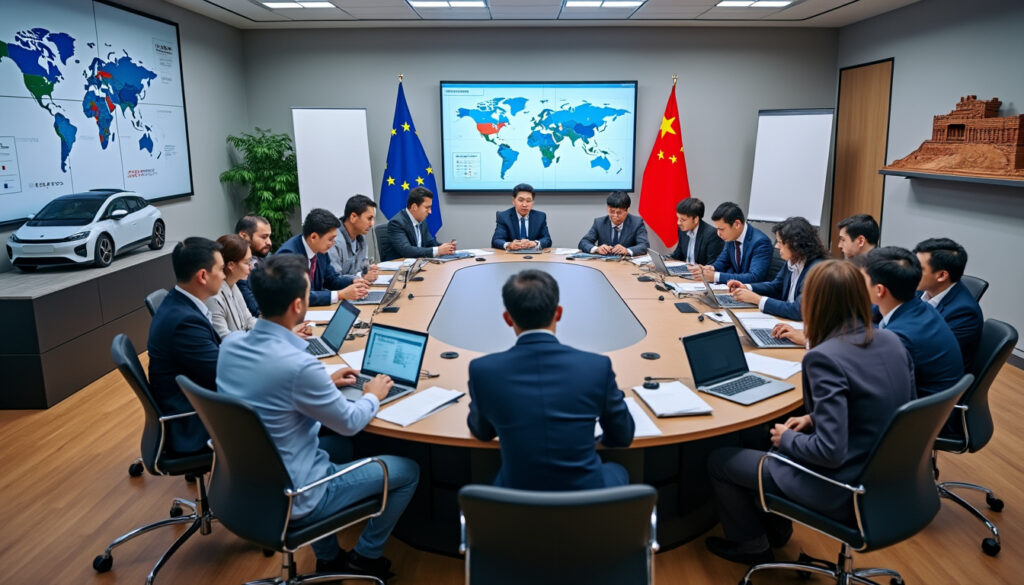

The trade tension between China and the European Union takes on a new dimension with Beijing's official complaint to the World Trade Organization (WTO). This move follows the imposition of additional tariffs on Chinese electric vehicles, a strategy deemed necessary by the EU to protect its own economic interests. Analyzing the stakes and implications of this situation is crucial for understanding the future of the automotive sector, both in Europe and in China.
Origin of Beijing's complaint against the EU regarding tariffs
China's complaint to the WTO did not occur by chance. It follows the European Union's decision to impose tariffs of up to 35% on electric cars imported from China. This decision, announced in October, elicited immediate reactions from the Chinese government, which described these measures as protectionist and detrimental to its economic growth.
The motivations behind the EU's tariff surcharges
For the European Union, the increase in tariffs is justified by the need to protect its automotive industry. Indeed, the EU fears that the massive public subsidies granted by the Chinese government to its manufacturers, such as Tesla, Volkswagen, and BYD, may create an imbalance in the European market. By imposing surcharges, Brussels is attempting to support European companies like Renault, Peugeot, and BMW, which risk seeing their market shares reduced if the prices of Chinese vehicles remain as competitive.
Impact on the automotive industry and consumers
The consequences of these tariffs are manifold. On the one hand, European producers may benefit from a certain level of protectionism that could allow them to maintain jobs and avoid plant closures. On the other hand, European consumers may be displeased by an increase in electric vehicle prices, compromising their accessibility. This dilemma highlights the complexity of the economic and social issues accompanying political decisions.
- Potential increase in prices of electric vehicles in Europe.
- Preservation of jobs in the European automotive industry.
- Risks of an escalating trade war between the EU and China.
China's response to the EU's tariffs
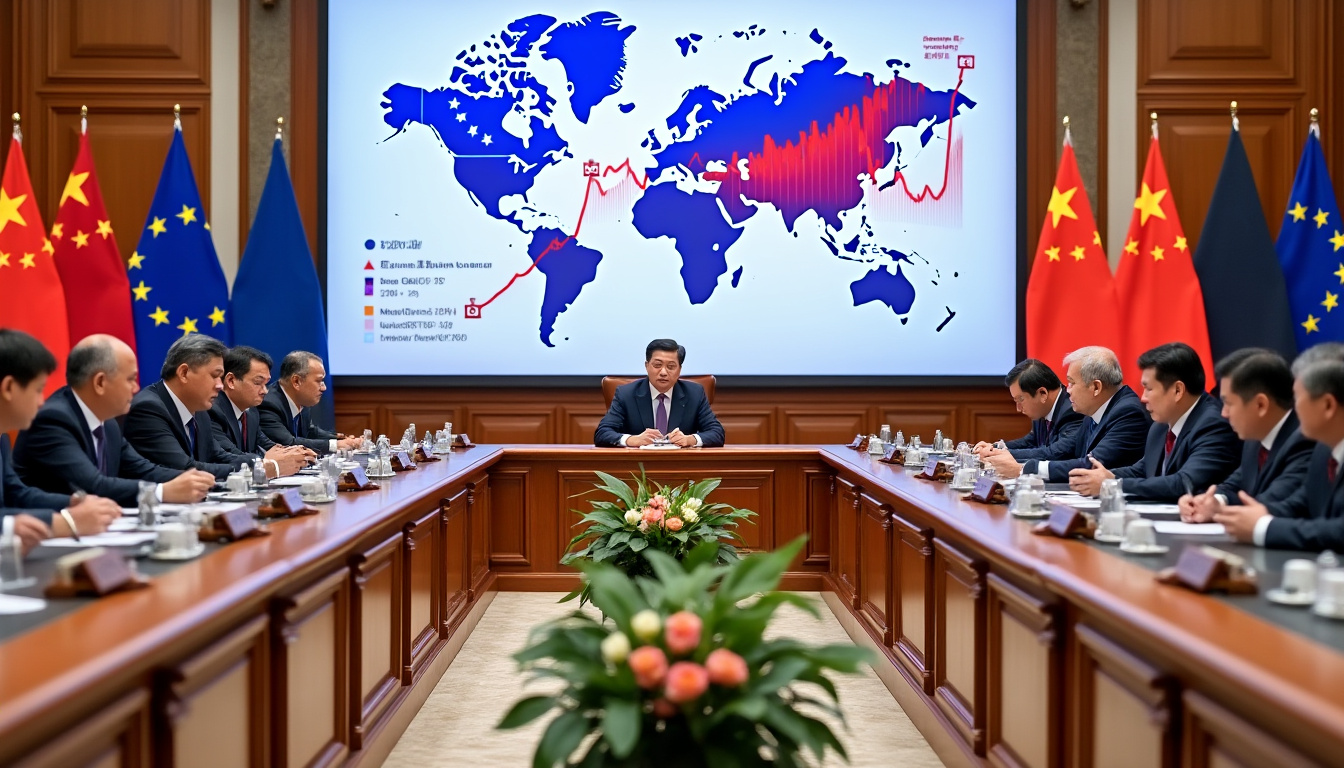
Following the establishment of European tariffs, China quickly reacted by imposing taxes on certain European products, particularly in the spirits sector. This strategic response aims to exert pressure on the EU to reconsider its decision. The Chinese Ministry of Commerce has stated that it will take all necessary measures to defend the legitimate rights and interests of Chinese companies.
Products targeted by the new Chinese taxes
The Chinese taxes primarily target sectors where Europe holds strong positions, such as:
| Product | Sector |
|---|---|
| Spirits (Cognac, Armagnac) | Food |
| High-tech instruments | Electronics |
| Industrial equipment | Manufacturing |
Chinese strategies to address the trade conflict
China's strategy consists not only of reacting defensively but also of seeking a constructive dialogue with Europe in order to resolve the dispute. Some analysts believe that this approach could lead to a renegotiation of trade terms, allowing both parties to find common ground. Beijing's willingness for dialogue echoes the history of trade relations where compromises have often played a crucial role in easing tensions.

Experts' analysis of Beijing's complaint to the WTO
The group of experts established by the WTO is tasked with examining the justifications for the mobility of tariffs and how they affect international trade. This analysis is essential for understanding the legal and economic implications of decisions made by the EU.
The legal stakes at the heart of the complaint
From a legal standpoint, Beijing's complaint raises several questions. First, it must be determined whether the EU has violated WTO rules by imposing these tariffs. The response could have significant implications, not only for trade between the EU and China but also for other countries that might consider taking similar measures.
- Violation of WTO rules: China argues that the EU has not upheld its commitments to the WTO.
- Possible reconfiguration of trade relations: A decision in favor of China could influence other countries to challenge tariffs.
The economic implications of the final report
The results of this investigation are highly anticipated as they could initiate significant changes in global trade policy. Furthermore, a conclusive report in favor of China could lend legitimacy to other countries, particularly those whose industries are threatened by tariff reductions in similar procedures. Experts suggest that developing global economies could emerge strengthened from this outcome.

Europe's reaction to Beijing's complaint
The European Union's reaction to China's complaint has been to firmly maintain its position on the necessity of protecting the European market. European officials assert that the decision to impose tariffs is entirely justified by the need to preserve a European automotive industry that generates thousands of jobs.
EU arguments in favor of tariffs
The European Commission presents several arguments to justify the imposition of tariffs:
- Protection of the local industry against unfair price competition.
- Combating dumping practiced by certain Chinese manufacturers.
- Creation of a fair regulatory framework for all parties involved.
The challenges of the European position
However, this stance could also lead to challenges. European consumers would be disadvantaged due to increased prices, and the risk of an escalation of the trade conflict, which could lead to a tariff war, raises concerns. Brussels must also navigate this complex landscape, especially when iconic brands like Daimler and Stellantis struggle to adapt. Flexibility in the approach may be necessary to avoid adverse economic consequences.
Experts' conclusion on the future of trade relations between the EU and China
Experts agree that the outcome of this case could redefine relations between the EU and China for years to come. Beyond mere economics, this situation touches on broader political, social, and environmental issues. As discussions progress, it will be interesting to see how each party measures the need for constructive dialogue in the face of complex and sometimes contradictory norms.
Si vous souhaitez lire d'autres articles tels que Analysis of experts tasked with evaluating Beijing's complaint regarding customs duties on Chinese electric vehicles in Europe, consultez la catégorie Non classé.
-
Lysandre Montfleur says:
Les tarifs européens sur les véhicules chinois compliquent vraiment les relations commerciales entre l'UE et la Chine.
-
Ces nouvelles augmentations de tarifs pourraient vraiment compliquer les achats de véhicules électriques en Europe.
-
Cette situation entre l'UE et la Chine va vraiment influencer le marché automobile mondial.
Leave a Reply
Articles relatifs