An innovative sensor that could transform the electric motors of the future



At a time when sustainability and energy efficiency are at the heart of discussions about the future of mobility, a new sensor could very well renew our way of designing electric motors. This is a crucial issue, particularly for permanent magnet synchronous motors that are increasingly equipping vehicles on the road today.
Revolutionizing thermal measurement in electric motors
The precise measurement of temperature within an ElectroMotor remains a complex challenge. A sensor recently developed by Continental, the eRTS (electronic Rotor Temperature Sensor), promises to transform this field. This innovative system directly measures the rotor temperature, an approach that could improve the performance and durability of motors. While most current methods exhibit a margin of error of 15°C, this sensor achieves a remarkable accuracy of 3°C. This represents an improvement of 80%! 🌟
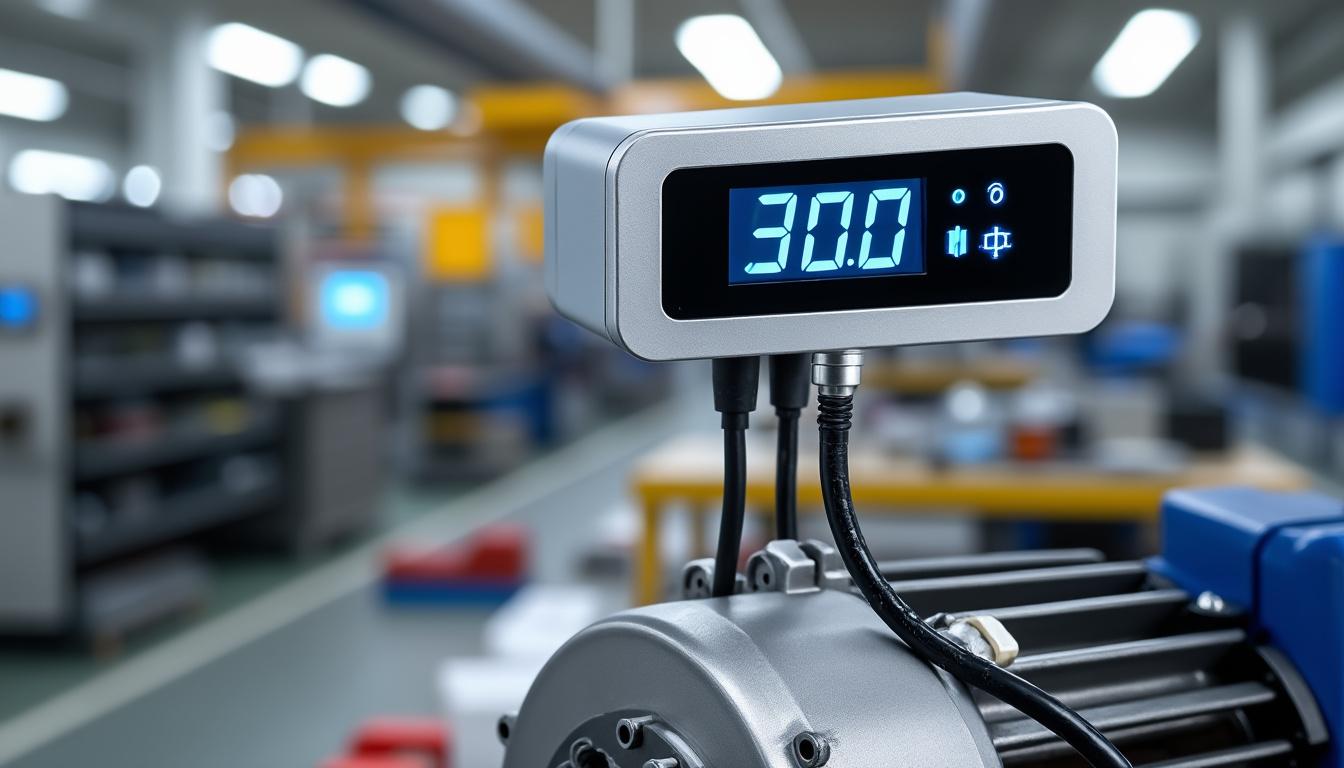
- Precise rotor measurement capability
- Accuracy of 3°C, reducing the risk of overheating
- Optimization of electric motor performance
The stakes of permanent magnet motors
The rise of permanent magnet synchronous motors is linked to the numerous advantages they offer. However, their vulnerability to overheating represents a real handicap. Magnets lose their properties above certain temperatures, making thermal management crucial for safety and performance. 🏎️
| Characteristics | Conventional Motors | Motor with eRTS |
|---|---|---|
| Measurement accuracy | 15°C | 3°C |
| Risk of demagnetization | High | Low |
| Cost of rare earths | High | Reduced |
Impact on the industry and production costs
An optimized thermal management thanks to the eRTS allows for significant reductions in production costs, ranging from 10 to 15%. By minimizing the use of rare earths, not only will the environmental footprint of electric motors be reduced, but also their manufacturing cost. This has direct implications on the production strategy of electric vehicle manufacturers. 🌍💰
- Reduction of dependence on rare earths
- Improvement of carbon footprint
- Possibility to increase motor power
Energy savings and increased range
For consumers, this technology represents a real advance: more efficient and durable motors. Motors using the SmartSensor eRTS will operate at full capacity longer without the risk of overheating. An increase of 2 to 3% in energy efficiency could provide up to 15 km of additional range on a WLTP cycle of 500 km! 🌱
| Criteria | Before eRTS | After eRTS |
|---|---|---|
| Energy efficiency | Standard | Improved by 2 to 3% |
| Range | 500 km | Up to 515 km |
Technical challenges and the future of innovation
Despite these spectacular advances, integrating the sensor into existing motors still poses technical challenges. The wireless transmission of data between the rotating sensor and a fixed receiver has been designed to overcome wear constraints. This innovation has been tested over test cycles equivalent to 300,000 km, proving the robustness of the system. 🔧
Although the adoption of this technology by manufacturers depends on its integration cost, the first motors equipped with this sensor are expected to emerge in the market by 2026. The ecological and technological stakes of this innovation are part of a broader trend: optimizing resources and improving the sustainability of mobility. 🚗


Si vous souhaitez lire d'autres articles tels que An innovative sensor that could transform the electric motors of the future, consultez la catégorie Non classé.
-
Lysandre Verdant says:
Cette technologie pourrait vraiment changer la donne pour les moteurs électriques. Hâte de voir les résultats!
-
Ce capteur eRTS semble prometteur pour l'avenir des moteurs électriques, très intéressant à suivre !
-
Cette technologie pourrait vraiment changer la donne pour les moteurs électriques !
-
Ce capteur pourrait vraiment changer la donne pour les moteurs électriques, c'est impressionnant!
Leave a Reply to Lysandre Archin Cancel reply
Articles relatifs