A mixed overview of electric car sales in Europe for April 2025


Contrasting trends in the automotive market in Europe mark the beginning of 2025. Electric vehicle sales show a certain resilience in the face of a challenging economic context. This article delves deep into the current sales dynamics, the performance of key market players, and the future prospects for electric mobility on the Old Continent.
Electric Vehicle Sales in Europe: A Mixed Picture
The European automotive market registered a slight rebound in April 2025, with sales growth of 1.3%. Nevertheless, this improvement is counterbalanced by a worrying trend: after experiencing a sharp slowdown in 2024, electric vehicle sales show marked progress, but this remains below expectations. Indeed, Battery Electric Vehicles (BEVs) increased by 31.4% compared to the previous year. However, this rise is still short of the 2.1 million sales hoped for in 2025.
The start of 2025 takes place in an uncertain economic environment. As the figures indicate, between January and April, new car sales across all categories in the European Union (EU) fell by 1.2%. This phenomenon is explained by several factors, including persistent inflation, rising interest rates, and increasing consumer caution. In the face of this gloom, the growth in electric vehicle sales appears as a glimmer of hope, yet it reflects a paradox where the share of electric vehicles hovers around 15.3% in the European market.
Regionally, three of the four largest European markets, representing 63% of electric vehicle registrations, have shown significant increases. Germany stands out once again with an impressive increase of 42.8%, followed by Belgium with 31.3% and the Netherlands with 6.4%. On the other hand, France appears to be lagging behind, recording a decrease of 4.4% during the first four months of the year, although signs of recovery have been observed in April.
Table 1: Evolution of Electric Vehicle Sales by Country (January-April 2025)
| Country | Change (%) |
|---|---|
| Germany | +42.8 |
| Belgium | +31.3 |
| Netherlands | +6.4 |
| France | -4.4 |
Understanding these issues is essential to observe consumer purchase behaviors, which seem increasingly oriented towards hybrids. While BEVs show growth, simple hybrids are experiencing a substantial boom in the market, illustrating a remarkable shift in European consumer preferences.
Simple Hybrid Takes the Lead
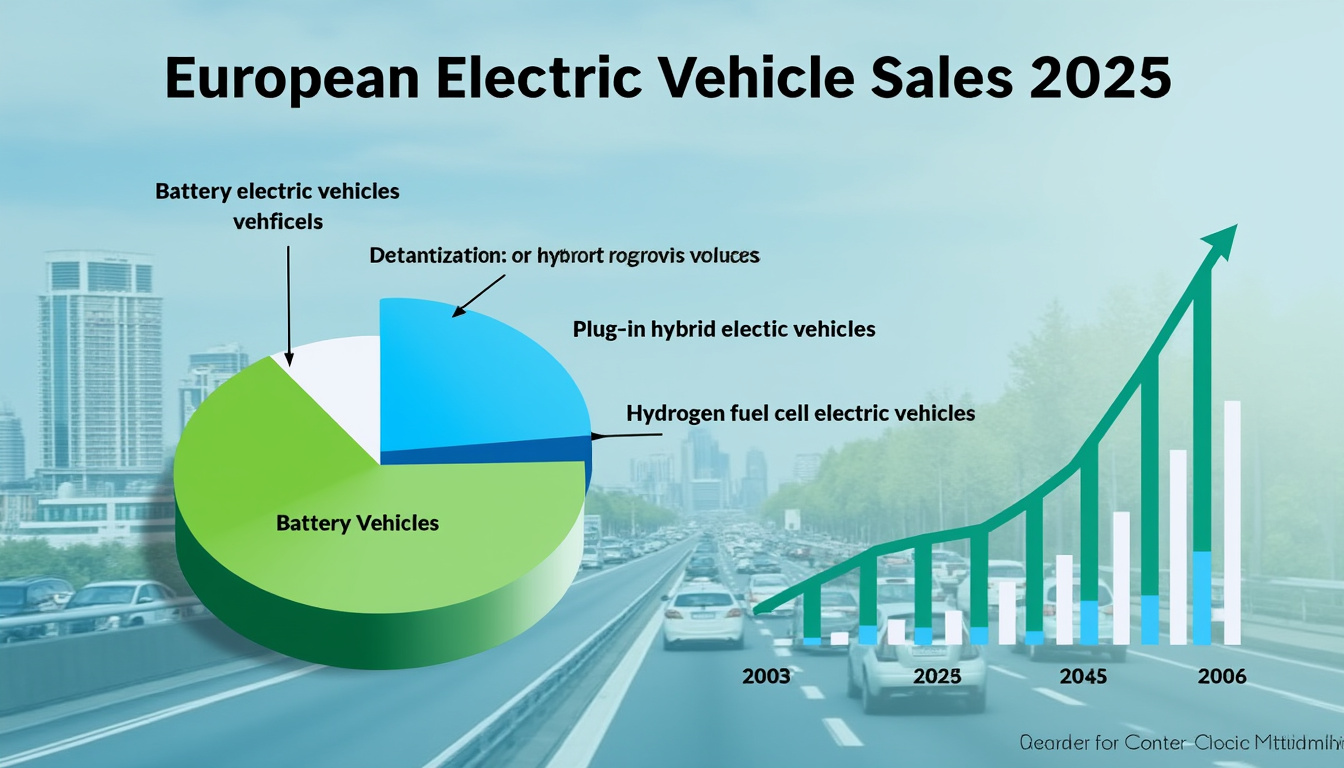
In a climate of intensified competition, Hybrid Vehicles (HEVs) in the European Union are witnessing a significant increase, with registrations up by 20.8%. A total of 1,285,486 units were delivered during the first four months of 2025. France, in particular, stands out with an impressive increase of 44.9%, followed by Spain with 35.8%, Italy at 15%, and finally Germany at 11%.
This market evolution makes hybrid vehicles particularly attractive to many consumers who prefer the balance between performance and energy efficiency. The market share of hybrids now reaches 35.3% at the European level, positioning them as the preferred choice among European motorists.
Regarding Plug-in Hybrids (PHEVs), a favorable trend is also at hand. Indeed, registrations of these models have seen an increase of 7.8% since the beginning of the year, representing 287,850 units. Countries like Germany (+ 46.6%) and Spain (+ 42.8%) show strong demand for these vehicles, making them increasingly popular in consumer purchasing choices.
Table 2: Evolution of Hybrid and Plug-in Hybrid Vehicle Sales in 2025
| Type of Vehicle | Change (%) |
|---|---|
| Hybrids (HEVs) | +20.8 |
| Plug-in Hybrids (PHEVs) | +7.8 |
It is also notable that, despite the growth of hybrid vehicles, statistics still indicate a long way to go before achieving the desired prevalence of fully electric vehicles. This raises a crucial question: will the electrification of mobility be primarily through hybrids or BEVs? The answer to this challenge may lie in the strategic choices of manufacturers such as Renault, Peugeot, Citroën, Volkswagen, and others, who will need to step up efforts to attract consumers.

Encouraging Figures in April: Is It Enough?
Examining more specifically the month of April 2025, it is noteworthy that electric vehicle sales within the European Union have increased by 34.1% compared to the previous year. Meanwhile, simple hybrids and plug-in hybrids also experienced respective growths of 20.8% and 31.2%. These figures, while positive, must be contextualized within a global environment that remains volatile.
This renewed interest in electrified vehicles can be largely attributed to several factors:
- New offers of attractive models from major manufacturers.
- Financial incentives and government subsidies favorable to the purchase of eco-friendly vehicles.
- Increased consumer awareness of the need to reduce their carbon footprint.
It is important to analyze how these various dynamics influence consumer decisions. In a period characterized by high inflation and rising living costs, purchasing choices are often influenced by a sense of caution. Paradoxically, it is the hybrid vehicles, with their ability to offer flexibility and efficiency, that seem to attract buyers more than fully electric models.
Table 3: Sales Statistics for April 2025
| Type of Vehicle | Sales (Units) | Change (%) |
|---|---|---|
| Electric Cars | 558,262 | +34.1 |
| Simple Hybrids | Not disclosed | +20.8 |
| Plug-in Hybrids | Not disclosed | +31.2 |
While it is undeniable that these figures reflect a growing interest in electrified vehicles, it remains to be seen whether this trend will persist and whether it will be sufficient to transform the automotive landscape. Major players like Tesla, BMW, Audi, and Ford must adapt their strategies to anticipate consumer needs and expectations. The sales battle is intensifying, and only time will tell which of these players will succeed in positioning themselves at the forefront of this evolving electric market.
The Challenges Facing Tesla in a Growing Market
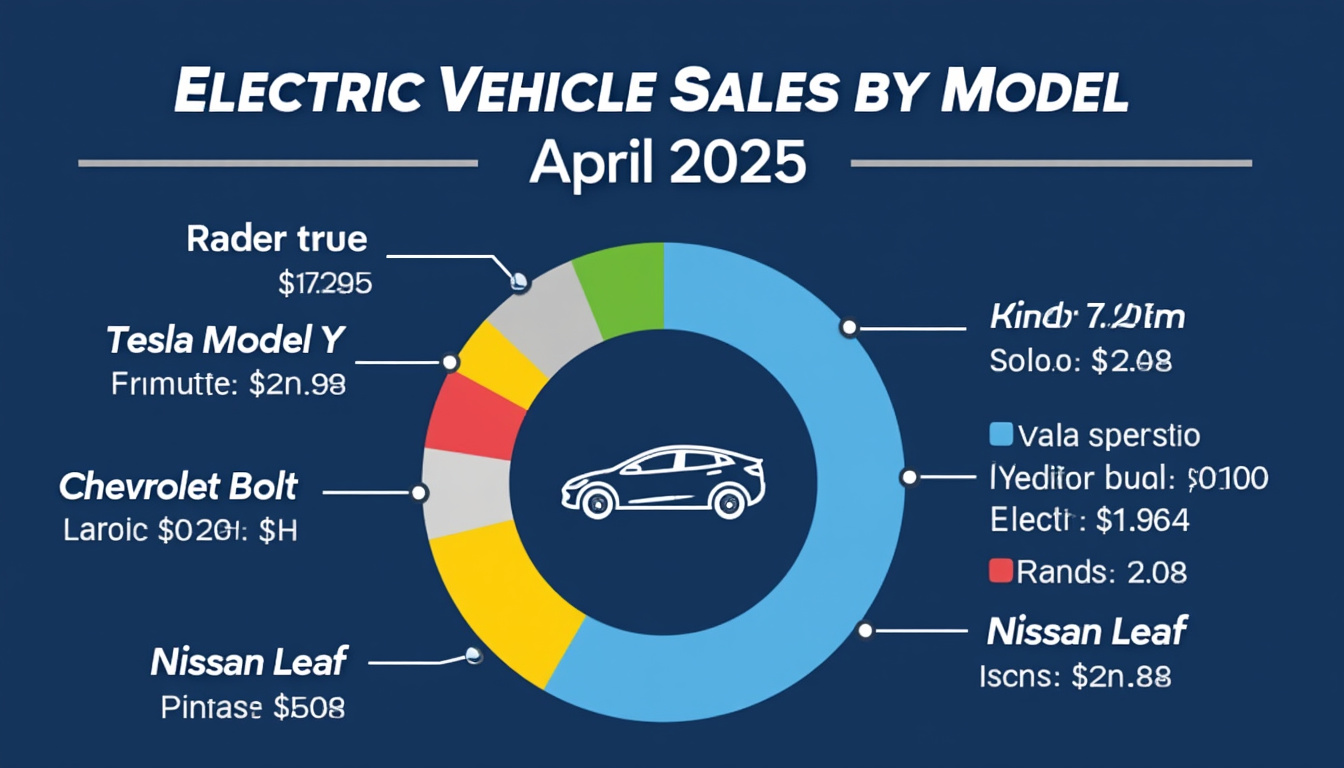
While Tesla has long dominated the electric vehicle market, in March 2025, a worrying trend has developed: the Californian automaker has seen its sales decline in the face of increased competition, notably from Volkswagen, which has managed to dethrone Tesla in the electric vehicle sales sector in Europe. Tesla's performance is beginning to show signs of weakness, raising questions about its ability to maintain a strong market share.
This decline can be attributed to several factors:
- A model range that has not evolved as quickly as that of its competitors.
- Logistical problems preventing quick delivery in Europe.
- The increased development of charging infrastructure by other brands.
In order to recover, Tesla will need to reassess its strategy and consider potential collaborations with local players or companies to create synergies and reduce operating costs. Meanwhile, the manufacturer must optimize its supply chain to ensure it meets the growing demand in the European market.
Table 4: Comparison of Electric Vehicle Sales in Europe (January-April 2025)
| Manufacturer | Sales (Units) | Change (%) |
|---|---|---|
| Volkswagen | Estimated increase | +157 |
| Tesla | Estimated decrease | -10 |
| BMW | Estimated increase | +25 |
| Ford | Estimated increase | +40 |
In summary, the electric vehicle market in Europe is undergoing significant transformation. The results from various brands indicate that increasingly strong competition is setting in within this segment. Volkswagen is now at the forefront of this transformation, while Tesla faces unprecedented challenges. The future may well be marked by a diversification of players and strategies, and the ability of each to innovate and respond to consumer expectations will be key to their success.

Market Perspectives for Eco-Friendly Vehicles
The future of the eco-friendly vehicle market looks promising, but many challenges remain to be addressed. The trend toward a transition to clean vehicles is intensifying, and consumers are becoming increasingly aware of their ecological footprint. However, access to adequate charging infrastructure is a crucial element to consolidate this dynamic. Major players such as Mercedes-Benz, Nissan, and others must demonstrate innovation to alleviate concerns related to range and charging.
It is also pertinent to monitor regulatory developments, as the European Union is intensifying its efforts to reduce CO2 emissions by imposing strict standards on new vehicles. This legislation could change the game and encourage manufacturers to accelerate the development of their electric and hybrid models. The various countries within the EU have diverse strategies, but the general trend towards more sustainable mobility is clear.
Investments in research and development, as well as increased availability of competitively priced batteries, are other essential elements that will influence the eco-friendly vehicle market.
Table 5: Sales Forecasts for Electric and Hybrid Vehicles by 2030
| Year | Sales (Units) | Vehicle Type |
|---|---|---|
| 2025 | 2 million | Electric |
| 2026 | 3.5 million | Electric |
| 2027 | 5 million | Electric and Hybrid |
| 2030 | 8 million | Electric and Hybrid |
As brands must juggle current challenges, the implementation of innovative strategies can lead to unexpected growth opportunities. It will be crucial to closely observe how the landscape evolves in the coming years, as innovation and adaptability will remain key drivers of this transformation.
In addition to the information provided, an online platform like GT Automotive could offer additional data on market trends and help anticipate upcoming changes.
Si vous souhaitez lire d'autres articles tels que A mixed overview of electric car sales in Europe for April 2025, consultez la catégorie Non classé.
-
Lysandre Beaufort says:
C'est encourageant de voir une croissance pour les véhicules électriques malgré des défis persistants.
-
Les ventes de véhicules électriques progressent, mais il reste encore beaucoup à faire pour convaincre les consommateurs.
-
Les ventes de véhicules électriques montrent des signes prometteurs malgré des défis persistants. Intéressant à suivre!
-
Les chiffres de vente des véhicules électriques sont prometteurs, mais il reste encore beaucoup à faire.
-
Les véhicules hybrides semblent vraiment attirer l'attention des consommateurs en ce moment.
Leave a Reply
Articles relatifs