A manufacturer succumbs to the pressure of Donald Trump's taxes by bringing its production back to the United States



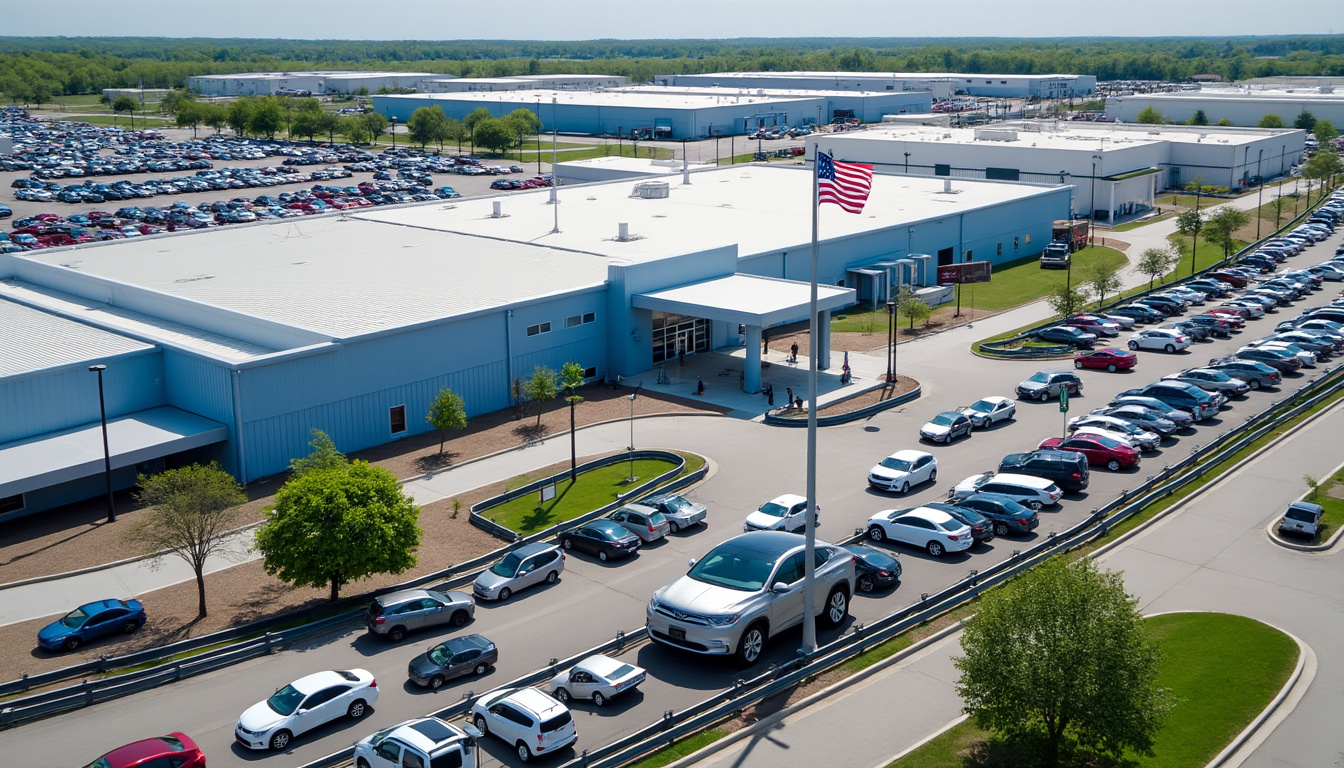
In the face of the crushing imposition of tariffs at a rate of 25% by the Trump administration on imported vehicles, several automotive giants find themselves forced to radically rethink their production strategies. This change marks a turning point for both the American and global industries, where reshoring becomes more than just a trend: an economic necessity. Among these players, Honda stands out for an emblematic decision: to bring the production of the hybrid Civic from its Japanese factory in Saitama back to its American site in Indiana.
This measure, which fits into a global context of heightened trade tensions between the United States and certain foreign partners, well illustrates the weight of tariff policy on the global automotive supply chain. For Honda, but also for other manufacturers like Nissan, the threat of tariffs has become a catalyst for major industrial adjustments.
Beyond the economic aspect, this strategic shift reveals complex dynamics involving political pressure, financial imperatives, and adaptation to the American domestic market, often perceived as essential. This evolution invites a closer examination of the specific economic and social consequences of these measures, as well as the innovative responses of the companies involved.
Economic Impacts of Reshoring Automotive Production in the United States
Honda's decision to transfer the manufacturing of the hybrid Civic to its Indiana factory perfectly illustrates how the pressure of tariffs acts as a powerful lever for strategic change. On one hand, this reshoring allows the manufacturer to bypass the 25% tariffs imposed on imports from Japan. On the other hand, it brings production closer to American consumers, thereby facilitating better responsiveness to domestic market demand.
In 2024, Honda already had a production capacity of over a million vehicles across its American plants, but remained dependent on its exports from Japan for certain ranges, including the hybrid Civic. The impact of the establishment of these tariffs is therefore not negligible, particularly when factoring in the taxes on spare parts that further complicate the logistics chain.
This situation has a dual effect:
- Cost Pressure: the tariff increases the price of imported models, potentially reducing their competitiveness within the vast American market.
- Incentive for Local Investment: to avoid these additional costs, manufacturers are committing to massive investments in production infrastructure on American soil.
Such industrial restructuring does not come without challenges. For example, Honda's flagship model, the CR-V SUV, is still produced in Canada. It continues to be subject to these American tariffs, which could reduce the company's profit margins and, according to some analysts like Christopher Richter, lead to a contraction of up to 20% in operating profit this year.
To understand the extent of these changes, it is helpful to compare production and export figures:
| Production Location | Annual Volume 2024 | Key Models Affected | Tariff Impact |
|---|---|---|---|
| India, Japan | Export to USA: several thousand units | Hybrid Civic | 25% Tariff |
| Indiana, USA | Increased local production | Hybrid Civic from 2025 | No Tariff |
| Canada | Import to USA | SUV CR-V | 25% Tariff |
The same scenario complicates operations for other major manufacturers such as Ford, General Motors, Chrysler, and even Tesla, who must revisit their locations both nationally and internationally. Apple, particularly in their approach to vertical integration and their growing interest in electric mobility, is also closely monitoring these developments.
In summary, the tariffs imposed by Washington act as catalysts for profound transformation, forcing companies to rethink not only where they build their cars but also how they manage their global value chains.
Strategies Adopted by Manufacturers to Adapt to American Trade Policy
In response to high tariff barriers, foreign automakers are multiplying solutions to avoid commercial damage. Honda, a pioneer of this trend, illustrates the complexity and industrial creativity deployed:
- Complete Reshoring: transfer of production lines such as the hybrid Civic from Japan to Indiana.
- Range Revision: Nissan has decided to withdraw two SUVs produced in Mexico from the American market, thus minimizing exposure to tariffs.
- Geographical Diversification: groups like Volkswagen and Toyota are optimizing the availability of their plants to maximize local production in areas exempt from excessive duties.
- Diplomatic Pressure: at the same time, the Japanese government is engaging in active dialogues to negotiate suspensions or temporary relief, while American importers are voicing their concerns to mitigate the impact.
This situation resembles a game of dominos where each governmental move generates a chain reaction among multinationals, governments, and consumers. The resurgence of the notion of local production reshapes all industrial plans, from sourcing components to distribution logistics.
It is also important to consider the indirect effects of these decisions:
- Creation of Industrial Jobs on American soil.
- Likely Increase in Costs for the End Consumer, who will partially bear the price hike related to industrial investments and tariff fluctuations.
- Pressure for Innovation to optimize production processes and reduce costs in a context of heightened competitiveness.
The following table compares various strategies of manufacturers in response to this new tariff landscape:
| Manufacturer | Main Strategy | Tariff Implication | Side Effects |
|---|---|---|---|
| Honda | Reshoring Hybrid Civic to the USA | Eliminates Tariff | Heavy Investment and Industrial Adjustment |
| Nissan | Withdrawal of Mexican SUVs from the USA Market | Reduction of Exposure to Tariffs | Loss of Market Share |
| Volkswagen | Optimization of Local Capacities | Partial Cost Mitigation | Rapid Deployment Required |
| Toyota | Controlled Mix of International Production | Gradual Adjustment | Complexification of the Supply Chain |
Consumers are also becoming indirect participants in this transformation. Indeed, beyond the simple economic equation, it is essential to consider their reactions and choices in face of models now produced locally, with potential consequences on pricing and distribution.
Consequences for the American Automotive Market and Consumers
The reshoring of production chains to the United States, triggered by tariffs, has wide-reaching implications extending beyond just the companies. It causes a shockwave throughout the very structure of the American automotive market.
The economic model based on globally optimized production loses its flexibility, affecting the availability of models and pricing. The increased proximity of production should theoretically facilitate responsiveness to variations in local demand, but this gain is tempered by the likely increase in costs.
- Increase in Gas Prices: added taxes and costs related to reshoring can be passed on to customers.
- Modification of Available Range: certain imported models disappearing, forcing brands like Nissan to clarify their catalogs.
- Alignment with the Demand for Green Mobility: Honda, Toyota, and Tesla are betting on hybrid or electric models produced locally to meet this expanding eco-social requirement.
The table below summarizes the expected effects at the consumer level:
| Impact | Description | Involved Manufacturers |
|---|---|---|
| Higher Prices | Passing on additional costs to customers | Honda, Nissan, Volkswagen, Toyota |
| Reduced Availability | Disappearance or limitation of certain models in the US market | Nissan, Volkswagen |
| Increased Green Offer | Development of local hybrid and electric vehicles | Honda, Tesla, Toyota |
For car enthusiasts, this transformation is evident on the innovation front, where the struggle to remain competitive pushes manufacturers to intensify efforts in energy efficiency and embedded technologies.
Geopolitical Issues Related to Tariffs and Industrial Reshoring
Beyond pure economics, the strategy of taxing automotive imports fits into a geopolitical dynamic where the United States seeks to reinforce its industrial sovereignty against competitors like Japan. This policy is as much a political message as it is a strategic economic maneuver.
The case of Honda illustrates the complex interaction between government decisions and the reactions of multinationals. The shift in production can be perceived as a victory for the "Buy American" policy advocated by Donald Trump, but it also raises challenges for Japan, which sees a part of its economic influence eroding.
This tension pushes the Japanese government to negotiate, illustrated by Minister Ryosei Akazawa's visit to Washington seeking a compromise. So far, the agreements obtained remain partial with the temporary suspension of certain tariffs, but a floor tariff of around 10% persists.
- Diplomatic Consequences: risk of escalation if no sustainable solution is found.
- Economic Concessions: increase in American imports of natural gas and Japanese defense equipment.
- Influence on Trade Alliances: possible revision of trilateral trade agreements including Canada and Mexico.
Moreover, other manufacturers like Boeing, heavily reliant on global supply chains, are closely monitoring these developments as import restrictions can create a domino effect impacting other industrial sectors.
| Element | Detail | Potential Impacts |
|---|---|---|
| USA-Japan Relations | Ongoing negotiations to reduce tariffs | Maintaining or deteriorating diplomatic ties |
| Pressure on Supply Chains | Reshoring of automotive productions | Modification of global logics |
| Repercussions on Other Industries | Indirect effects for Boeing and Apple | Risk of industrial slowdowns |
Therefore, trade geopolitics remains a fluid terrain where each strategic industrial decision is also a political gamble. By 2025, companies and governments are still navigating this delicate balance.
Influence of Tariffs on Competition and Innovations in the Automotive Industry
The establishment of customs surcharges like those imposed under the Trump administration also serves as a formidable trigger for innovation and adaptation in the automotive sector. Where some see a constraint, the industry perceives an opportunity to accelerate its transformation.
Honda, Toyota, Tesla, as well as American giants like General Motors, Ford, and Chrysler, are working to rethink their production models and innovate in hybrid and electric technologies. They are particularly intensifying investments in research and development to design vehicles that are both competitive and compliant with American market requirements.
Positive effects are thus manifested as follows:
- Acceleration of locally produced hybrid and electric vehicles, reducing dependence on imports subject to tariffs.
- Cost Optimization through New Production Methods, aimed at compensating for expenses related to reshoring.
- Boosting a National Industrial Ecosystem, encouraging collaborations between suppliers, start-ups, and established giants.
The table below summarizes the impacts of tariffs on competition and innovation dynamics:
| Manufacturer | Adapted Response | Preferred Technologies | Expected Results |
|---|---|---|---|
| Honda | Reshoring + R&D in Hybrid | Hybridization of Civic Models | Cost Reduction and Better Competitiveness |
| Toyota | Development of Electric Vehicles | Expansion of EV Catalog | Leadership in the American Market |
| Tesla | Investments in Factory and Battery Innovation | Battery Range and Performance | Maintaining a Technological Advantage |
| General Motors | Refocusing on Local EV Production | Expansion of American Plants | Strengthening Industrial Competitiveness |
In summary, the pressure of tariffs has acted as a powerful multiplier of innovation efforts for this sector, beneficial in the long term. This situation elegantly illustrates the principle of continuous improvement: facing constraints by transforming obvious weaknesses into innovative strengths.
Si vous souhaitez lire d'autres articles tels que A manufacturer succumbs to the pressure of Donald Trump's taxes by bringing its production back to the United States, consultez la catégorie Constructeurs.
-
Elara Trinquis says:
Les décisions de Honda montrent bien l'impact des tarifs sur l'industrie automobile. Une stratégie nécessaire.
-
La décision de Honda est un bon choix pour répondre aux défis du marché américain.
-
Les décisions de Honda montrent comment les tarifs peuvent transformer l'industrie automobile américaine.
-
Ces changements pourraient vraiment bénéficier aux travailleurs américains tout en encourageant l'innovation dans l'industrie.
-
Les décisions de Honda montrent à quel point les tarifs influencent la production automobile aux États-Unis.
Leave a Reply to Elara Trinquis Cancel reply
Articles relatifs