A major car rental company falls victim to hacking: are your personal information exposed?

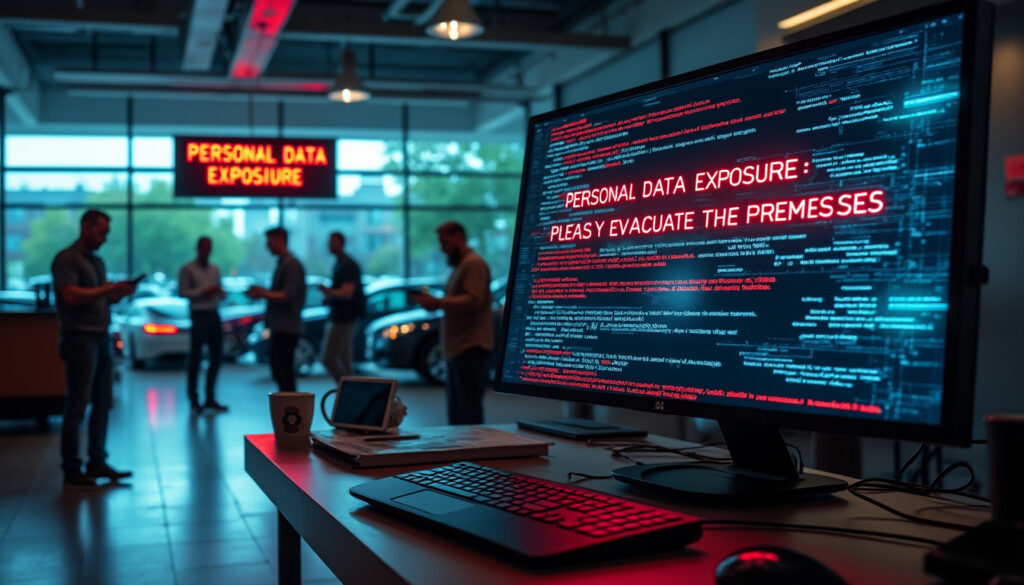

The hacking of personal data has become a pervasive threat, and recently, the car rental industry was caught up in such an event. Hertz, one of the big names in rentals, revealed that a security breach had led to the exfiltration of personal information from some of its customers. The incident raises crucial questions: who is responsible, how did this happen, and most importantly, are your personal information safe? In this complex digital environment, it becomes essential to understand the stakes of data breaches and the means to avoid such disasters.
Massive hacking at Hertz: an alarming breach
Hertz recently confirmed that it had fallen victim to a massive hack that may have exposed the confidential information of several of its customers. This situation is not only disastrous for the company but also for the security of customers who trusted this car rental service. The clutter of data circulating in the digital world poses the risk that sensitive information can be stolen and used for malicious purposes.
The mechanisms of hacking
This hacking was made possible by an attack targeting Cleo Communications, one of Hertz's suppliers specializing in file transfer services. The hackers exploited zero-day vulnerabilities, meaning they took advantage of security flaws that were unknown to developers at the time of the attack. In October and December, their efforts led to an intrusion into Cleo's systems, compromising sensitive data circulating via their platform.
This situation has raised concerns about the reliability of third-party systems that handle important customer data. The question arises: to what extent is a company responsible for the security breaches of its suppliers? The answer could determine not only consumer trust but also the viability of future business practices.
What types of data were exposed?
The information affected by this cybersecurity incident is alarming. Among the compromised data are:
- Personal contact details of customers
- Credit card details
- Driver's license numbers
- In some cases, social security or passport numbers
This data represents a true windfall for cybercriminals, as it can be used to commit fraud, identity theft, or other criminal acts.
Hertz's response and implications for customers
In response to this incident, Hertz assured its customers that its own IT network had not been compromised. They conducted a thorough investigation, stating that there was no evidence showing that their internal infrastructure was vulnerable. However, this reassurance does not alleviate the concerns of the affected customers.
The implications of this breach are vast. Affected customers who use Hertz as well as other rental companies like Europcar, Sixt, and Avis must take precautions against the potential misuse of their personal information. It is advisable to monitor bank statements for any suspicious activity.
Preserving personal information after such an incident
The theft of personal information prompts reflection on the protective measures to integrate into daily life. Here are some practical tips to follow if you are a customer of Hertz or other rental companies:
- Regularly check your customer account on Hertz's website and monitor transactions made.
- Consider deleting any saved payment cards to limit risks.
- Stay vigilant against any emails purportedly from Hertz, as some may be malicious.
Constant vigilance is the key to protecting against potential abuses that could arise from this breach.
State of the car rental market: a landscape to watch
The incident at Hertz should not be taken lightly. As the car rental industry undergoes a digital transformation, companies must adopt robust cybersecurity measures. The competition is fierce with players like Europcar, Sixt, Budget, and others, who must also ensure that customer security is paramount.
The challenges of cybersecurity in the sector
Car rental companies, like all modern businesses, are racing towards increased digitization of their systems. This creates incredible opportunities, but also rapid vulnerabilities. The major cybersecurity challenges in this sector include:
- Online platforms that store sensitive information.
- Multiple connections with third-party suppliers, each posing its own security risk.
- A general lack of awareness of cybersecurity, at both employee and customer levels.
Companies must therefore invest significantly in secure infrastructures. This includes deploying intrusion detection technologies, employee training, and rigorous data management protocols.
Comparison of protection measures among major players
A comparative table of the security policies adopted by different car rental companies provides an overview of their commitment to cybersecurity:
| Company | Data protection measures | Response in case of a breach |
|---|---|---|
| Hertz | Regular security audits, 24/7 monitoring | Prompt customer notification |
| Europcar | Partnerships with cybersecurity specialists | Identity protection services offered |
| Sixt | Regular employee training on threats | Secure response with dedicated teams |
| Avis | Encryption of sensitive data | Active complaint center with customer support |
This table shows that cybersecurity is perceived differently among companies, but one common point remains: the urgency of proactive action to protect customer information.
The future of car rental in 2025
With the regular emergence of new technologies and the increase in cyber threats, the car rental sector must undergo profound transformation. As companies like National, Alamo, Thrifty, and Dollar continue to grow, the challenge of maintaining customer trust regarding data security requires sustained efforts. Proactivity will be essential.
Companies must also evaluate their relationships with third parties like Cleo Communications to ensure their reliability in handling customer data. Transparency regarding the security measures taken and incident management should orchestrate the relationships between rental companies and their clients.
The psychological impact of data breaches
The consequences of a data breach go beyond the mere exposure of personal information. Psychologically, customers affected by the Hertz hack or other major companies may experience a sense of vulnerability that transcends mere concern for their information. This phenomenon highlights profound implications for trust in a brand.
The loss of trust: an obstacle for car rental companies
After such a breach, customer perception of the affected company changes radically. According to research, a majority of consumers state that they would no longer trust a company that has experienced a data breach. This can lead to a substantial reduction in clientele and a domino effect in which companies can lose far more than data.
Trust is the cornerstone of any business relationship, and a single breach can destroy decades of efforts to establish and maintain that trust. The consequences for Hertz, for example, may translate into a loss of loyal customers, moving towards competitors like Avis or Budget, perceived as safer.
Recovery strategies after a breach
To start rebuilding this trust, companies must implement robust recovery strategies:
- Communicate transparently with customers about the incident.
- Offer identity protection services and compensations.
- Invest in advanced cybersecurity measures to prove their commitment.
These actions may represent a significant investment, but they are reassuring, as they go beyond regulatory obligations: they address a fundamental need for understanding and security among customers.
Building a cybersecurity culture
Cybersecurity awareness must also be cultivated within organizations. Employees should be regularly educated about the risks and best practices regarding data security. This forms the first line of defense against breaches.
Training and awareness
Establishing a cybersecurity culture involves ongoing training. Rental companies should include elements such as:
- Regular training on recognizing phishing attempts.
- Cyberattack simulations to test responsiveness.
- Information sessions on new trends in cybersecurity.
Developing such a culture is not limited to preventing breaches. It also enhances employee loyalty and their commitment to the company, vital for an effective response to any crisis.
The role of technology in data protection
Technological advancements play an indispensable role in creating a secure environment. The use of artificial intelligence and machine learning algorithms can help detect unusual behavior, thus alerting companies to potential security vulnerabilities.
All rental companies, including Enterprise and Alamo, should consider integrating these advanced technologies to anticipate threats before they become crises. It is the combination of technology and human capital that will ensure the sustainability of these companies in an increasingly complex cyber environment.
Every data breach incident, such as the one Hertz has just experienced, calls for collective awareness, both from companies and consumers, in the fight against cybercrime. Vigilance at every transaction and each-risk signal indicates a positive change in this dynamic.
Si vous souhaitez lire d'autres articles tels que A major car rental company falls victim to hacking: are your personal information exposed?, consultez la catégorie News.
-
Emilien Grimaldi says:
La sécurité des données est cruciale, et cette affaire avec Hertz le prouve bien.
-
C'est inquiétant de voir à quel point les données personnelles peuvent être volées facilement. Vigilance nécessaire !
-
C'est inquiétant de penser à la sécurité de nos données. Les entreprises doivent vraiment faire mieux.
-
C'est vraiment préoccupant de voir combien nos données peuvent être exposées. La cybersécurité est essentielle!
-
C'est inquiétant de voir à quel point nos données peuvent être vulnérables. La sécurité est primordiale!
Leave a Reply
Articles relatifs