A cargo ship carrying electric cars catches fire near Alaska

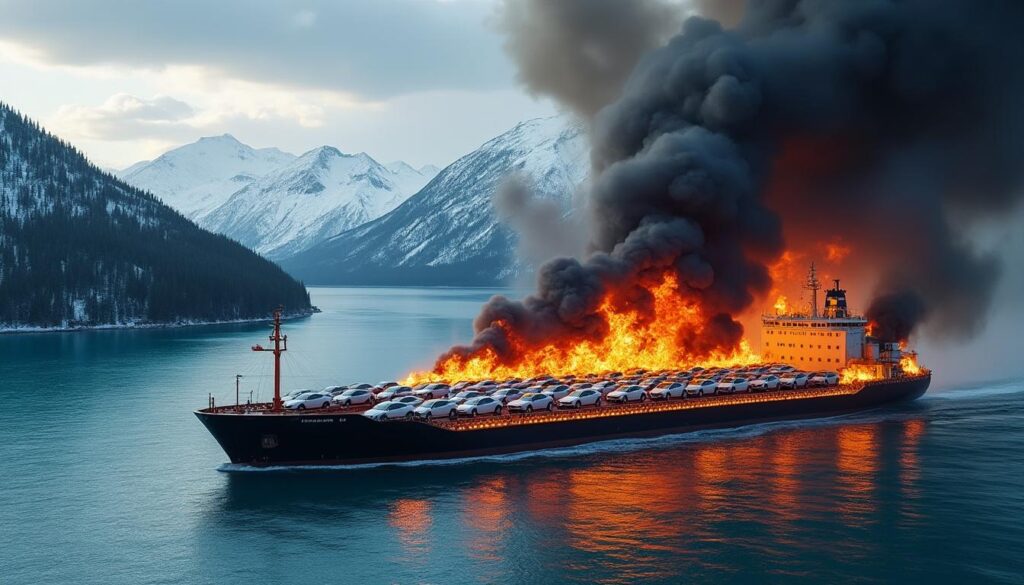

A spectacular fire broke out on the cargo ship Morning Midas as it was sailing off the coast of Alaska, raising major concerns about the safety of maritime transport for electric vehicles. This ship, which set sail from the Chinese port of Yantai on May 26, was headed for Lazaro Cardenas, a major Pacific port in Mexico. With approximately 3,000 vehicles on board, including 800 electric cars, this incident has revived old concerns regarding the maritime transport of electric cars.
A fire at sea: details of the incident
On June 3, while located about 300 miles off the coast of Adak, the Morning Midas experienced a disaster that caught the attention of the U.S. Coast Guard. Initial reports indicated that a thick column of smoke was rising from the rear of the ship, where the electric cars were stored. The crew immediately activated emergency procedures using the onboard fire suppression system. However, despite their efforts, they were unable to control the flames that continued to spread.
Response from authorities and rescue teams
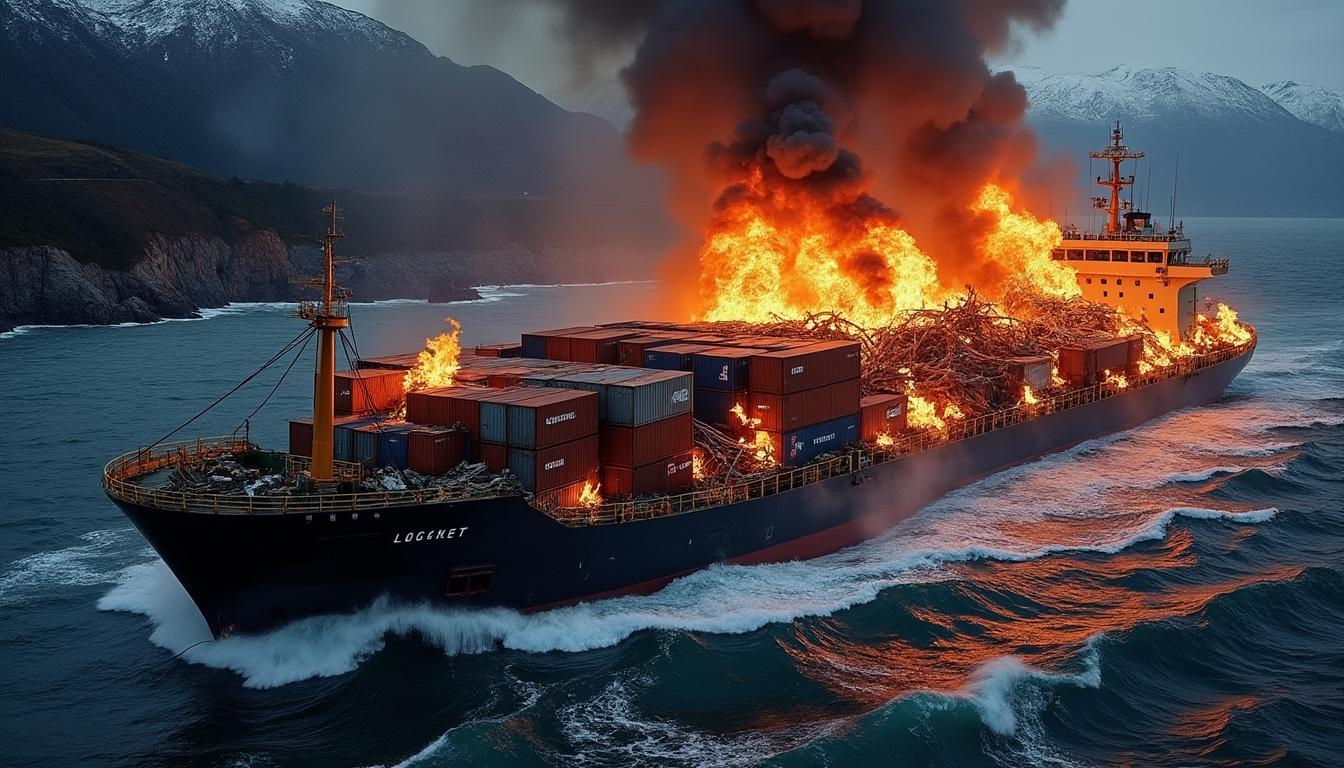
In light of the emergency situation, the quick and organized response of the U.S. Coast Guard successfully evacuated all 22 crew members of the Morning Midas. They were rescued by a nearby merchant ship, the Cosco Hellas. The rescue teams were able to execute an effective rescue operation, saving lives, but the outcome for the ship remained concerning.
The Coast Guard command then stated that they were monitoring the situation closely, although details concerning the evolution of the fire remained unclear. At the same time, Zodiac Maritime, the managing company of the cargo ship, began collaborating with the authorities to determine the best way to recover the boat or manage its remains to prevent it from becoming a maritime hazard.
Concerns related to electric cars
One of the central points of this incident is the nature of the vehicles being transported, particularly electric cars. Models from well-known brands such as Tesla, Nissan, Renault, BMW, and others increasingly raise safety concerns during maritime transport. Indeed, the lithium-ion batteries that equip these vehicles pose an increased fire risk, particularly in situations where they suffer impacts or damage.
The list of brands offering electric cars continues to grow, with recently introduced models such as Chevrolet, Ford, Volkswagen, Hyundai, Kia, and Jaguar. This diversity of models intensifies the need for strict regulation and rigorous safety protocols during maritime transport.
| Brand | Model | Range (km) |
|---|---|---|
| Tesla | Model Y | 525 |
| Nissan | Leaf | 385 |
| Renault | Zoe | 395 |
| BMW | i3 | 310 |
| Chevrolet | Bolt EV | 416 |
Analysis of safety issues related to maritime transport
Incidents like the fire on the Morning Midas highlight the safety issues associated with the maritime transport of vehicles. Several previous cases documented similar incidents. For example, in 2022, the Felicity Ace, another cargo ship, caught fire off the Atlantic coast with nearly 4,000 cars on board, and ultimately sank, raising questions about the safety of maritime transport.
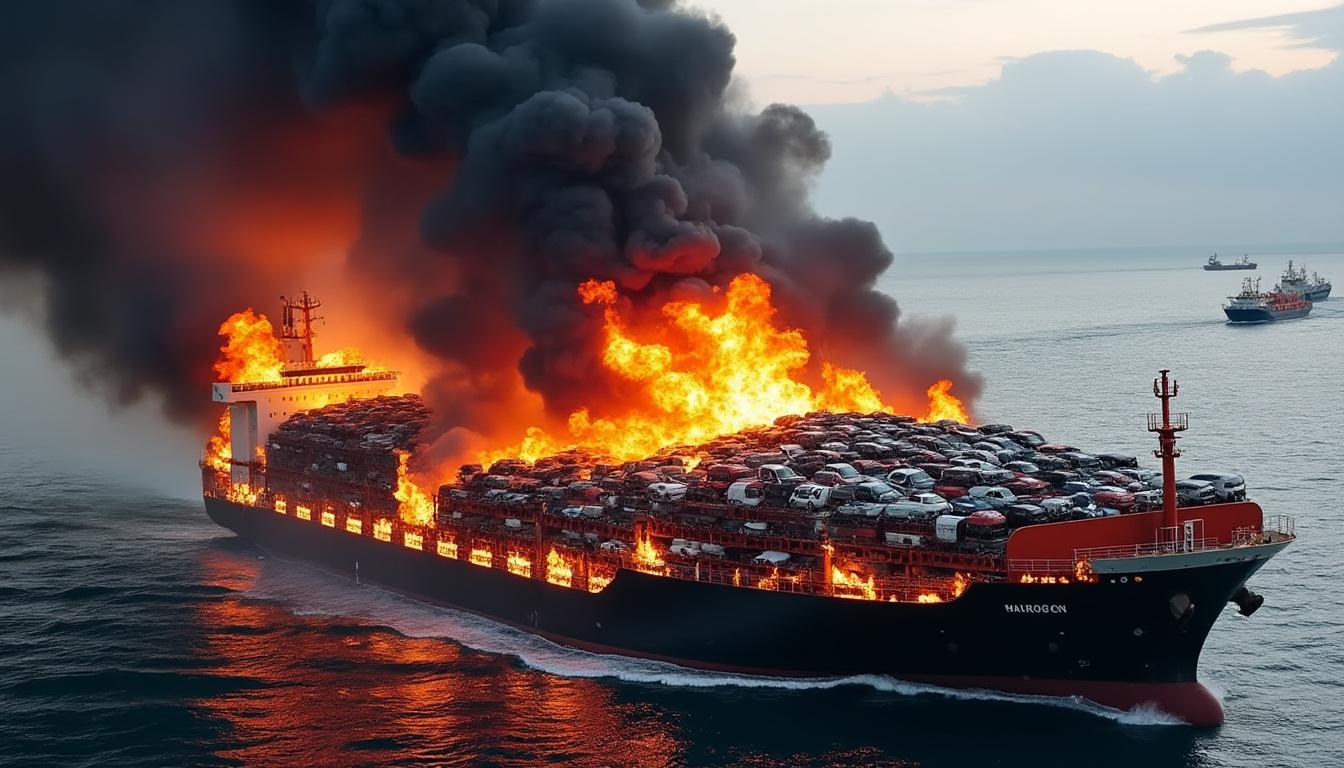
Maritime authorities and transport companies now face a critical challenge: how to ensure the safety of cargoes and crews while meeting the growing demand for electric cars? Several solutions can be considered:
- Strengthening safety protocols during the loading of vehicles, verifying batteries.
- Dedicated training for crew members on handling fires related to electric vehicles.
- Education and awareness for manufacturers on best practices for transport safety.
These measures must be rigorously implemented to prevent future disasters. The need for robust regulation in the maritime industry becomes increasingly urgent as more electric vehicles enter the market.
The economic impact on the automotive industry
Due to the fire on the Morning Midas, questions also arise regarding its economic impact on the automotive and maritime industries. Restrictions in transport could potentially affect supply chains, especially for manufacturers such as Volkswagen, Ford, Hyundai, and others. The distribution of new cars, especially those powered by electricity, could be delayed, resulting in financial consequences for many companies.
Deliveries to the American and European markets could also experience disruptions. For instance, a report indicates that Volkswagen, refining its strategy for the U.S., could face hurdles due to incidents like this.
| Possible Consequences | Potential Impact on the Industry |
|---|---|
| Delivery Delays | Increased Logistic Costs |
| Regulatory Changes | Adaptation of Manufacturing Processes |
| Loss of Consumer Confidence | Decrease in Electric Car Sales |
Long-term environmental consequences
Any maritime incident resulting in the combustion of electric vehicles also poses major environmental challenges. Lithium-ion batteries, when burned, can release toxic chemicals into the water. This raises questions about the long-term environmental impact on marine ecosystems.
Debris and residues from the fire must be handled carefully to avoid pollution. Recovery efforts for the Morning Midas, therefore, must include aspects of sustainability and environmental protection.

To address these consequences, solutions can be considered, such as:
- Implementing filtration systems to capture toxic particles.
- Collaboration with environmental authorities to assess damages.
- Developing safer recycling methods for batteries within industries.
These measures must become priorities when thinking about the future of maritime transport and its sustainability.
Towards stronger regulation of maritime transport
In response to these challenges, the maritime industry must evolve to include robust regulations and increased safety standards. These should address not only the dangers associated with electric vehicles but also the overall challenges facing the sector. It is vital to establish guidelines that will ensure the safety of cargoes and personnel, thus minimizing the risks of similar incidents in the future.
A starting point could be the creation of international regulations supported by governments and regulatory bodies. Meanwhile, private initiatives from transport companies to adopt safer technologies will also help to build trust in the industry. For example, more thorough testing and better collaborative work with automotive manufacturers to ensure battery quality can be beneficial.
There is thus an urgent need for ongoing dialogue among the various stakeholders in the industry, whether they are in maritime transport, automotive manufacturing, or government, to establish standards that will benefit all.
Si vous souhaitez lire d'autres articles tels que A cargo ship carrying electric cars catches fire near Alaska, consultez la catégorie Non classé.
-
Liora Destin says:
Cet incident souligne l'importance de la sécurité dans le transport maritime des voitures électriques.
-
C'est vraiment inquiétant de voir un autre incident avec des voitures électriques en mer.
-
Cet incident met en lumière les risques majeurs liés au transport maritime des voitures électriques.
-
Ce feu soulève vraiment des questions sur la sécurité des voitures électriques en mer.
-
Cet incident soulève vraiment des préoccupations sur la sécurité des voitures électriques en mer.
Leave a Reply
Articles relatifs