surprising revelations about electric cars coming from China


Electric cars, long perceived as the future of the automotive industry, are undergoing a significant evolution, particularly with the emergence of Chinese models. This strategic phenomenon finds its origins in numerous factors, ranging from technological advancements to political decisions. 2025 is a pivotal year for the sector, as it reveals an unexpected dynamic that highlights the successes and failures of the various market players.
Explosion of Electric Car Sales in China and Their Global Impacts
China is establishing itself as the undisputed leader of the electric vehicle market with an impressive figure of 11 million vehicles sold in one year, representing a 40% increase compared to the previous year. This figure not only illustrates the enthusiasm of Chinese consumers for electric vehicles but also the crucial role of the country in the evolution of the global automotive industry.
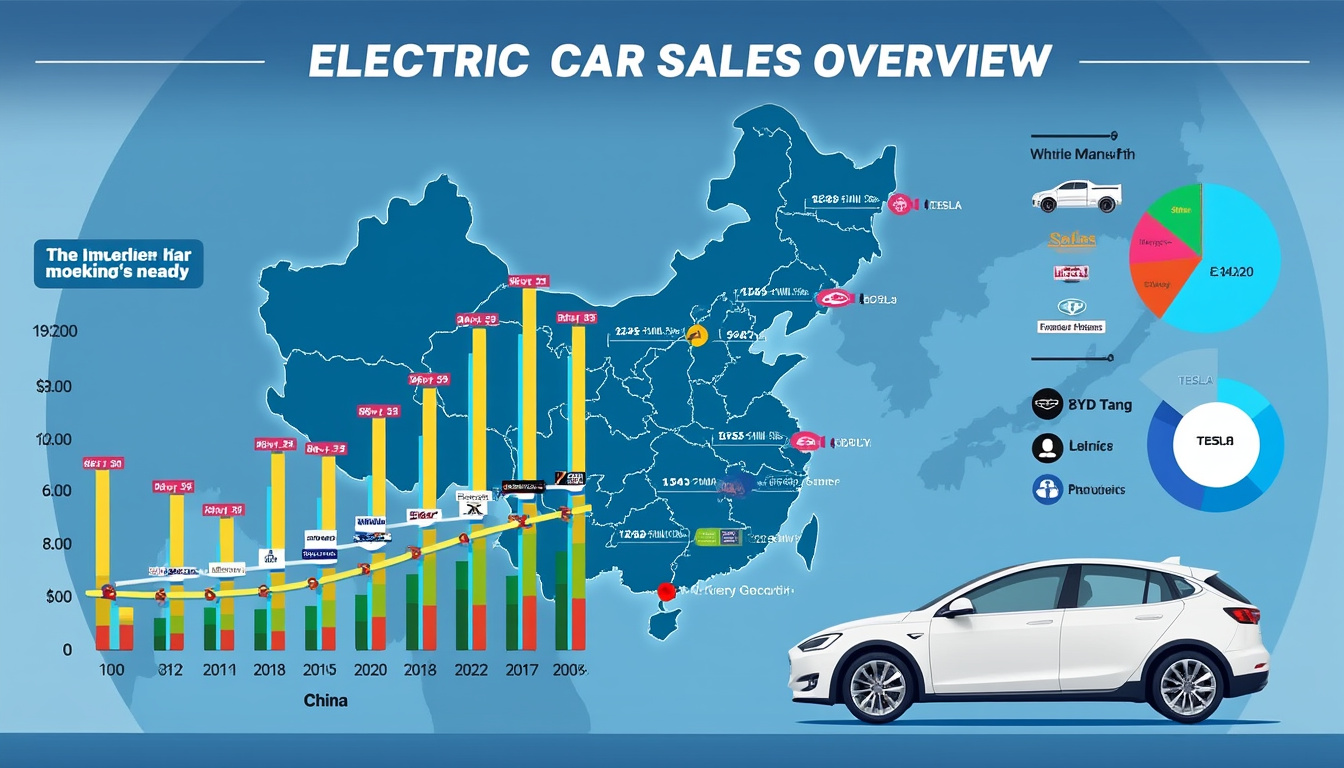
By mid-2025, observers note that Chinese brands, such as BYD, Nio, Xpeng, and Li Auto, continue to expand their market share thanks to their excellent price-quality ratio and rapid innovation in battery technology. This phenomenon is an example of an unprecedented upheaval in the automotive field. In just a few years, China has become a veritable breeding ground for green technologies.
The Determining Role of Subsidies and Government Initiatives
The success of electric cars in China cannot be attributed solely to market demand. Government subsidies play a central role. To encourage the adoption of electric vehicles, the Chinese government has allocated significant investments to support research and development (R&D), symbolized by the "Made in China 2025" initiative, which promotes innovation in certain sectors, including automotive.
- Subsidies for local manufacturers.
- Favorable taxation for buyers.
- Development of charging infrastructure.
With an increasing competitive landscape, these measures support not only the domestic industry but also provide a significant competitive advantage over foreign players. The phenomenon of these subsidies is also felt in exporting countries, where Chinese brands are trying to establish themselves.
| Chinese Brands | Sales in 2024 (in millions) | Growth Compared to 2023 (%) |
|---|---|---|
| BYD | 3.5 | 40% |
| Nio | 1.2 | 30% |
| Xpeng | 0.8 | 25% |
| Li Auto | 1.0 | 35% |
This table shows the impressive sales figures of some of the leading electric car brands, illustrating the strength of the Chinese market. The proactive strategy of the Chinese government benefits the integration of new technologies while making electric vehicles more accessible to consumers.
Export Challenges for Chinese Manufacturers
Despite these successes, the landscape for exporting Chinese electric cars has changed dramatically. At the beginning of 2025, a 18% drop in exports is observed. Chinese brands face notable obstacles, primarily protectionist measures implemented by the European Union and other key markets such as the United States.
- Increase in tariffs up to 45% in Europe.
- Similar restrictions in the United States, where tariffs rose to 100% in 2024.
- A growing reluctance among consumers to adopt Chinese brands due to a rising sense of patriotism.
This obstacle is particularly notable in sales to European markets, which have dropped by 30%. Brands like MG have suffered a calamitous drop of 67%, while others such as BYD manage to double their sales volume despite tariffs of 27%.
Strategies of Chinese Brands in International Markets
Due to the encountered obstacles, Chinese manufacturers are adjusting their business approach to meet new challenges. BYD, for example, is beginning to establish factories in Europe to circumvent customs barriers. This strategy aims to give the vehicles the label "Made in Europe," which could increase their attractiveness.
Moreover, other brands, such as MGA, are adapting their offerings towards hybrid models rather than being strictly focused on fully electric vehicles. This could allow these brands to navigate more easily through European consumer preferences. The following table summarizes the strategies adopted by major brands in response to this dynamic.
| Brand | Adaptation Strategy | Performance (in units sold) |
|---|---|---|
| BYD | Construction of factories in Europe | +100% (4,436 units) |
| MG | Reorientation towards hybrid | -67% (2,260 units) |
| Xpeng | Focus on high-end technology | +259% |
This table highlights the contrasting performances of Chinese brands in February 2025 and the strategies chosen to respond to a changing international environment. Market players are adjusting their tactics while seeking to maintain or increase their global market share despite heightened complexity.
Patriotism and Its Impact on Electric Vehicle Sales
A quantifiable yet often underestimated element in the dynamics of electric car sales in Europe is the sense of patriotism among consumers. Indeed, many European buyers opt for local vehicles, partly for reasons of cultural identity and attachment to the traditional automotive industry.
This phenomenon is particularly evident in France, where no Chinese model is among the top 20 sales at the beginning of 2025. In contrast, historic brands such as Volkswagen, Renault, and Peugeot maintain dominant positions in this market considered a stronghold of the automotive industry.
- Marked sense of industrial sovereignty.
- Preference for brands associated with perceived superior quality.
- The political dimension of the act of purchasing vehicles.
This new dynamic is reflected in a growing opposition to Chinese brands whose models, while technologically advanced, may appear unfamiliar to European consumers.
The Future of Chinese Electric Cars in the Global Market
As the battle for the electric car market remains intense, it is essential to consider how the landscape is evolving. With revised analyst forecasts predicting a 15% market share for Chinese brands by 2030, the dynamics seem to fluctuate but not stabilize.
Major brands such as SAIC Motor, Geely, Great Wall Motors, Changan, and WM Motor continue to compete with increasingly innovative advancements. With constant improvements in battery technology, range, and connectivity, these companies strive to meet a growing need for electromobility on a global scale.
- Massive investment in R&D is crucial.
- Monitoring consumer objections is necessary.
- Adaptability to market trends to remain competitive.
These issues, coupled with a perception that is still developing among the public, make it interesting to follow how Chinese players will overcome these various challenges. The coming months will mark a decisive step for these brands in their quest for legitimacy in a complex and constantly evolving market.
Si vous souhaitez lire d'autres articles tels que surprising revelations about electric cars coming from China, consultez la catégorie Non classé.
-
Luminia Veil says:
Les voitures électriques chinoises sont impressionnantes, mais le patriotisme complique leur adoption en Europe.
-
Les progrès chinois dans les voitures électriques sont vraiment impressionnants. Hâte de voir l'avenir!
-
Les voitures électriques chinoises progressent vite, c'est fascinant de voir cette évolution !
-
Les voitures électriques chinoises semblent vraiment prometteuses, mais j'ai des doutes sur leur durabilité.
Leave a Reply
Articles relatifs