Electric vehicle sales are experiencing remarkable growth globally in the first quarter of 2025.

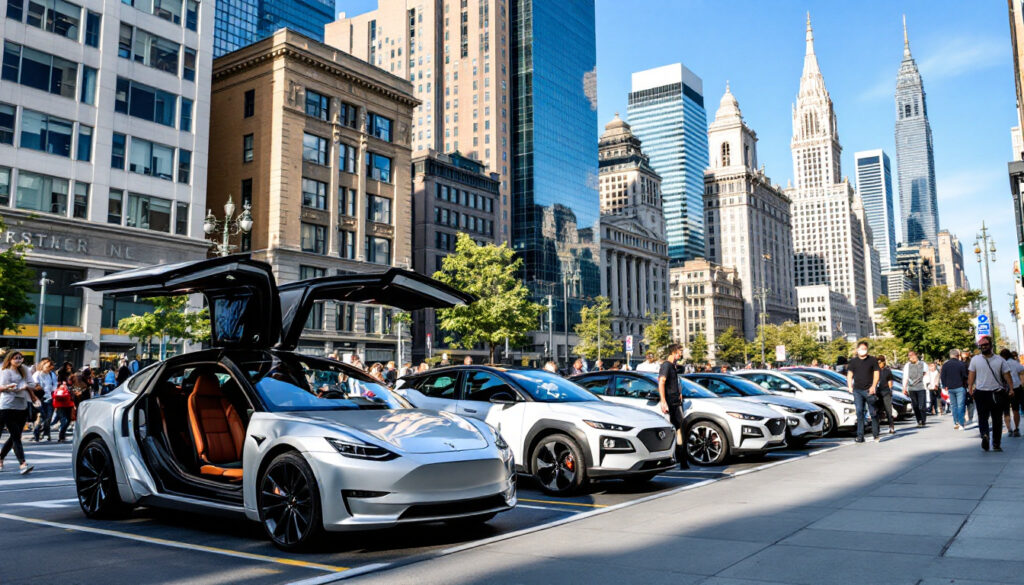

The electric car market seems to have found a new dynamic, establishing itself as a key player in the automotive industry during the first quarter of 2025. With figures indicating more than 4.1 million electrified cars sold worldwide, this exceptional growth is a clear sign of increasing consumer adoption of new forms of mobility. While some regions, like France, face challenges, others, like Germany and Italy, show strong progress, thus placing Europe in a delicate but potential-rich position for evolution. Beyond the numbers, this progression requires a deep understanding of the issues, the players, and the factors shaping this rapidly changing sector.
Surge in Electric Car Sales: A Global Overview
The first studies of 2025 revealed that the global electric car market experienced a net increase of 29% during the first three months, with a total of 4.1 million electrified vehicles registered. This includes both fully electric and plug-in hybrid vehicles and marks a significant evolution compared to the previous year. China, with nearly 2.4 million units, continues to dominate the global market, showing a growth of 36%.
Here is a summary table of electrified car sales worldwide:
| Geographic Area | Sales (millions) | Change (%) |
|---|---|---|
| World | 4.1 | +29 |
| China | 2.4 | +36 |
| Europe | 0.9 | +22 |
| North America | 0.5 | +16 |
| Rest of the World | 0.3 | +27 |
This increase in sales highlights the growing enthusiasm for electric vehicles, despite the challenges faced by some countries, notably France.
Dynamics in Europe: Contrasts and Disparities
Despite an encouraging dynamic at the European level, France stands out due to a downward trend in electrified car sales. While the continent shows an overall increase of 22% in registrations of electrified vehicles, France has recorded a decline of 18%. This setback is largely attributed to the slowdown in plug-in hybrids, which saw their sales drop by 47% in the first quarter of 2025. This situation is the result of a combination of factors, ranging from less favorable ecological bonus policies to slowdowns in supply from major brands like Tesla.
Some brands, like Renault, Peugeot, and Citroën, are facing difficulties, while other automotive giants like BMW and Volkswagen continue to make progress in the market. Regional differences in purchase incentive policies and charging infrastructure play a key role in these disparities.
In summary, the challenges facing France contrast sharply with the success experienced by other nations. In this context, it is essential to examine the factors underlying these variations, including:
- Consumer trust in brands and their models.
- Government policies regarding incentives for purchasing clean automobiles.
- Available charging infrastructure and its accessibility.
- Technological innovations and their adoption by the general public.
Leaders in the Electric Automotive Market: Market Share Distribution
2025 China will continue to be the global leader, representing nearly 30% of the market. This figure is impressive, especially compared to the United States and Europe, which struggle to attract consumer attention to their electric models.
Here is a table highlighting the market share distribution of the main players in the sector in 2025:
| Brand | Market Share (%) | Projected Sales (millions) |
|---|---|---|
| Tesla | 20 | 0.8 |
| BYD | 15 | 0.6 |
| Renault | 10 | 0.4 |
| Volkswagen | 12 | 0.5 |
| Nissan | 8 | 0.3 |
| Audi | 6 | 0.2 |
The relationship between these brands illustrates not only the dominance of Asian companies, such as BYD, but also the growing importance of Renault, which, despite a difficult context in France, maintains a significant market share. The rise of plug-in hybrids and fully electric vehicles reflects changing consumer purchasing trends and preferences.
Technological Innovations and Charging Infrastructure Development
Another fundamental aspect of the electric car market dynamics lies in the technological innovations that redefine user experience. Brands like Tesla and Nissan are constantly innovating to improve their models, both in terms of performance and range. These advancements also include the development of higher-performing batteries and better charging capacity.
A recent study has shown that the future of electric cars closely depends on the evolution of charging infrastructures. Here are some innovative solutions implemented by market players:
- Fast charging stations, enabling a recharge in 30 minutes.
- Integration of renewable energies into the charging process to reduce carbon footprint.
- Home charging initiatives to simplify life for drivers.
- Supercharger networks established by brands like Tesla to facilitate long journeys.
However, this will not be enough. Countries will need to amplify their efforts to install charging stations, ensuring extensive geographic coverage, especially in countries like France where access remains limited.
| Innovation | Description | Potential Impact |
|---|---|---|
| Solid batteries | New batteries offering greater range. | Increased demand for electric vehicles. |
| Wireless charging | Technology that allows vehicles to charge without a physical connection. | Improved access to charging. |
| Intelligent management systems | Tools that manage charging according to energy peaks. | Optimization of energy used. |
Technological advancements thus become a necessity to stimulate the market while meeting the growing expectations from users regarding performance, practicality, and environmental values.
Consumption and Habits of Electric Car Users
Finally, the last dimension to explore concerns the new behaviors of consumers adopting electric cars. Indeed, their expectations are evolving rapidly, shaped by environmental issues and a desire for a more sustainable lifestyle. Drivers today are not just looking for a means of transport but a product that reflects their values.
On this point, the data revealed by market studies indicate that:
- 65% of electric car buyers cite environmental impact as their main motivation.
- 50% of consumers say they are looking for a cost-effective transport solution in the long term.
- 30% state that the technological innovation of models influences their choice.
These behaviors are precisely what brands need to take into account to anticipate demand. Moreover, the trend towards more customizable models and expectations regarding connectivity and assistance systems will also redefine the electric car landscape in the coming years.
Brands like DS Automobiles and Fiat will need to adapt to this new reality to remain competitive. The way consumers perceive cars and the choices they make today will shape the market of tomorrow. These changes bring forth new opportunities for manufacturers, but also new challenges in terms of supply and production. It is therefore essential to follow these evolutions and understand how they will transform the sector in the short and medium term.
Si vous souhaitez lire d'autres articles tels que Electric vehicle sales are experiencing remarkable growth globally in the first quarter of 2025., consultez la catégorie Non classé.
-
Liora Serafin says:
Les ventes de voitures électriques sont impressionnantes, mais la France doit redoubler d'efforts.
-
C’est impressionnant de voir une telle croissance des ventes de voitures électriques dans le monde.
Leave a Reply
Articles relatifs