Manufacturers facing the challenges of the tariffs imposed by Donald Trump



For several years, the tariffs instituted during the Trump era have reshuffled the cards of global industrial production, placing manufacturers at the heart of a genuine economic puzzle. The most exposed sectors, from automobiles to electronics, must now improvise in the face of these tariff barriers that disrupt supply chains and redistribute the cards of competitiveness. As Nike, Adidas, Levi’s, Apple, Samsung, Whirlpool, Ford, General Motors, Boeing, and Harley-Davidson try to adapt, the major question remains: how to turn these constraints into opportunities without compromising the long-term viability of their operations?
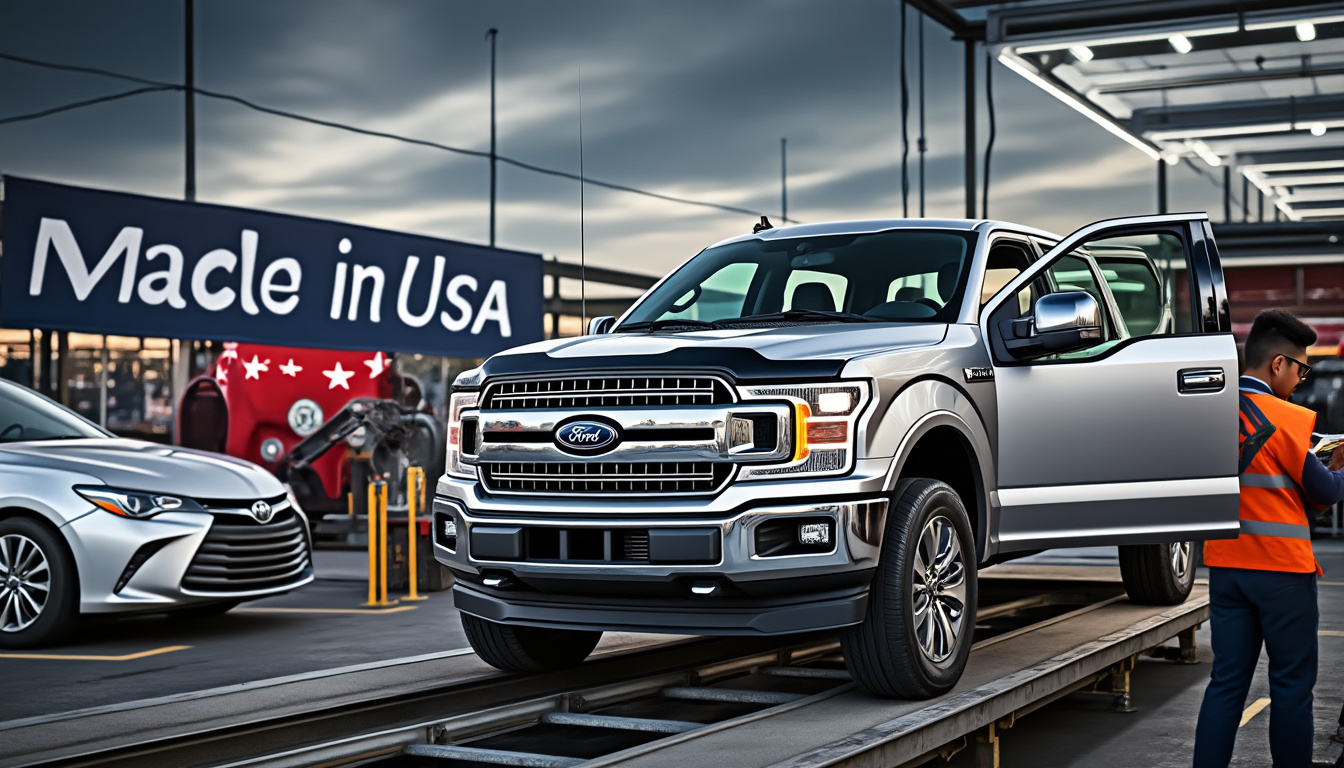
How Donald Trump's tariffs shake up the American automotive industry
The American automotive sector, long an industrial flagship, is now in a delicate position. The implementation of a 25% tariff on vehicles imported into the United States since April 3, 2025, has felt like an earthquake for global market players. Ford and General Motors, for example, now have to deal with significant additional costs that impact their margins as well as the final prices for consumers. This measure was designed as a boost to local production, aimed at strengthening the national industrial fabric. However, the situation has turned into a precarious balance.
The first notable reaction was a rise in advanced vehicle purchases before the full application of the tax, reflecting a palpable fear among both consumers and dealers. But this rapid spike is followed by an evident risk of market slowdown and contraction. According to experts gathered during the New York International Auto Show, current inventories can temporarily cushion the shock, but this buffer is only temporary. A recent study reveals that the direct impact on prices could lead to a nearly 8% drop in automotive sales as early as the last quarter of the year.
Under pressure from the new regulation, the manufacturer Volvo reacted strongly by expanding its production in South Carolina, relocating part of its chain to evade the taxes. Honda adopts a neighboring strategy by relocating the production of its hybrid Civic to the United States. Hyundai, for its part, announces a colossal investment of $21 billion in a steel mill in Louisiana, demonstrating a clear intent to anchor its resources locally. However, this reshoring comes with an increase in production costs that could be passed on to the final consumer.
This unstable period is mainly characterized by a constant uncertainty regarding the future evolution of tariff policies. Donald Trump has, on several occasions, hinted that he might adjust his decisions to support certain American manufacturers. This back-and-forth deeply disorients economic players; long-term planning becomes almost impossible. The snowball effect of this instability also influences investments related to new technologies, such as electric vehicles, which require stable infrastructures and supply chains.
- 25% increase in tariffs on imported vehicles since April 2025
- Anticipated price increase of up to 5% by the end of 2025
- Projected 8% drop in auto sales due to the tariff shock
- Massive investments in local production by Volvo, Honda, Hyundai
| Manufacturer | Adopted Strategy | Declared Investment | Expected Impact |
|---|---|---|---|
| Volvo | Capacity expansion in South Carolina | Not specified | Reduction in imports, tariff evasion |
| Honda | Relocating hybrid Civic production to the USA | Not specified | Reduction of tariffs on this model |
| Hyundai | Construction of a steel mill in Louisiana | $21 billion | Vertical integration, long-term cost reduction |
Adaptation strategies against tariffs in the electronics and textile sectors
While the automotive industry captures the spotlight, the electronics and textile industries are not exempt from this new tariff paradigm. Apple and Samsung, emblematic figures in global tech, have had to revise their logistics models to minimize the impact of tariffs. The relocation or diversification of supply chains to countries less exposed to the American tariff has been a shared reflex.
In the textile world, brands like Nike, Adidas, and Levi’s are also facing considerable pressures. These brands suffer not only from tariffs but also from slowdowns caused by prolonged geopolitical uncertainties. They seek to compensate through increased optimization of the supply chain, via manufacturing centers strategically located in Southeast Asia rather than directly in China, a country more targeted by American measures.
The textile industry is also betting on product diversification and unprecedented marketing campaigns to maintain customer engagement despite the gradual increase in production costs. This approach relies on a well-known behavioral psychology: a consumer faced with moderate price increases often retains their loyalty if the perceived value of the product is preserved or even enhanced.
Another crucial lever lies in investing in innovation. Whirlpool, although sometimes off the radar, has managed to counter the deleterious effects of tariffs by accelerating the development of smart connected appliances that benefit from higher margins. This strategy allows for better absorption of additional costs while strengthening competitive positioning in a demanding market.
- Refocusing supply chains away from China
- Modernization of product catalogs at Nike, Adidas, Levi’s
- Investments in innovative technologies at Whirlpool
- Maintaining customer loyalty despite rising prices
| Company | Action Taken | Objective | Expected Outcome |
|---|---|---|---|
| Apple | Diversification of supply chains | Avoid surcharges on components | Reduction of indirect costs |
| Nike | Increased production in Southeast Asia | Support volume despite taxes | Maintain cost competitiveness |
| Whirlpool | Development of connected appliances | Increase margins and innovation | Mitigate tariff increases |
The role of international relations and the response of trade partners against American barriers
The protectionist measures implemented by Donald Trump have triggered a chain reaction on the international stage. Trade partners, notably the European Union, did not take long to respond with targeted countermeasures. Thus, equivalent tariffs have been applied to certain American products, notably spirits, agricultural products, and industrial machinery.
This dynamic has created a climate of diplomatic tension that proves particularly detrimental to sectors such as Boeing and Harley-Davidson, emblematic of American industry. For these companies, the impact extends beyond the domestic market to a loss of global competitiveness, forcing them to redefine their commercial strategy and investments. Harley-Davidson, for example, has announced the diversification of its production towards Europe to avoid the surcharges.
In the face of these issues, diplomatic negotiations are intensifying, but the persistence of tariffs reflects a deep disagreement about the model of global trade. Current debates show that traditional alliances are being questioned and that companies must cultivate a new commercial resilience, based on flexibility and rapid adaptability to an unstable political environment.
- European tariff countermeasures on American products
- Significant impact on Boeing and Harley-Davidson
- Ongoing diplomatic negotiations to ease tensions
- Strengthening diversified commercial strategies
| Company | Impact of tariffs | Response Adopted | Strategy Perspective |
|---|---|---|---|
| Boeing | Increased export costs, loss of competitiveness | Lobbying and diplomatic dialogue | Market reorientation, diversification |
| Harley-Davidson | Surcharges on exported motorcycles | Partial relocation of production to Europe | Mitigation of tariff impact |
How behavioral psychology influences corporate reactions to tariffs
The way companies respond to changes in economic policy is not solely determined by financial or strategic variables; behavioral psychology plays a major role. In the face of uncertainty created by tariffs, leaders and teams often adopt behaviors aimed at reducing perceived risk and preserving internal stability.
A classic reflex consists of anticipating potential shocks by increasing inventories, as seen with several American automotive manufacturers. This behavior reflects a collective fear of an unpredictable future and a desire to control the situation as best as possible. However, in the long term, this precautionary strategy can also lead to additional costs and inefficiencies.
Moreover, uncertainty often generates decision-making paralysis. Large-scale investment projects, although necessary for sustainable adaptation, are delayed or canceled. This phenomenon hinders the essential innovation capacity needed to compete against global players better prepared or less exposed to tariffs, such as European or Asian giants.
To move forward, companies must cultivate a culture of adaptability and continuous improvement, relying on small, rapid, cumulative actions rather than radical decisions. This approach is reminiscent of race car driving management: rather than attempting risky bold maneuvers, it is about continually adjusting course to optimize trajectory despite changing conditions.
- Proactive stock management to limit volatility
- Gradual restructuring of production chains
- Encouraging agile decision-making in the face of uncertainty
- Adoption of a culture of continuous improvement at all levels
| Behavior | Consequence | Recommendation for the company |
|---|---|---|
| Increased inventories | Risk reduction but additional costs | Optimize flows to limit costs |
| Decision-making paralysis | Delays or cancellations of investments | Encourage agile and iterative decisions |
| Behavioral fears | Resistance to necessary changes | Promote a culture of adaptability and resilience |
Impact of tariffs on the competitiveness of global giants and avenues for improvement
Beyond American companies, the American tariff policy of recent years has put several global giants under significant strain. Nike, Adidas, Levi’s, and other heavyweights, as well as Apple or Samsung, feel the effects of a latent trade war on their margins and strategies. These groups seek to innovate in their methods to maintain their lead while managing the effect of surcharges.
A first strategy consists of strengthening the localization of key productions, while favoring materials or components less subject to tariffs. For example, several European and Asian giants have developed integrated vertical circuits, limiting exposure to external risks. For American groups like Ford or General Motors, it is necessary to find a balance between local political pressure and the reality of the global market.
Technological innovation also represents an important avenue. Tesla, while targeted by certain accusations, has positioned itself at the forefront of electric vehicles, which are less affected by some tariffs aimed at traditional combustion models. This energy transition fosters competitiveness in segments where competition is still on the rise.
To conclude this final stage of analysis, a reflection arises around industrial and commercial collaboration. Strategic alliances, targeted mergers, or transnational partnerships can reduce vulnerability against tariff barriers. This approach invites flexibility and encourages abandoning rigid protectionist attitudes to embrace a pragmatism nourished by cooperation.
- Development of integrated supply circuits
- Acceleration of innovation in green technologies
- Transnational partnerships to share risks
- Dynamic strategies to balance political pressure and economic realities
| Company | Key Actions | Expected Benefits | Challenges to Address |
|---|---|---|---|
| Nike | Diverse global sourcing, product innovation | Reduction of tariff risk, loyalty | Maintaining price competitiveness |
| Apple | Diversification of suppliers, strategic locations | Stabilization of costs, flexibility | Managing complexity of supply chain |
| Tesla | Focus on electric vehicles, continuous R&D | Technological lead, avoidance of taxes | Maintaining pace of innovation |
Si vous souhaitez lire d'autres articles tels que Manufacturers facing the challenges of the tariffs imposed by Donald Trump, consultez la catégorie News.
-
Talon Veral says:
Les augmentations de tarifs complexifient vraiment les choix des consommateurs et des entreprises.
Leave a Reply
Articles relatifs