Disastrous failure for Mercedes: the reasons for the disinterest in the electric model of the G class

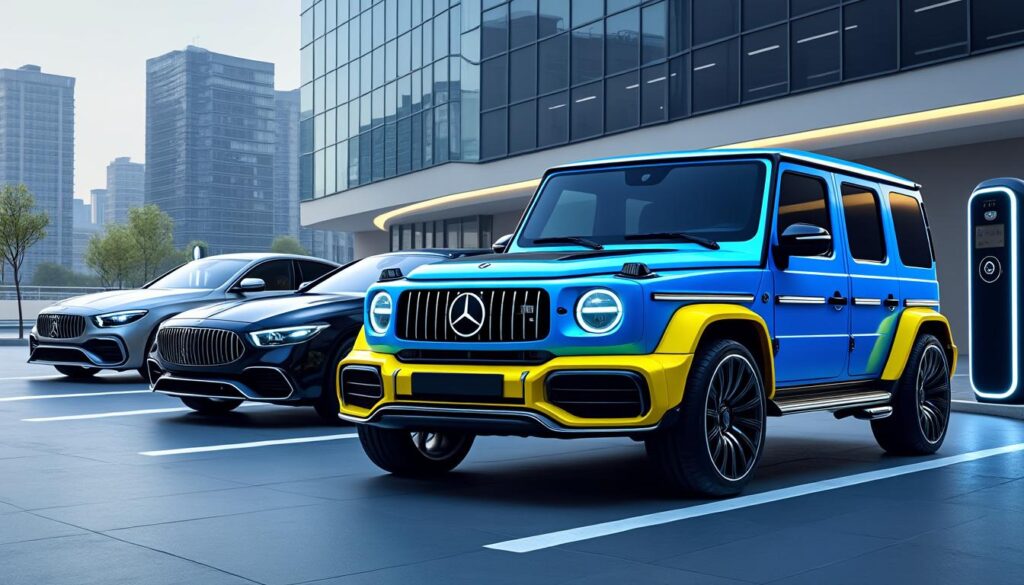

The electric Mercedes G580, playing the outsider role among the big players, is facing a true commercial cataclysm. Despite its promising technical performance and cheerful reviews, this model simply fails to attract its traditional clientele. An increasing question arises: why this sudden disinterest when electrification is on everyone’s lips?
Disconcerting sales figures
The data speaks for itself: until April, only 1,450 units of the G580 have been sold, an extremely low score compared to the 9,700 examples of its thermal versions. This gap is all the more surprising as the electric G-Class is rich in technical assets. In a high-end segment where high prices do not seem to hinder sales, the question arises: isn’t electrification synonymous with enthusiasm for everyone?
| Model | Units sold | Type of engine |
|---|---|---|
| Electric Mercedes G580 | 1,450 🚗 | Electric |
| Thermal versions | 9,700 🚙 | Thermal |
An intriguing pricing position
With a starting price of 147,000 euros in Europe, the G580 aims to live up to the premium image of Mercedes. 🤔 However, one element seems to be lacking: range. Limited to 385 km, it does not seem to meet the expectations of customers searching for longer journeys. Despite being primarily for urban use, this detail might well deter potential buyers.
- Starting price: €147,000 💰
- Range: 385 km 🌍
- Premium positioning ✅
A question of driving experience
G-Class owners are often seeking a particular driving experience. The G580, despite its four electric motors, fails to provide the sensation associated with the traditional V8 engine. Innovations like the “G-Roar” system, which simulates the sound of a V8, testify to this effort to recall the model's DNA, but will it be enough?
- Combined power: higher than thermal engines 💪
- Instant torque 🚀
- Optimized off-road capabilities 🏞️
- G-Roar sound system 🎶

Towards a redefined future strategy?
The difficulties encountered by the G580 could force Mercedes to reconsider its approach for the future "baby G-Class". Initially planned as a 100% electric model, the necessity to introduce thermal or hybrid engines might become unavoidable. Flexibility is now the key in the automotive world. 🔑
| Proposed model | Type of engine | Probability of adoption |
|---|---|---|
| Baby G-Class | Electric 🔌 | Initially planned |
| Baby G-Class | Hybrid 🔄 | High probability |
| Baby G-Class | Thermal 🚘 | Considered if necessary |
A clientele in full transformation
The chaotic journey of the G580 highlights a crucial point: the clientele of the G-Class is particularly attached to its traditional values. Premium SUV buyers, often more open to electrification, do not have the same emotional connection. This luxury model represents not just a means of transport, but indeed a status symbol. 🏆
As Mercedes prepares for transformations, the future of the G580 will depend on a dynamic of adaptations to a constantly evolving automotive market. Innovation and sustainability are at the heart of this reflection, and customers may be more receptive to an offer that combines tradition and technology.
To explore further the challenges and innovations that Mercedes is implementing, check out the following articles: New electric sedan, Charging limitations, and Collaboration with Audi.
Si vous souhaitez lire d'autres articles tels que Disastrous failure for Mercedes: the reasons for the disinterest in the electric model of the G class, consultez la catégorie Non classé.
-
Elliot Lumagien says:
C'est décevant de voir un si grand modèle ne pas séduire les acheteurs.
Leave a Reply
Articles relatifs